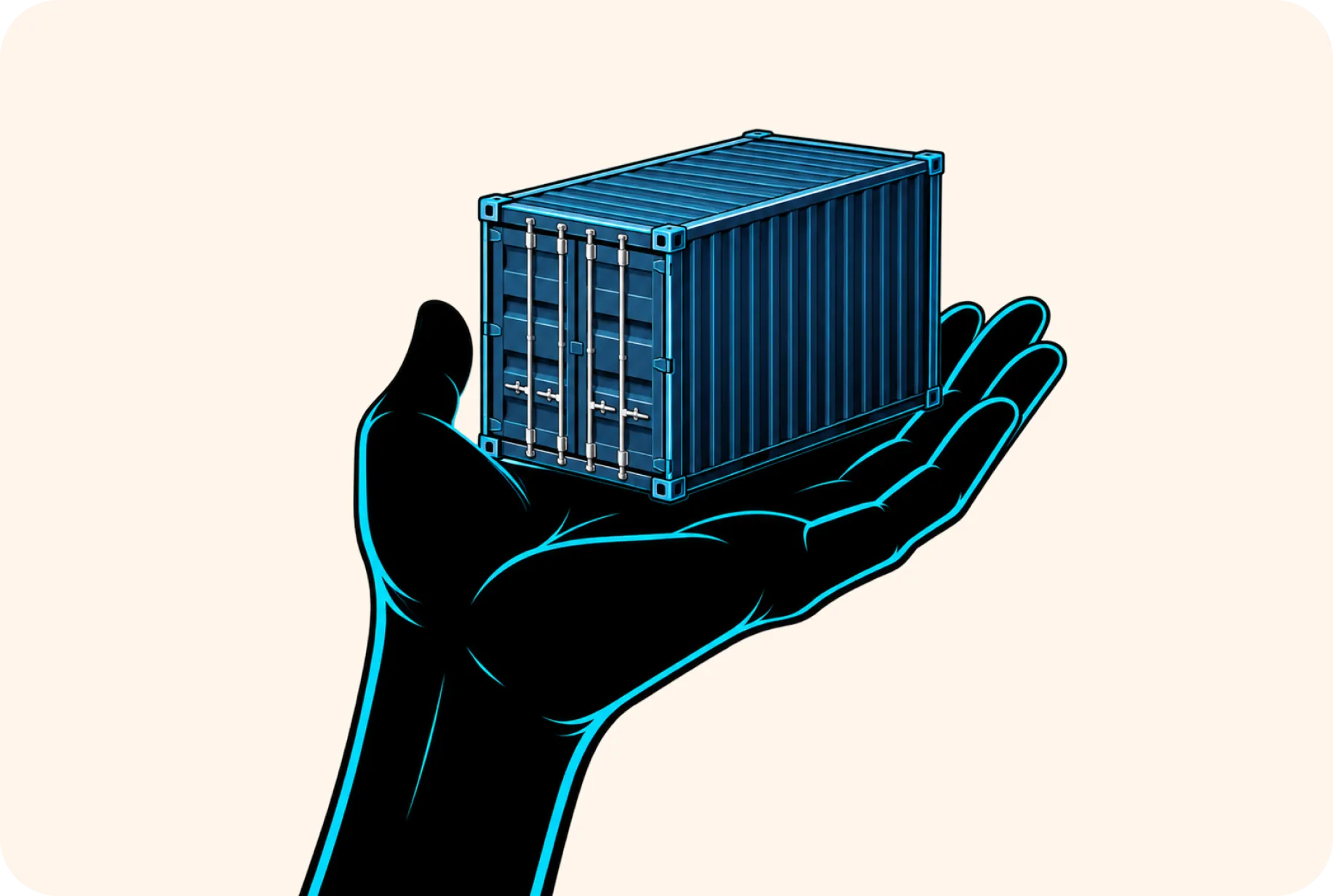
The Industry Blueprint for AI-Led Enterprise Solution Delivery in the SaaS Industry
Co-CEO, Trundl



Patrick Howell is Co-CEO and Co-Founder of Trundl, Inc. He leads go-to-market strategy and operations for Trundl, which includes multiple regions and platform verticals.


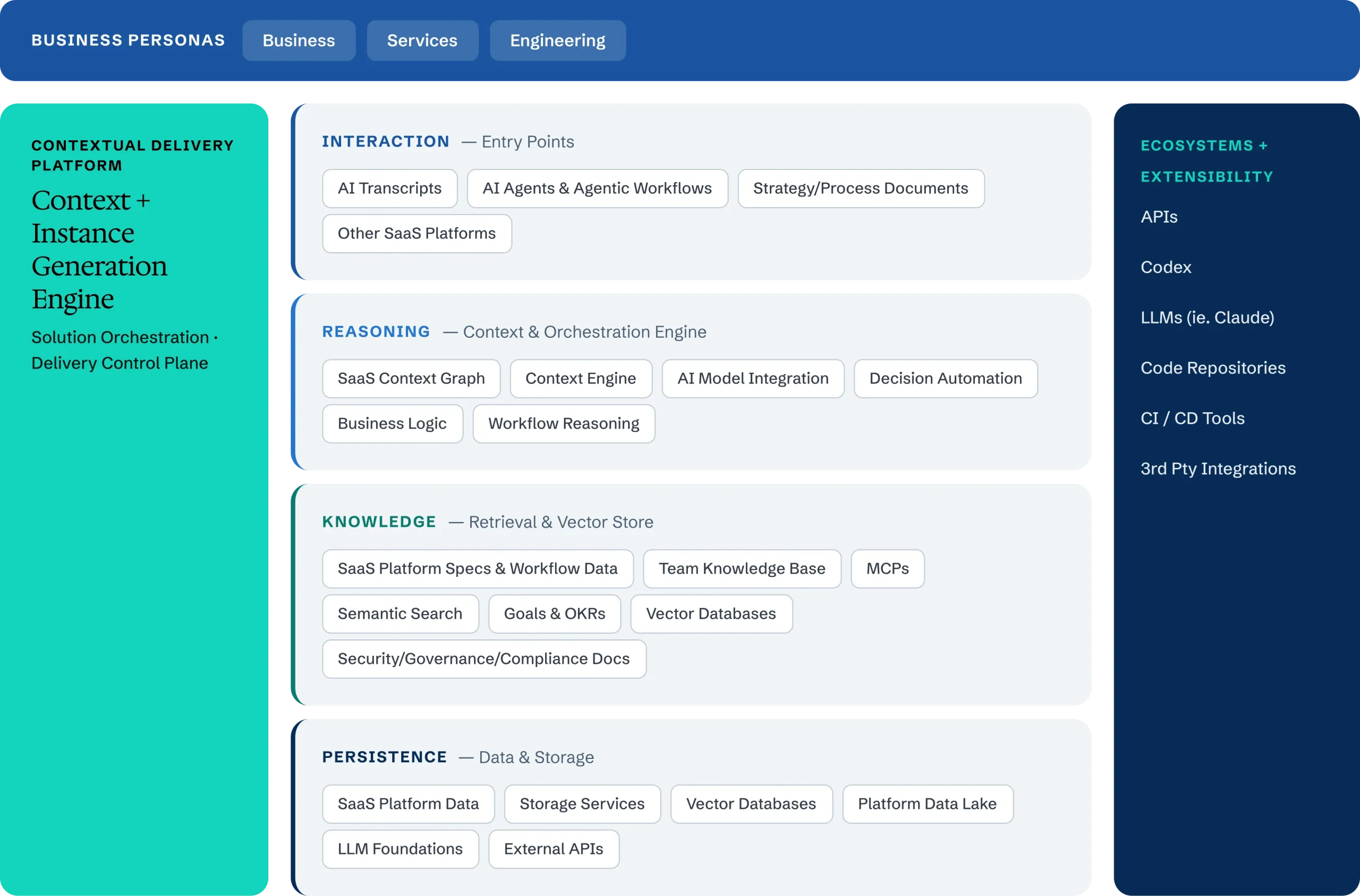
This paper defines the principles, capabilities, maturity model, and business implications of Contextual Delivery. It argues that enterprise delivery is entering a new phase, one in which competitive advantage will increasingly depend on an organization’s ability to transform business intent into governed operational outcomes at speed.
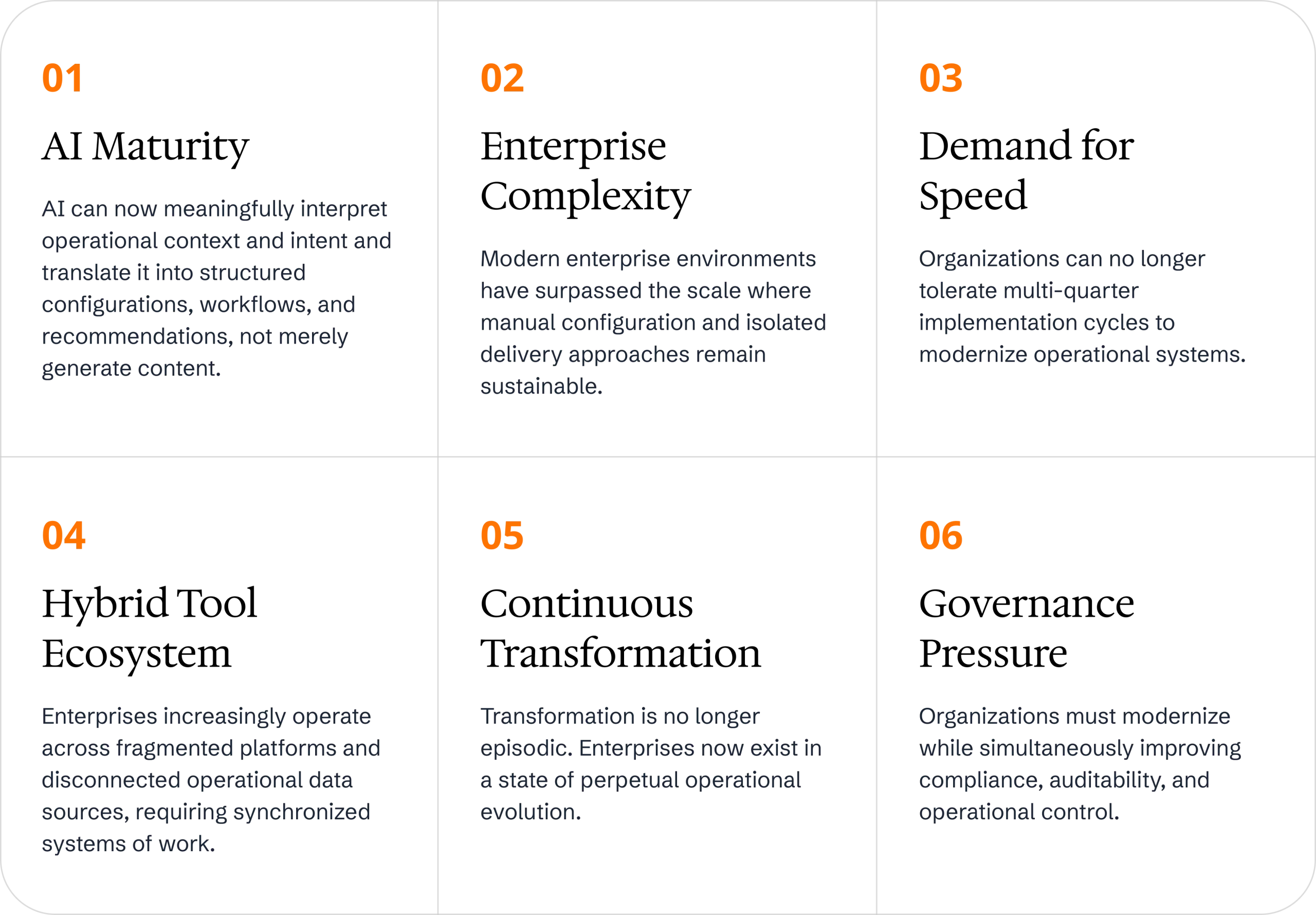
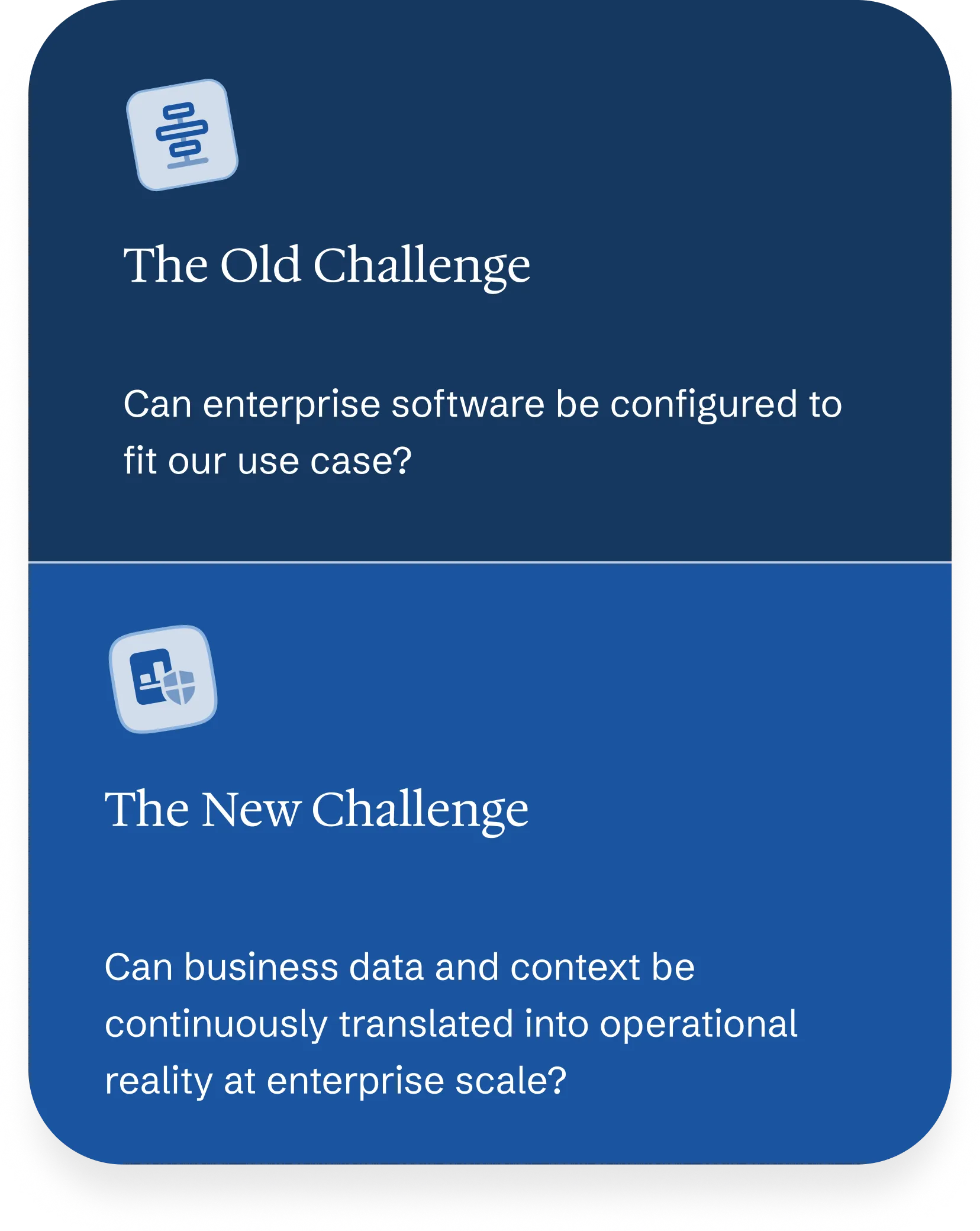
With the need for AI-embedded tooling growing in evermore complex enterprise environments, organizations must rethink solution delivery.

Enterprise environments are simply too dynamic and too distributed for any team to hold complete awareness.
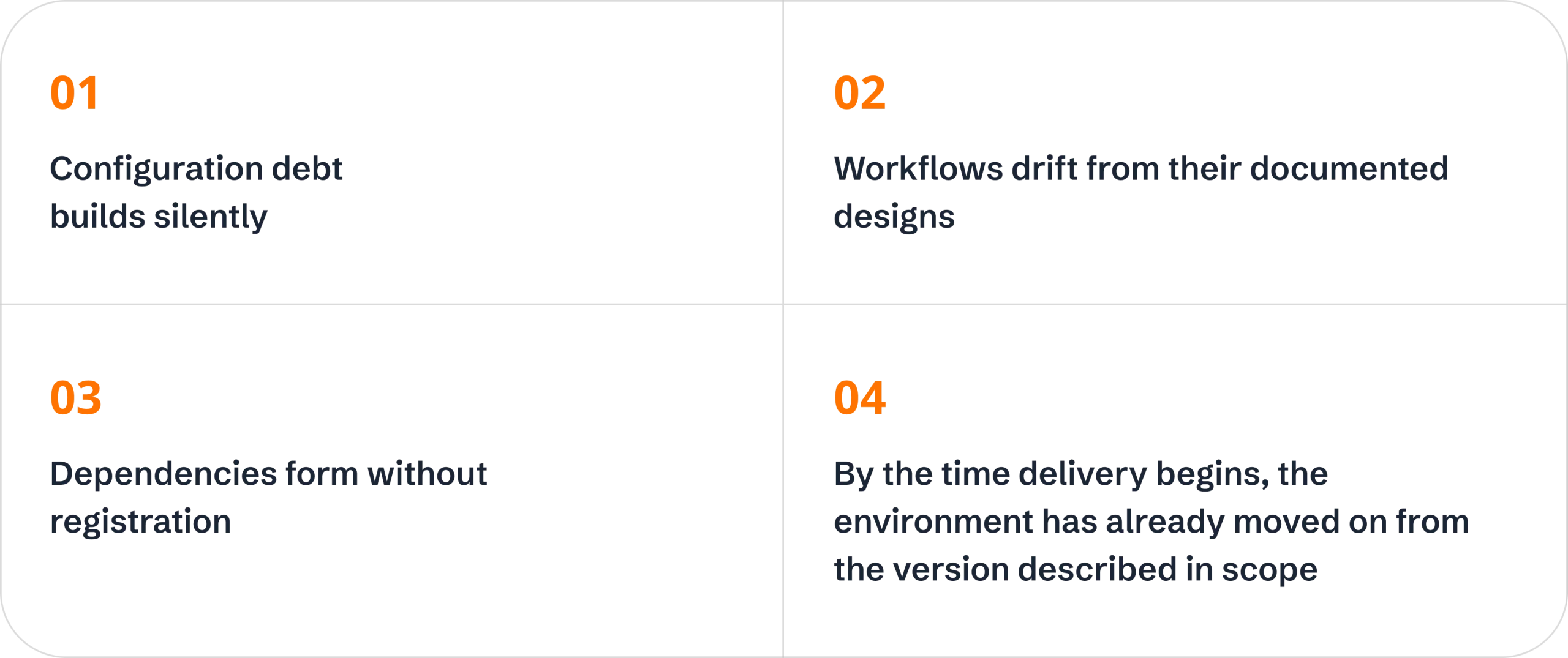
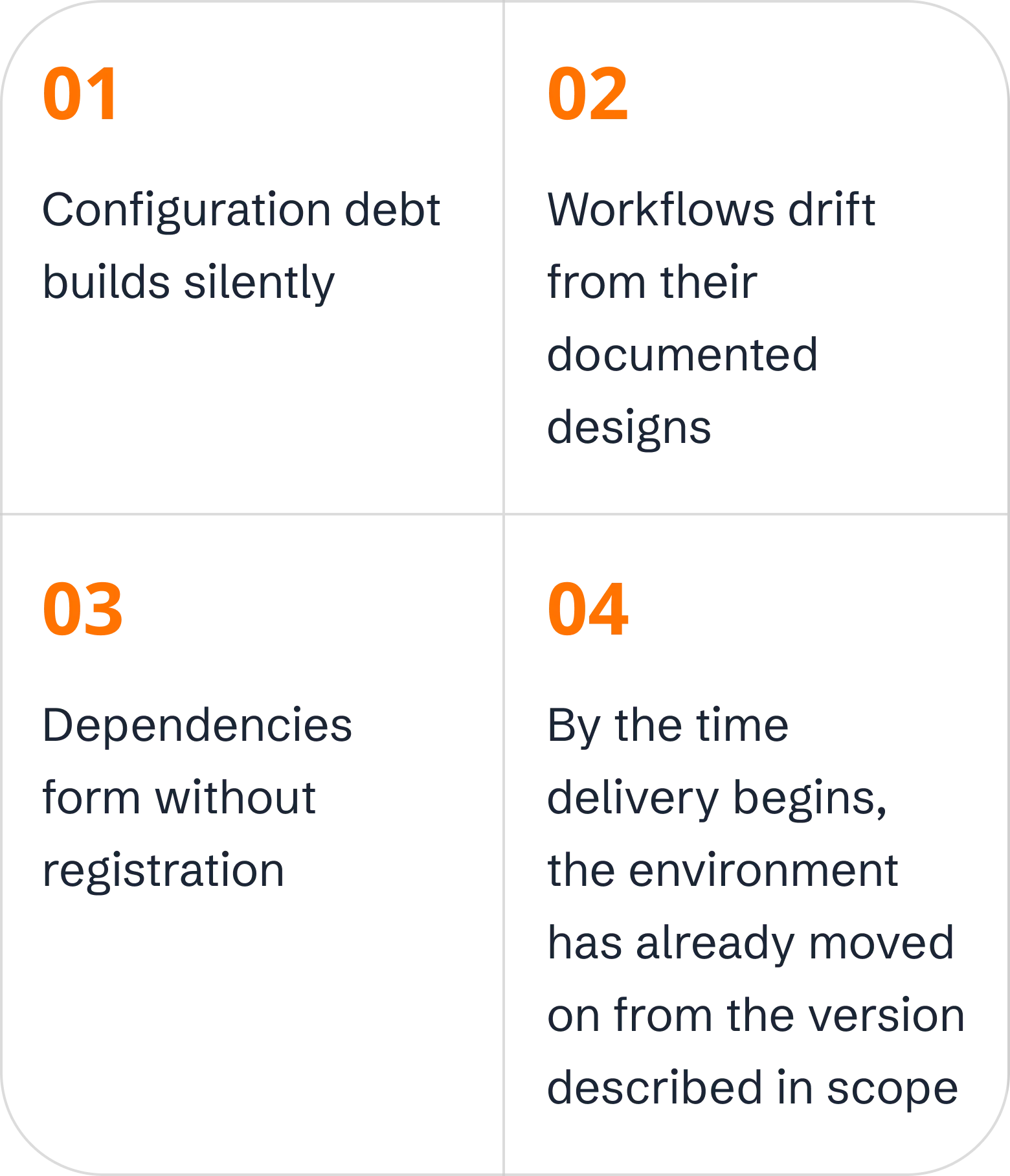
This is not limited to enterprise SaaS rollouts. Data migrations and tool consolidations suffer from the same inefficiencies.
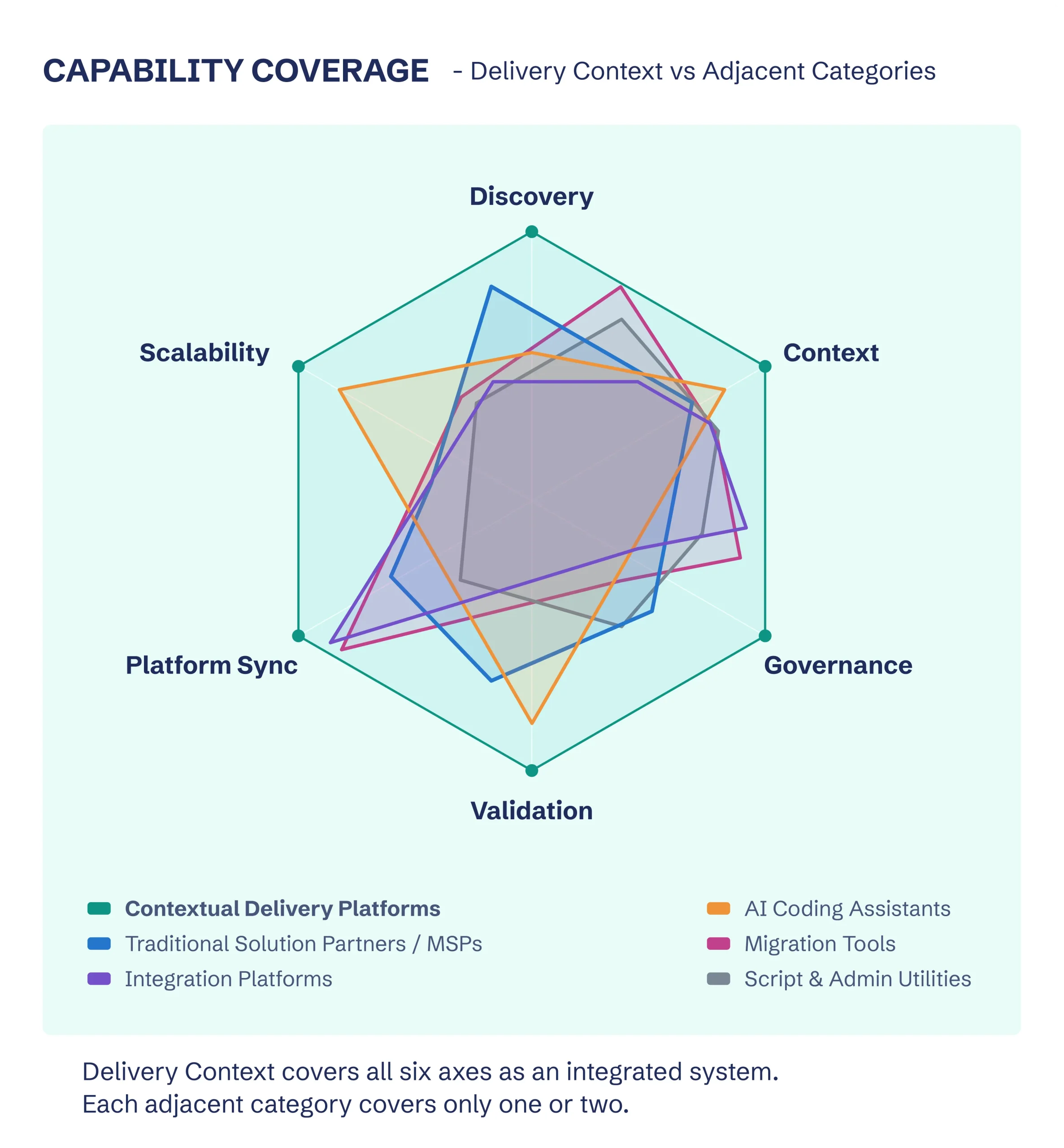
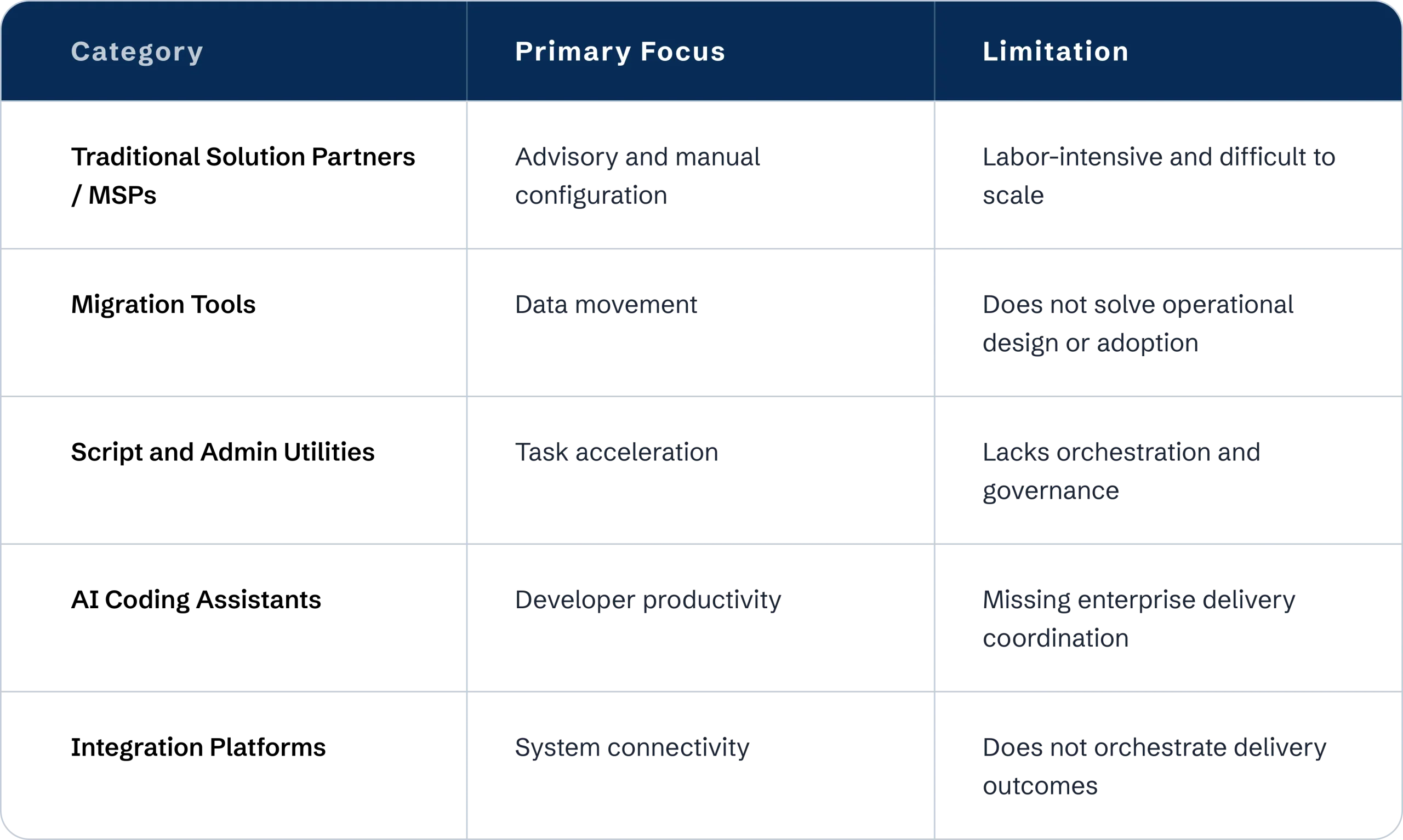
The data migration and tool consolidation market offers narrowly-focused, single-purpose tools, but they offer no role in solving for operational transformations using business context. They move data from one tool to another, adding significant time and cost to engagements. In total, these issues still persist in the age of AI.
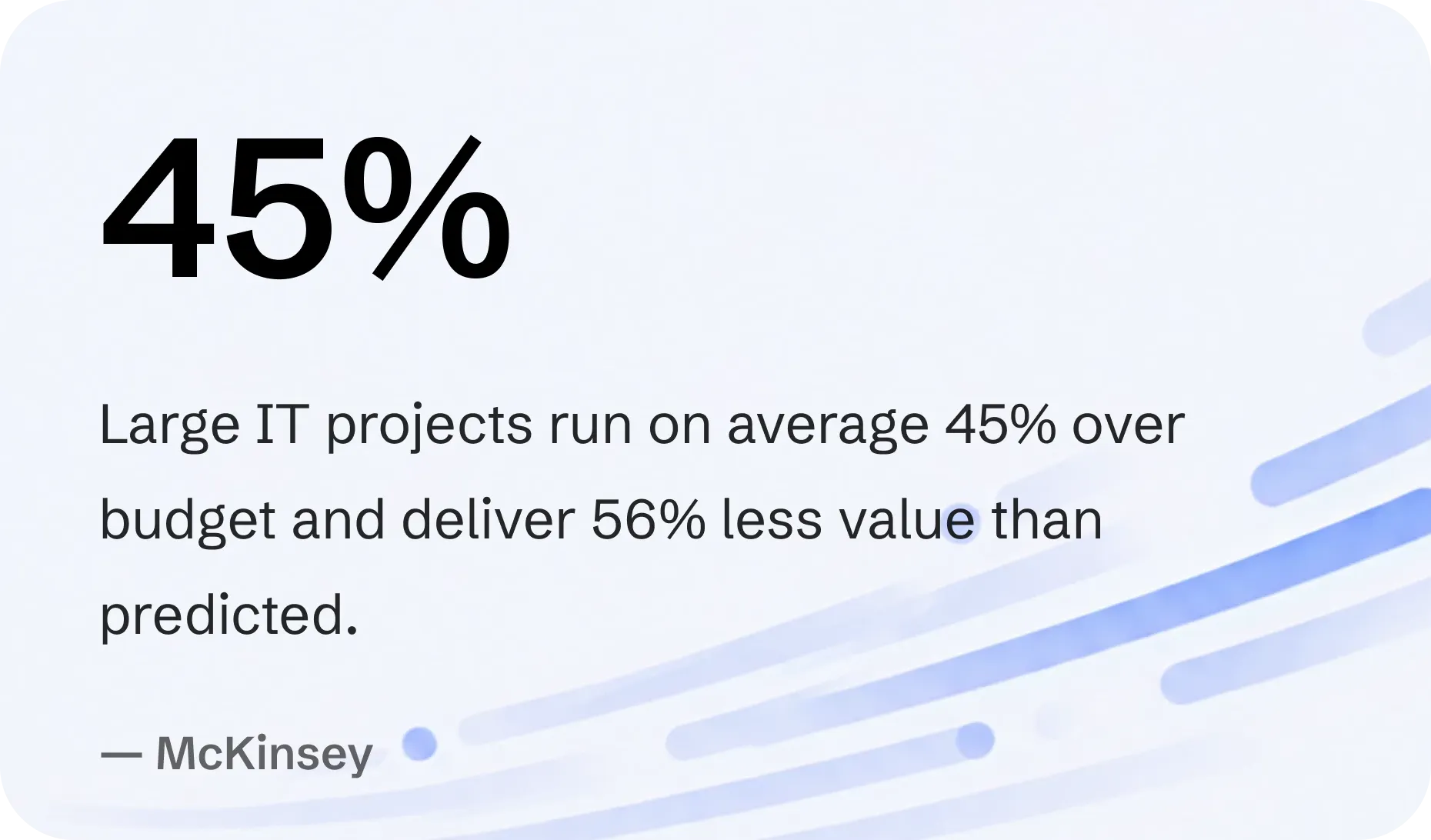
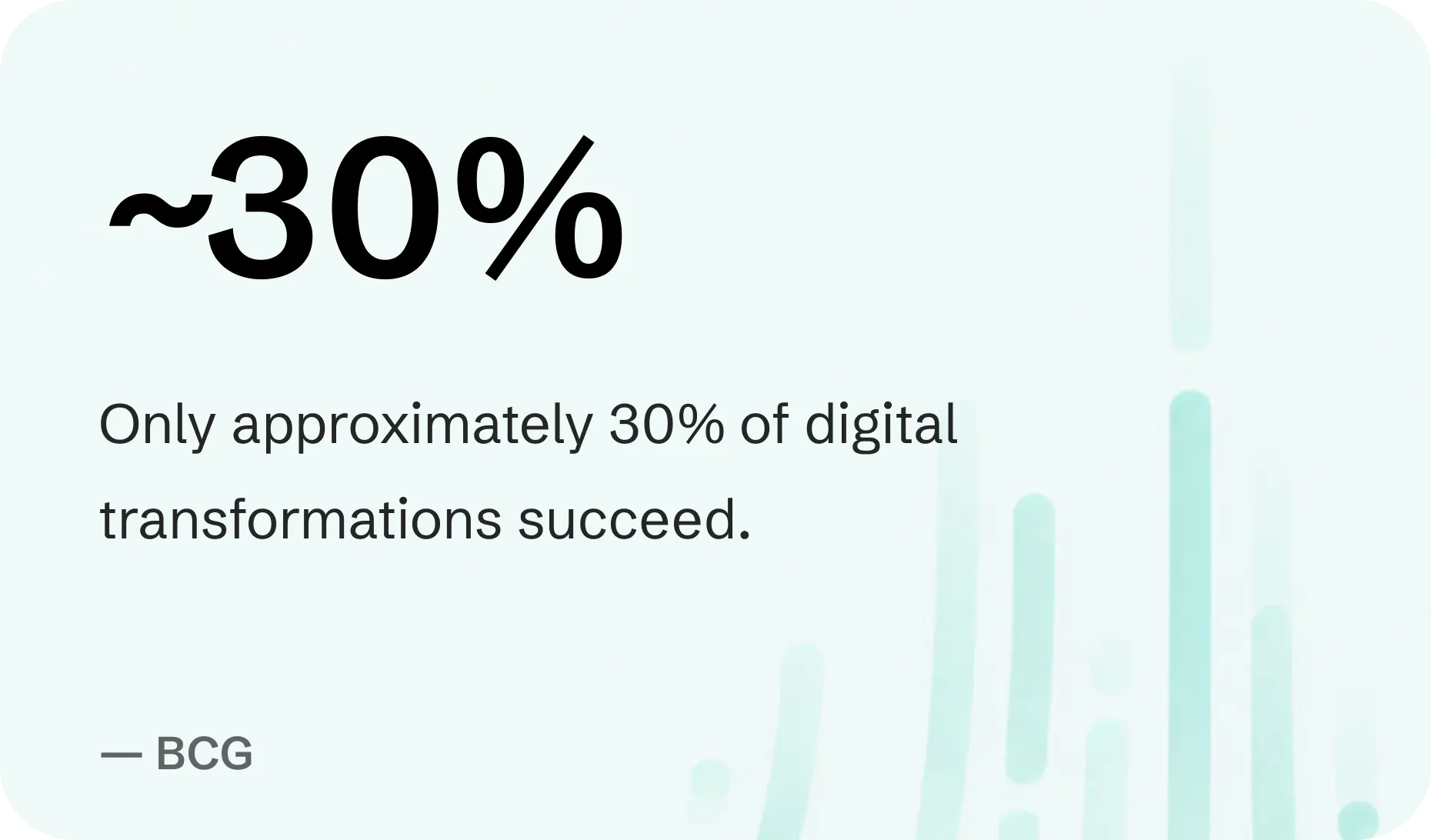

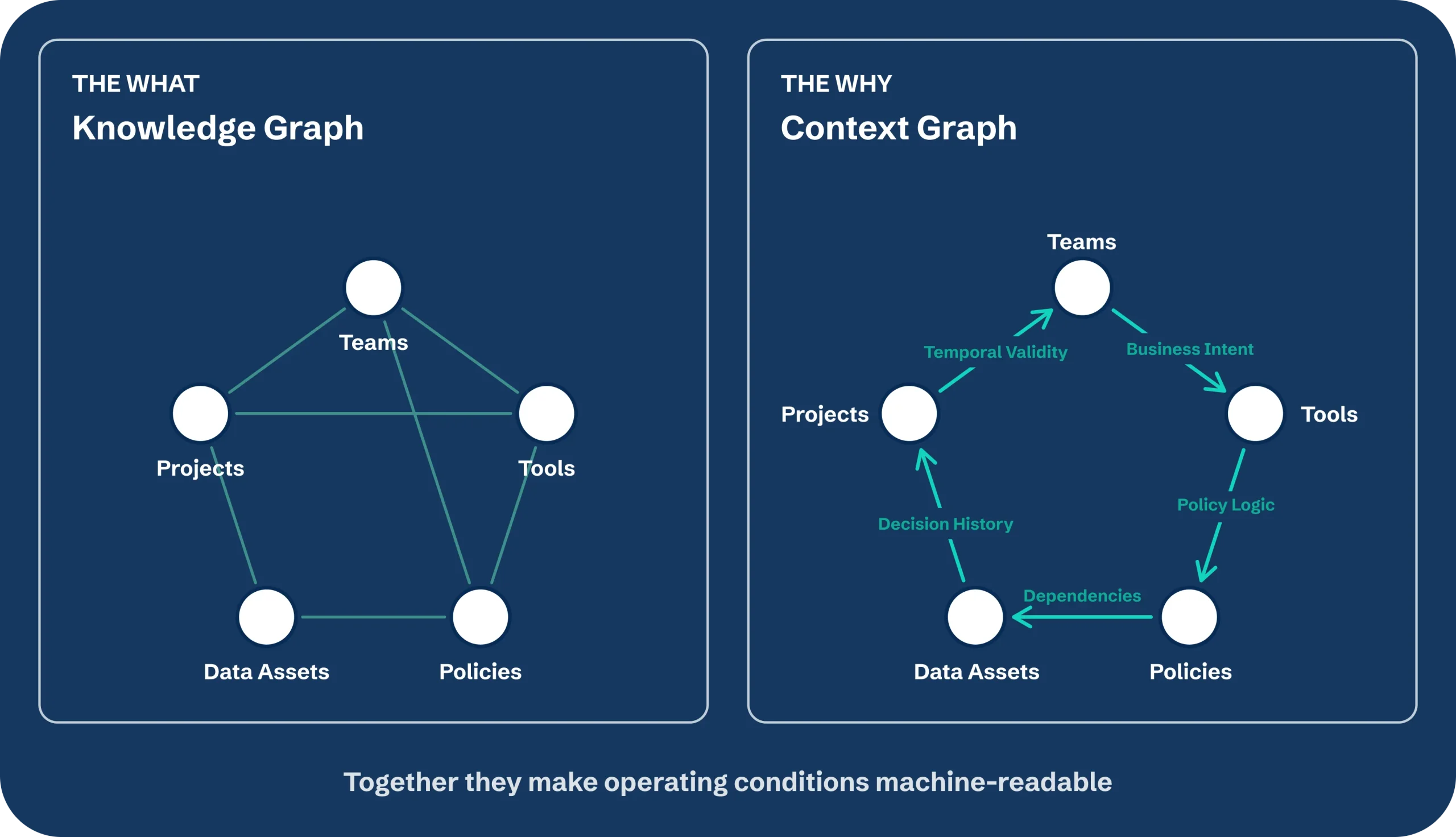
Context and knowledge graphs open an opportunity, making operating conditions explicit and machine-readable rather than trapped in tribal knowledge or other silos. Moreover, there are well-established context-capturing solutions, such as Loom, Zoom, and Teams.

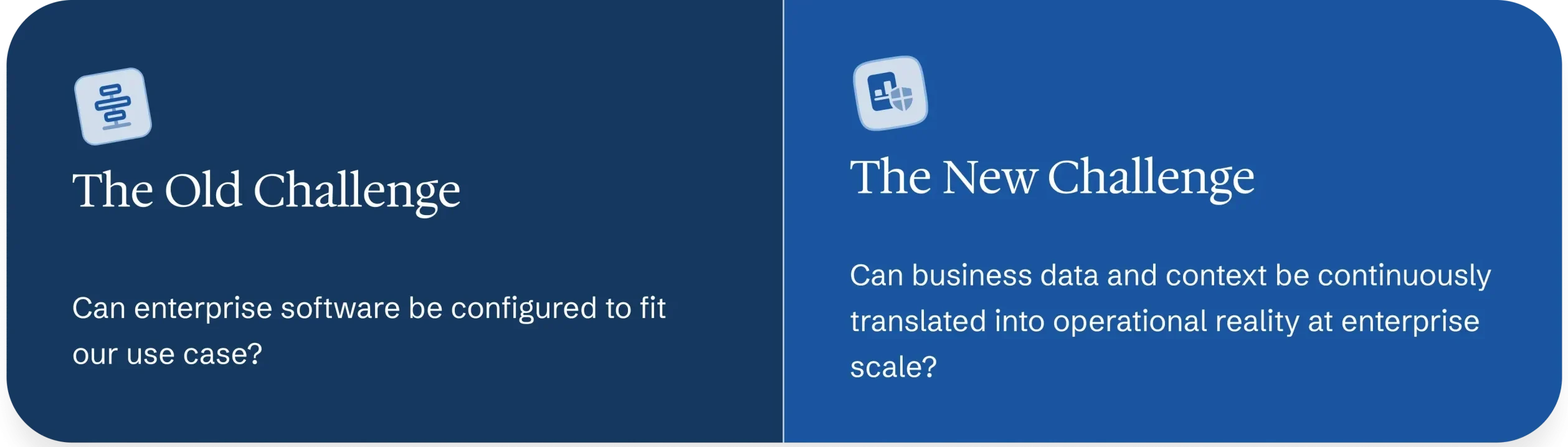
What's needed is a delivery model that accommodates both extremes.

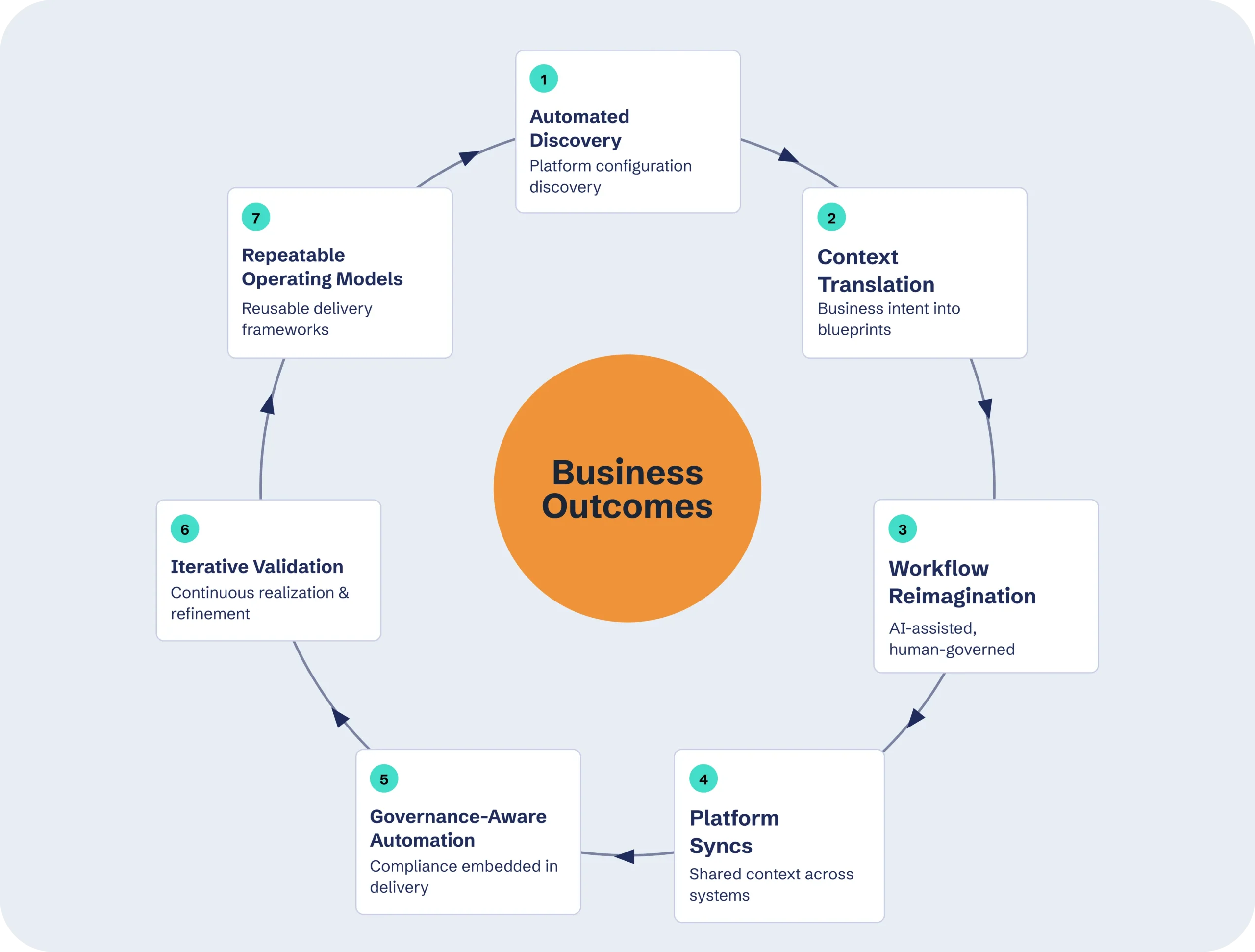
Gartner: Rethinking workflows with agentic AI from the ground up is the ideal path to successful implementation. Bolting agents onto legacy systems can be technically complex, often disrupting workflows and requiring costly modifications.
Gartner projects that at least 15% of day-to-day work decisions will be made autonomously through agentic AI by 2028.
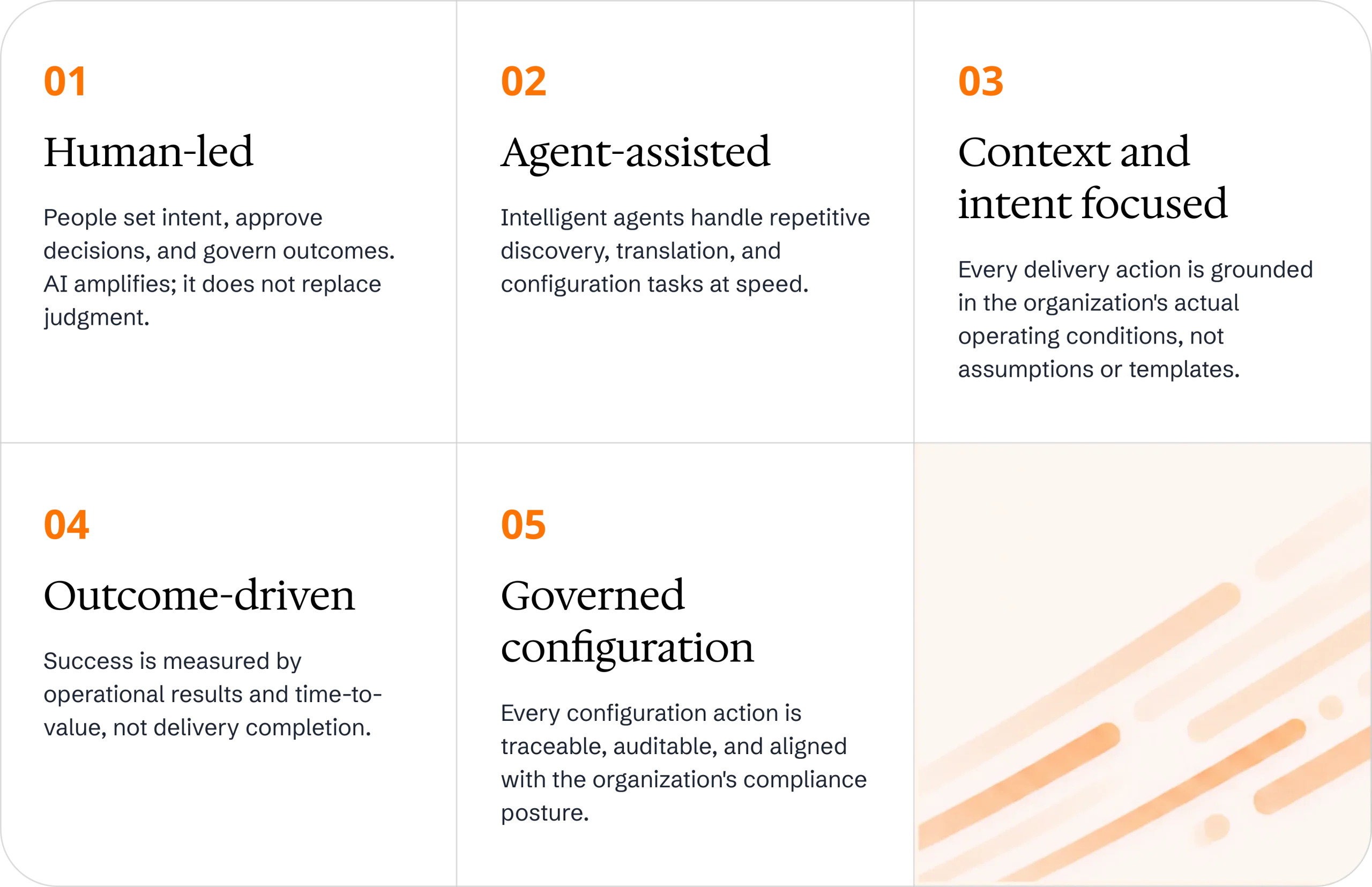
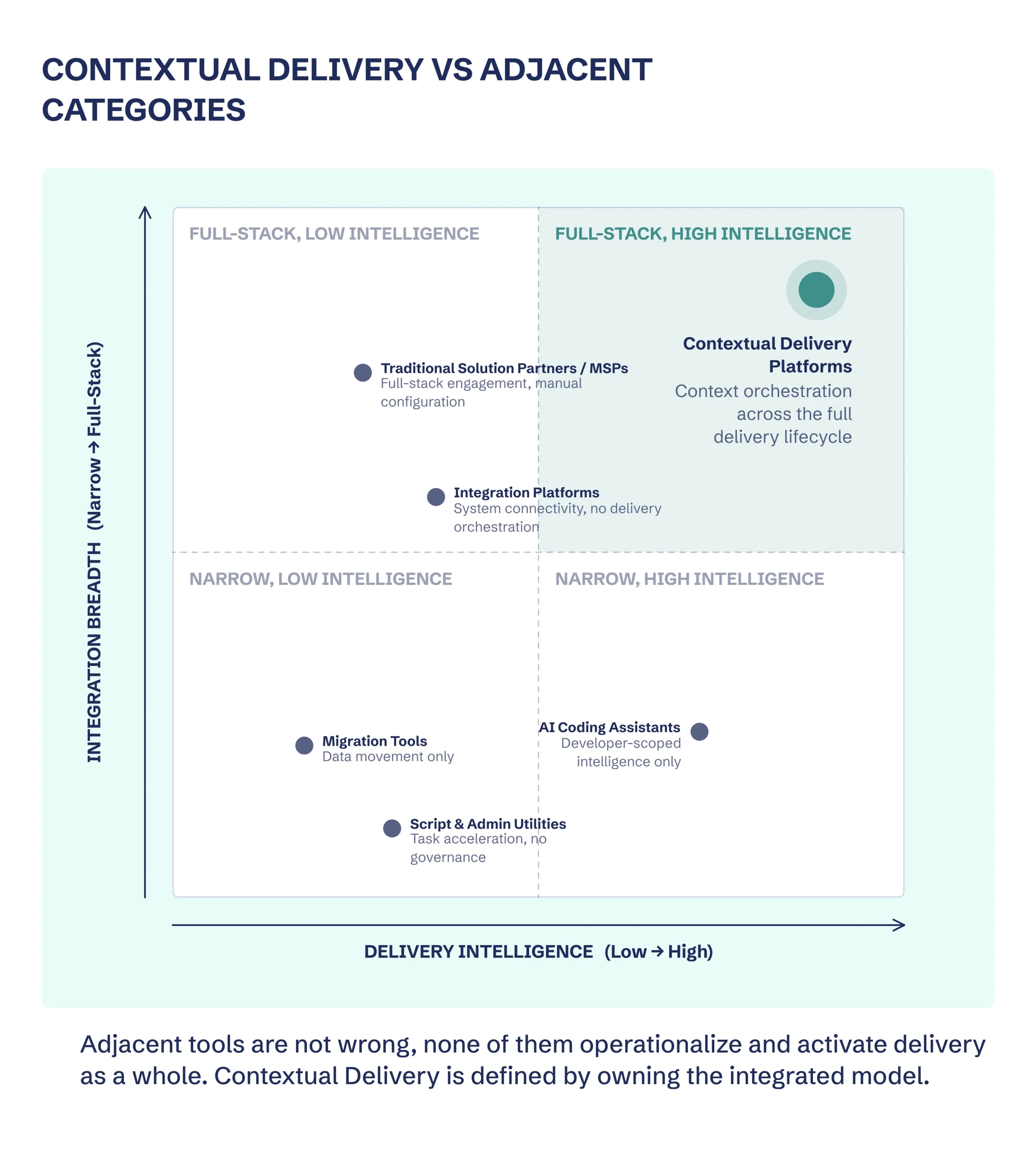


Most importantly, Contextual Delivery enables enterprises to continuously evolve their systems of work as business conditions change.
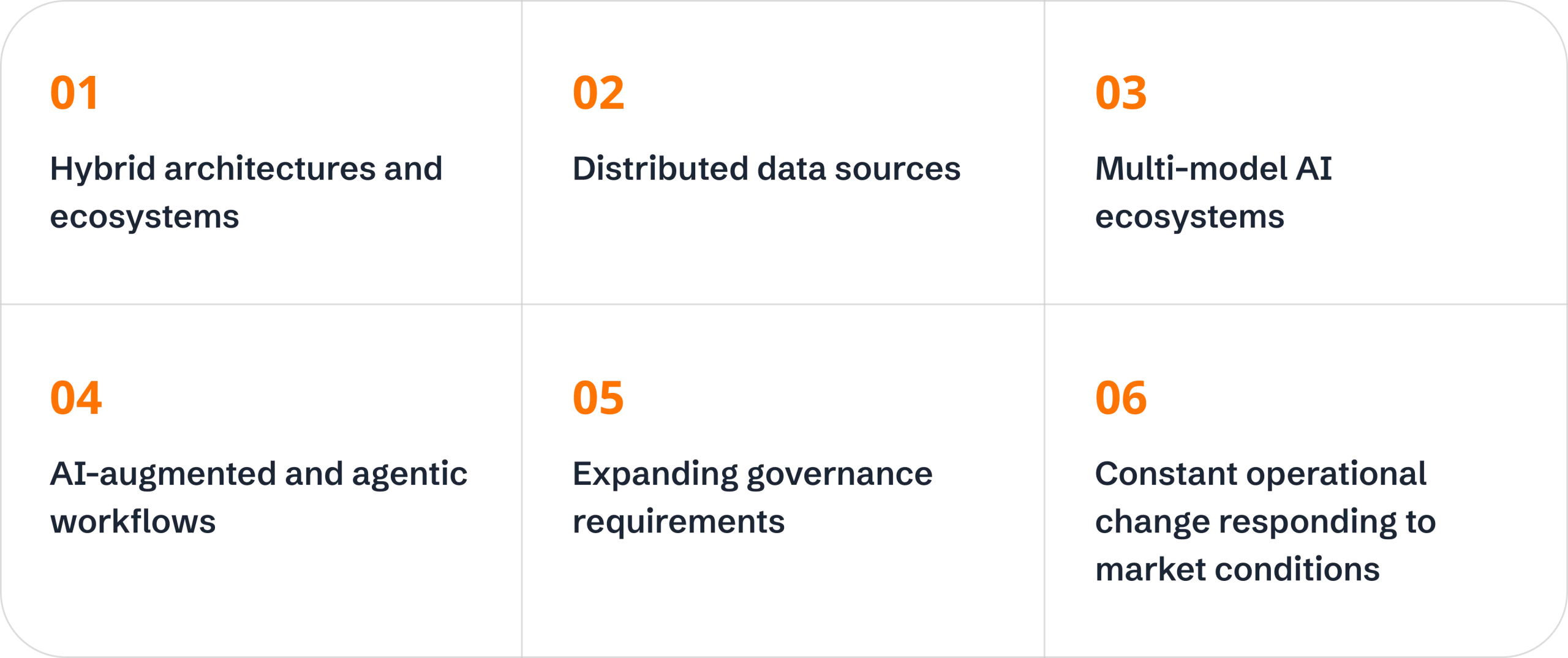
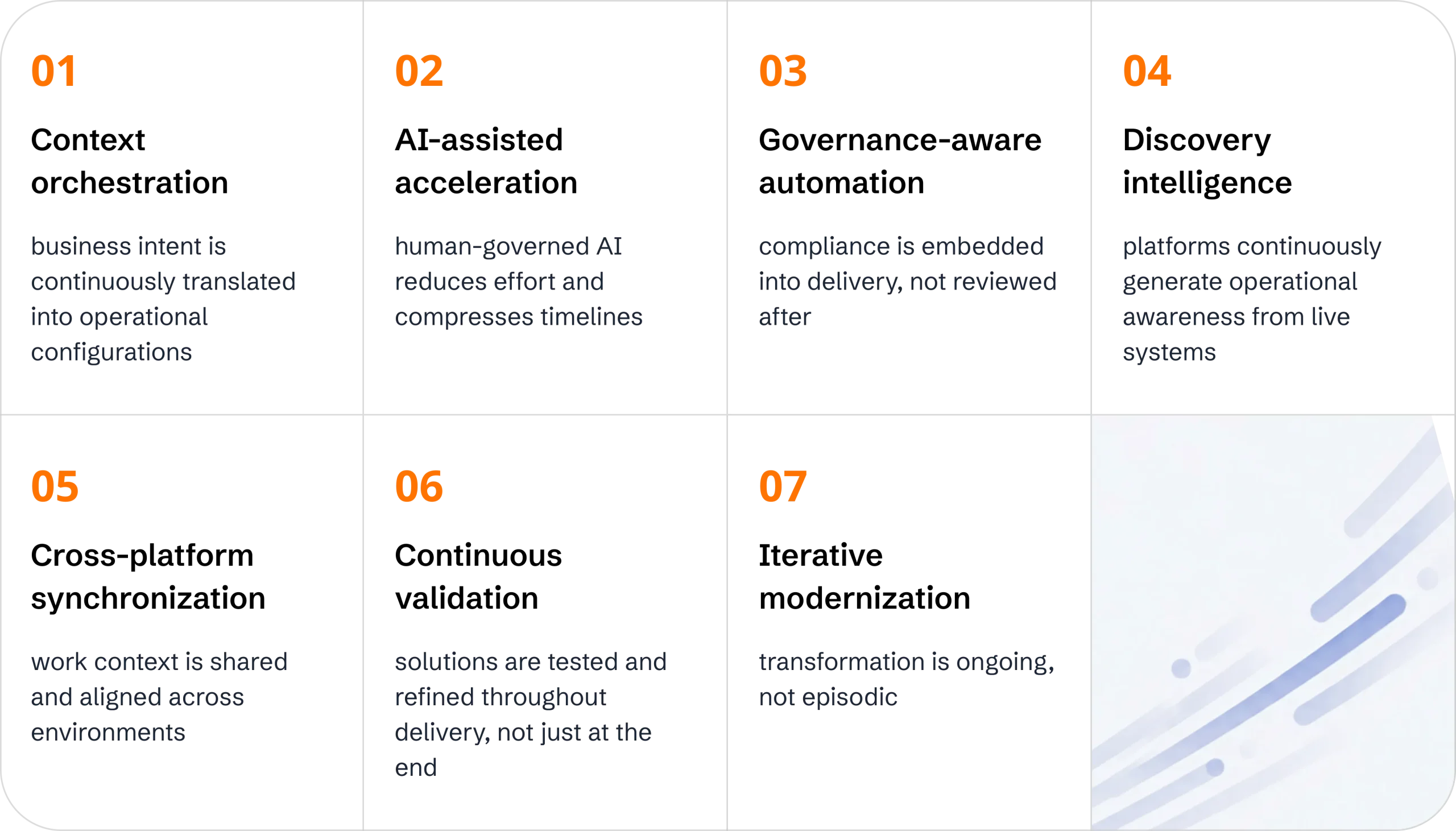
By the end of 2027, enterprise delivery models will increasingly require capabilities that are:






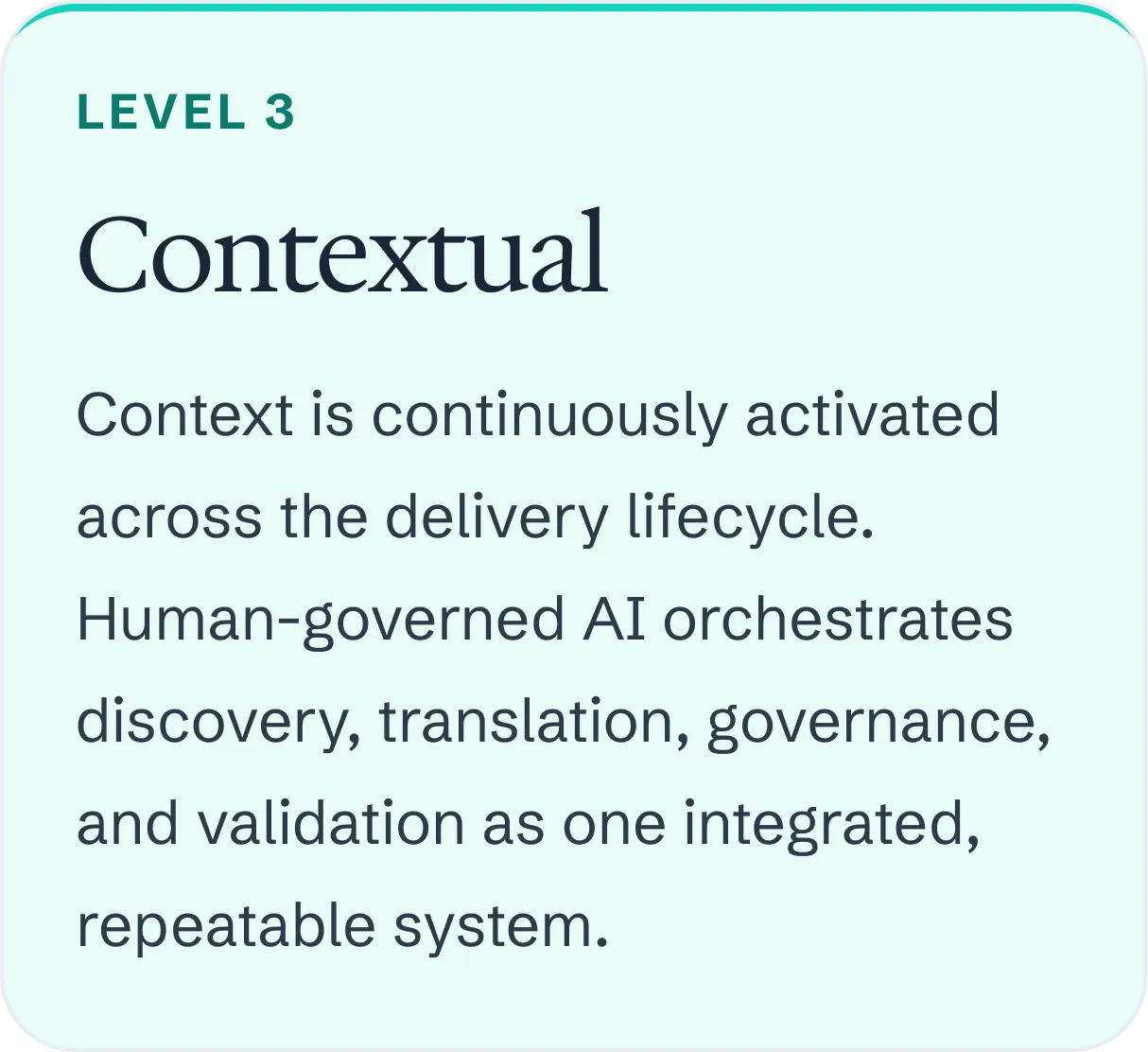
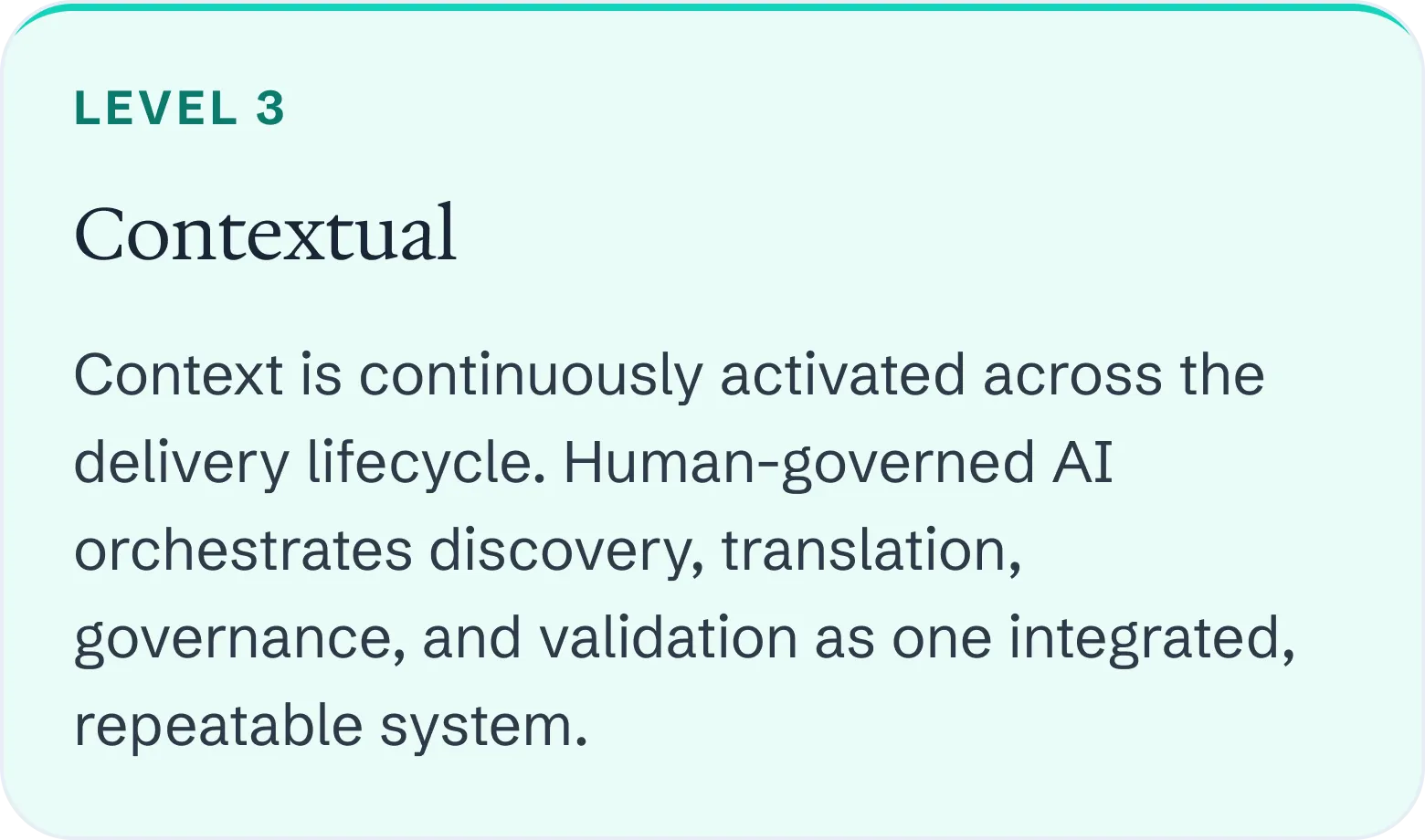
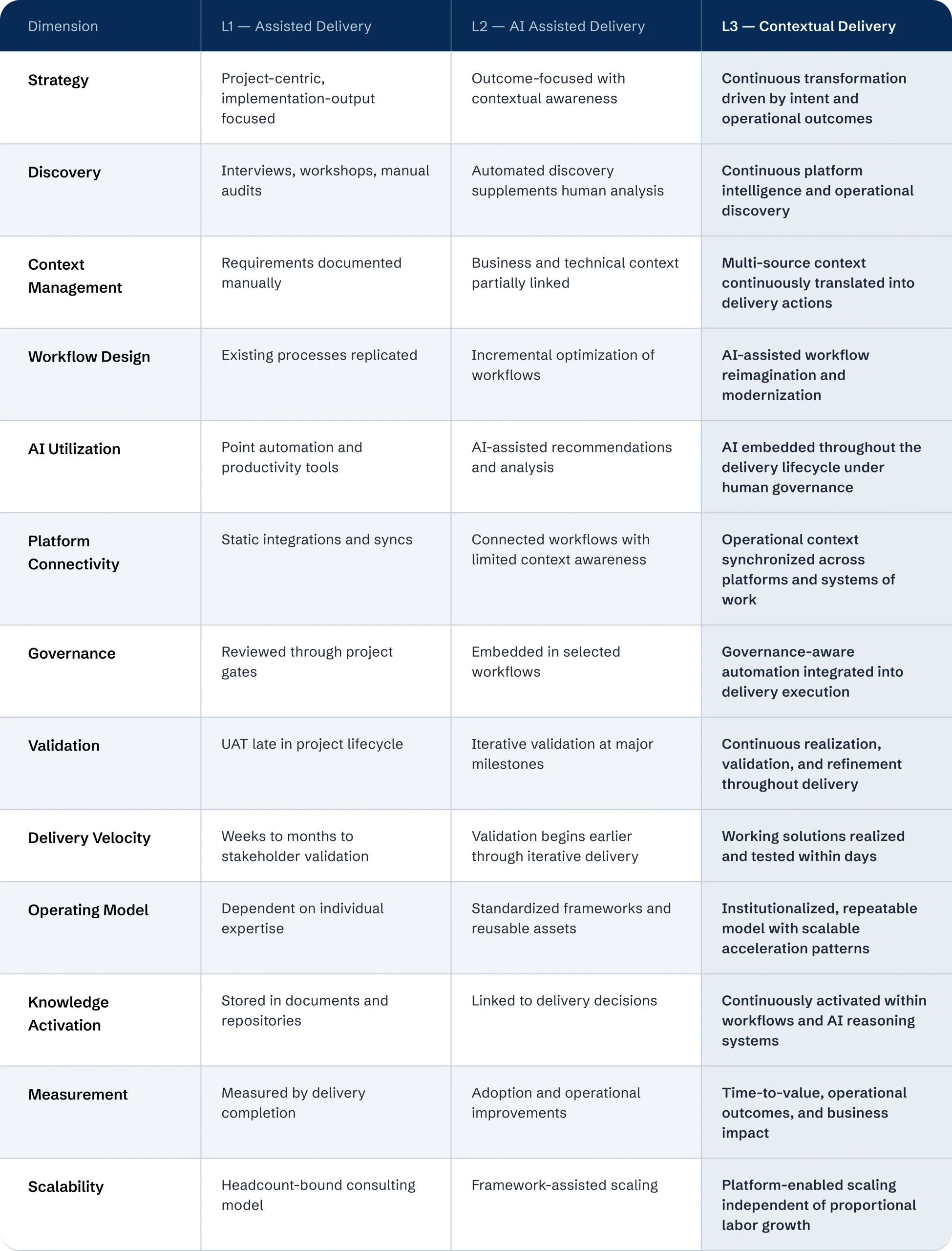

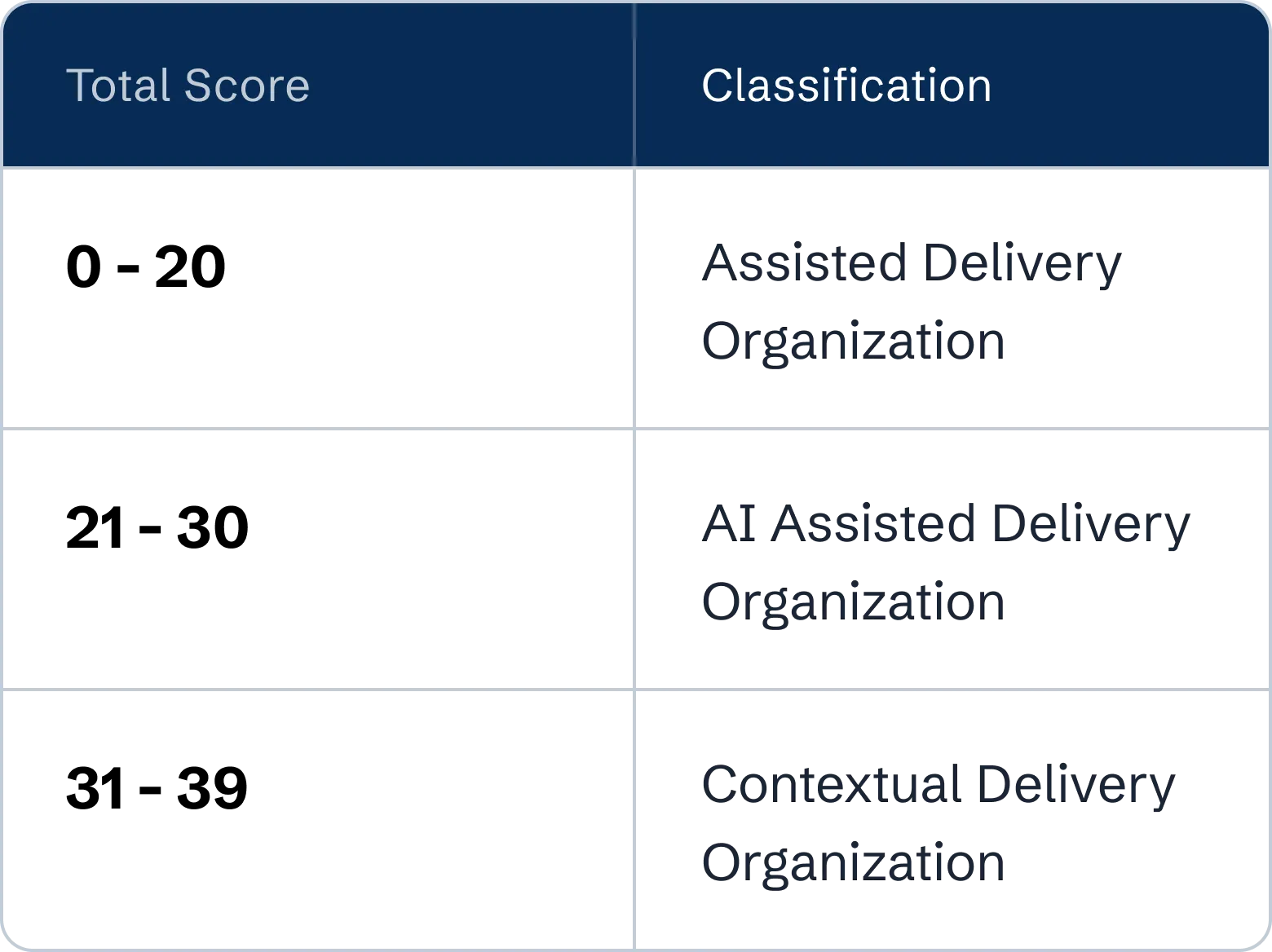
Contextual Delivery maturity is not a destination, it is a delivery posture that organizations develop progressively as their context infrastructure, AI capabilities, and operating models evolve.