You know your work.
We know Atlassian.

Trundl's contextual delivery engine supports fast innovation and fast changes. Give your Atlassian Admins a superpower to move at the speed of business and to built an Atlassian estate that fits your flow.

Big on Atlassian, but blind to its capabilities?

Your team has documented how work runs. In tickets, in runbooks, in retros, in Confluence pages no one reads. Six months in, the Jira instance does not match. The config was built from a template. The team works around it.

Businesses change.
Platforms are static.

Businesses change.
Platforms are static.

Marketing rebuilt their funnel, engineering moved to monthly releases, and HR added two new processes since your last deployment. The platform was configured for the operation that existed before. Today’s operation needs today’s configuration.

New Atlassian,
old habits.

New Atlassian,
old habits.

Atlassian shipped Rovo, integrated Loom, and made Dia available since your last renewal. Most customers find out months later. The Atlassian roadmap moves every quarter. Your usage of it could move with it.

Strategic admins,
tactical week.

Strategic admins,
tactical week.

Your Atlassian admins were hired to think about where the platform should go. Most of their week goes to access tickets and automation bugs. The strategic conversation never gets had because the queue never empties.

Adoption drifts
when nobody watches.

Adoption drifts when
nobody watches.

The platform went live, and the first year was great. Then Atlassian became less of a system of work as bad habits and workarounds took over.

Renewal happens
by inertia.

Renewal happens
by inertia.

Your current support contract gets renewed because changing partners is painful. Is your Atlassian stack actually making work better? It needs a conversation.

Solve problems, not configurations.

When you can deploy changes in minutes or hours, there’s real bandwidth and budget for solving big problems.
PARTNERSHIP

Business problems on the agenda.

Conversations focus on what isn’t working in the business, not what field needs changing. We bring deep Atlassian expertise to the operational challenges your team faces.
RAPID EXPERIMENTS

Workflow ideas tested between Tuesday and Friday.

“What if we tried this?” is no longer a four-week project. It is a Tuesday afternoon. Configuration changes ship in hours, so experimentation stays cheap. Successful ones compound.
ADOPTION DRIVEN

Adoption past the implementation.

Adoption is not a deployment metric. We monitor what teams are actually using, where they slip back to workarounds, and where new capabilities should land. Friction surfaces in the next review.

Speed makes real changes, real.
Trust makes it matter.

Two engines run alongside each other. Rapid Deploy ships Atlassian in hours. Trundl’s people drive trust for years.

Talk today.
Test tomorrow.

Anything that touches platform configuration ships within hours. Workflow tweaks, permission updates, automations, and request type changes go live the day they’re requested. Your admins stop being a ticket queue and become strategic again.

Experiment
without risk.

A team brings an idea on Tuesday. We prototype it the same week, your team validates it on Thursday, and the successful ones go to production by Friday. Experiments stop being projects.

Focus on
outcomes.

Trundl’s delivery model puts the smartest people in the room on the big problems. We run strategic reviews, watch KPIs, and account for real value.

Talk today. Test tomorrow.

Anything that touches platform configuration ships within hours. Workflow tweaks, permission updates, automations, and request type changes go live the day they’re requested. Your admins stop being a ticket queue and become strategic again.

Experiment without risk.

A team brings an idea on Tuesday. We prototype it the same week, your team validates it on Thursday, and the successful ones go to production by Friday. Experiments stop being projects.

Focus on outcomes.

Trundl’s delivery model puts the smartest people in the room on the big problems. We run strategic reviews, watch KPIs, and account for real value.
When configuration takes hours instead of weeks, the relationship can finally focus on what matters: whether the platform is making your business better.
Manohar Goli, CTO, Trundl.

Accountable for transformation, and your leaders.

Your CIO wants to know what we do, and how it impacts the outcomes expected from Trundl from start to finish.

Q1

The first strategic review runs with your executive sponsor. The annual roadmap gets shipped and the adoption baseline gets measured. Workflow experiments ship to production inside the quarter.

Q2

New teams get onboarded inside the engagement. Rovo agents ship and adoption gets measured, not assumed.

Q3

Confluence gets reorganized after the search-friction patterns surfaced. ESM teams land inside the engagement. The mid-year executive review runs with the CIO on the platform's business outcomes.

Q4

The annual platform health review runs, and the renewal conversation gets tied to documented outcomes. The roadmap for year two ships. New Atlassian releases from the year get evaluated and adopted where they fit.

Forecastable, on every engagement.

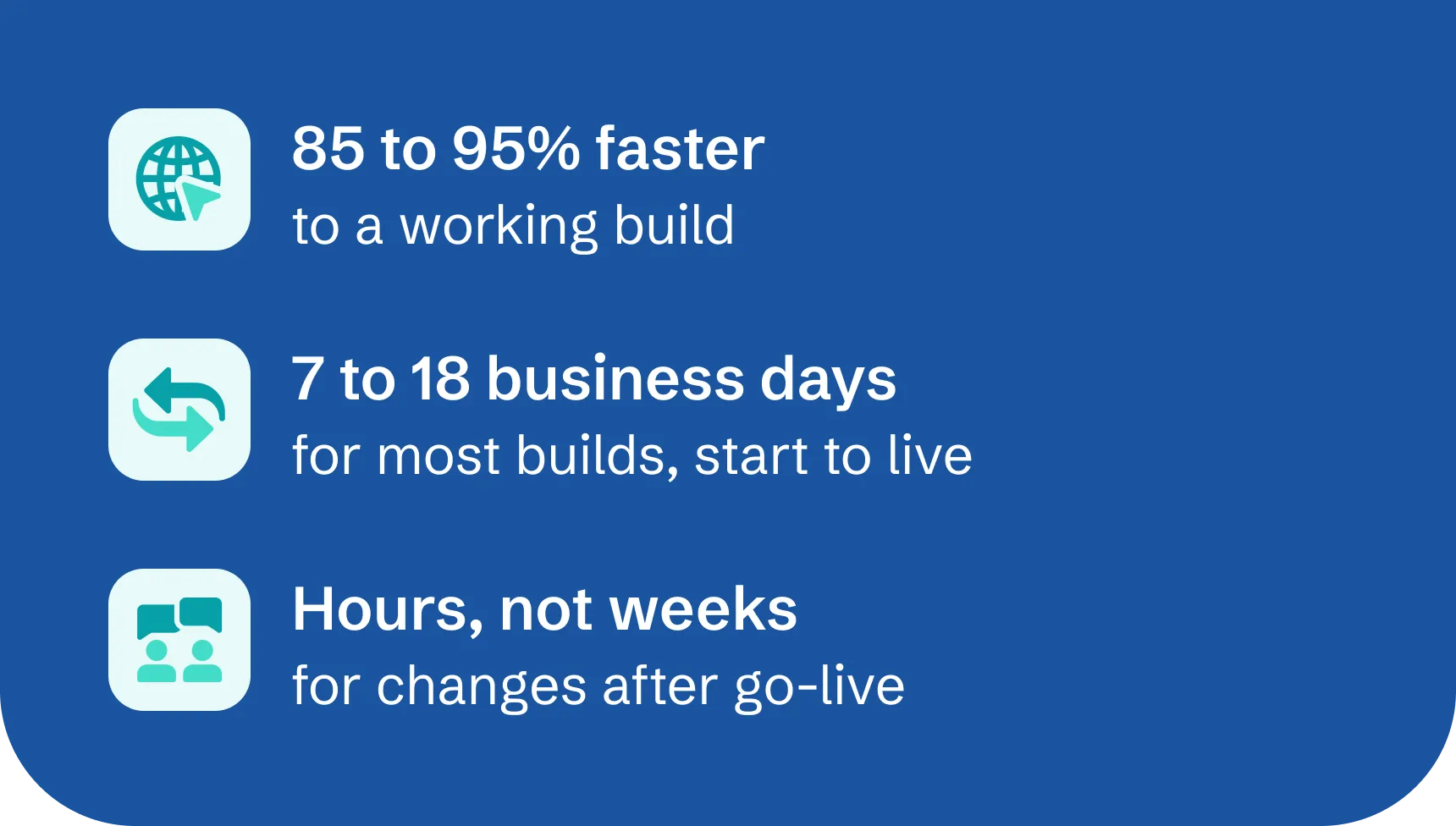
Hours, not weeks configuration changes

95%+ continue past year one
7 to 18 changes tested and live

Quarterly rhythm. Continuous evolution.

Fixed annual scope, quarterly review milestones, monthly rate, variable tiers. The rhythm matters as much as the work.

What's in the cadence

Quarterly strategic reviews with you and your executive sponsor. Bi-weekly syncs between your admin team and ours. Recommendations come to you, not the other way around.

Shipped in hours, reviewed quarterly

We get paid for what the platform investment delivers, not for the time we spend delivering it. That is how we keep the work honest, and how our customers keep their dates.

What you operate after

The old delivery model was fine for the platform of 2019. It is not enough for the platform of 2026. We built ACD because the alternative was watching customers settle.

A conversation,
not a quote.

Book thirty minutes with the practice lead. Walk us through where you want your Atlassian platform to be in six months and what is keeping it from getting there. We come back inside the week with a proposed engagement plan, scoped to your engagement year and a monthly rate, variable tiers.

Service spotlight.

Build working Rovo agents with your team in three weeks. Trundl pairs an expert in the Teamwork Graph with your team. You leave with working agents and the capability to build more.

Latest from Trundl.

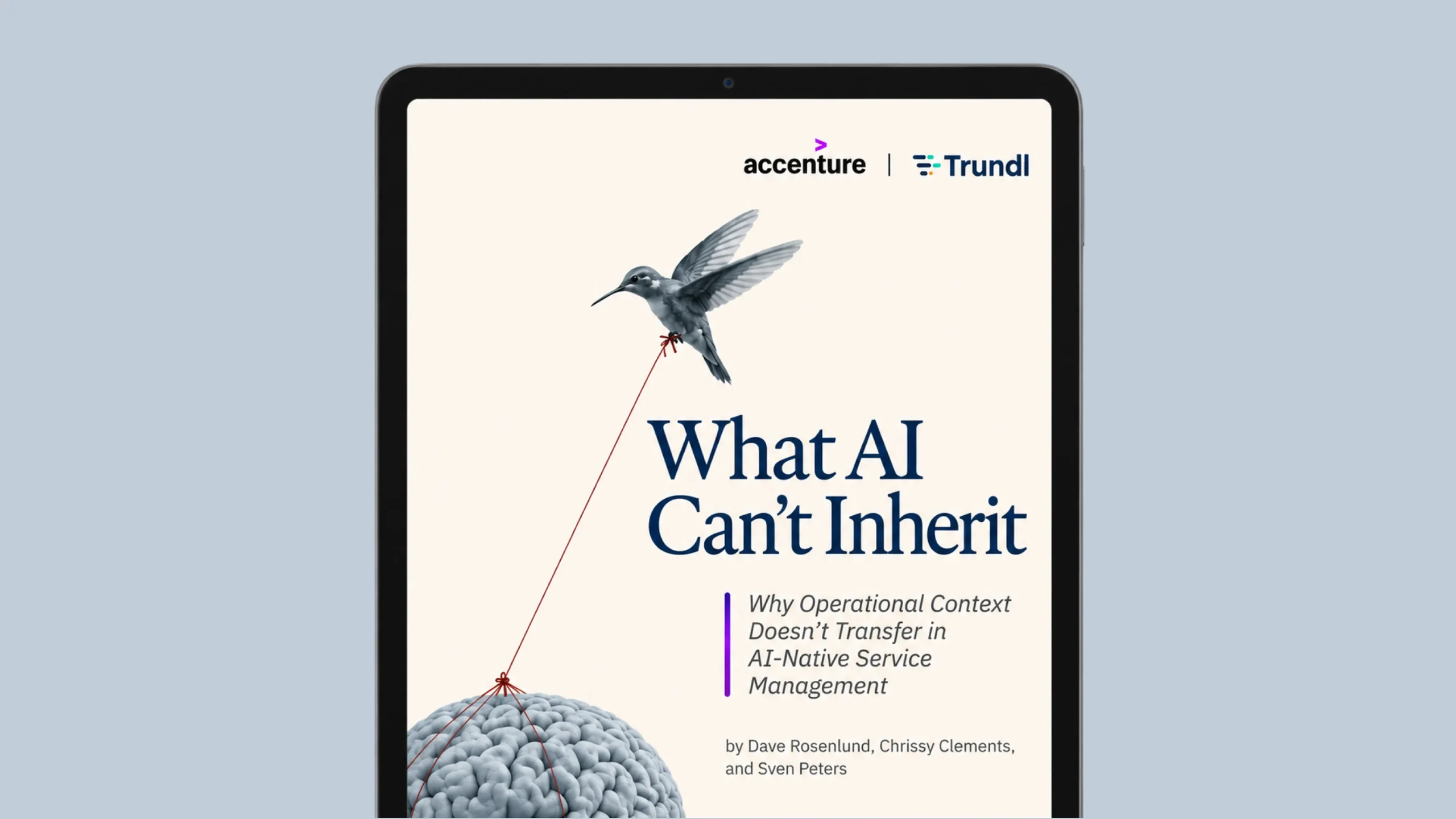
The Accelerated Contextual Delivery whitepaper.
The definitive guide to Accelerated Contextual Delivery.
The Toshiba story.
100 users and 8 teams off Smartsheet, with a working instance in a day.
Customer stories.
Engagements in their fourth year, across healthcare, finance, and manufacturing.

Common questions.

How is Trundl's Managed Services different from the support tiers Atlassian, monday.com, or Microsoft already provide?
Platform-level support from Atlassian, monday.com, or Microsoft handles high-impact issues, the P0 and P1 tier. Trundl’s Managed Services supports your unique configuration and integrations within your specific SaaS tool stack, hands-on, with best practices built around your actual way of working. Trundl’s team works alongside your administrators on a regular, ongoing basis rather than only when something breaks.
It’s possible, but Trundl doesn’t recommend it. Every Managed Services customer keeps at least one tool administrator, even if that person isn’t fully dedicated to the role. This is a partnership: Trundl participates in strategic discussions, and schedules and leads status meetings where priorities and backlogs get addressed. The more access and context your team shares, the more Trundl can help.
Managed Services contracts include a 12-month minimum, with room for mid-contract changes if budget or workload shifts. Monthly hours typically range from 20 to 160 hours a month, and the arrangement is built to stay flexible and adaptable at the pace of your business rather than locking in a fixed scope for a year.
Managed Services fits IT teams with a limited budget who still need transformational work done on their collaboration tooling, and teams that want improvements added iteratively, with a real focus on change management and strategic outcomes rather than a one-time project that ends at handoff.
Trundl supports Atlassian’s system of work, including Jira, monday.com’s Work OS, and Microsoft 365 tools including SharePoint, OneDrive, and Teams. This page covers the Atlassian side specifically; Microsoft Managed Services is a separate practice and page with its own team.
Where a one-time deployment uses Rapid Deploy to build an environment from scratch, Managed Services uses the same engine differently: to rapidly prototype and validate new workflows or integrations as they come up during the life of the relationship, so a proposed change can be tested before it’s committed to production.
Discovery-style review is part of how Managed Services starts. Trundl surfaces hidden dependencies, overlapping permission schemes, synchronization issues, legacy links, and data exposures that have accumulated over time, then works with your admins to prioritize what gets cleaned up first versus what gets monitored.
Yes. Trundl can extend trial licenses, offer flexible payment options, co-term renewals across products, and flag relevant product notifications, using the licensing benefits available to Atlassian, monday.com, Microsoft, and AWS partners.