
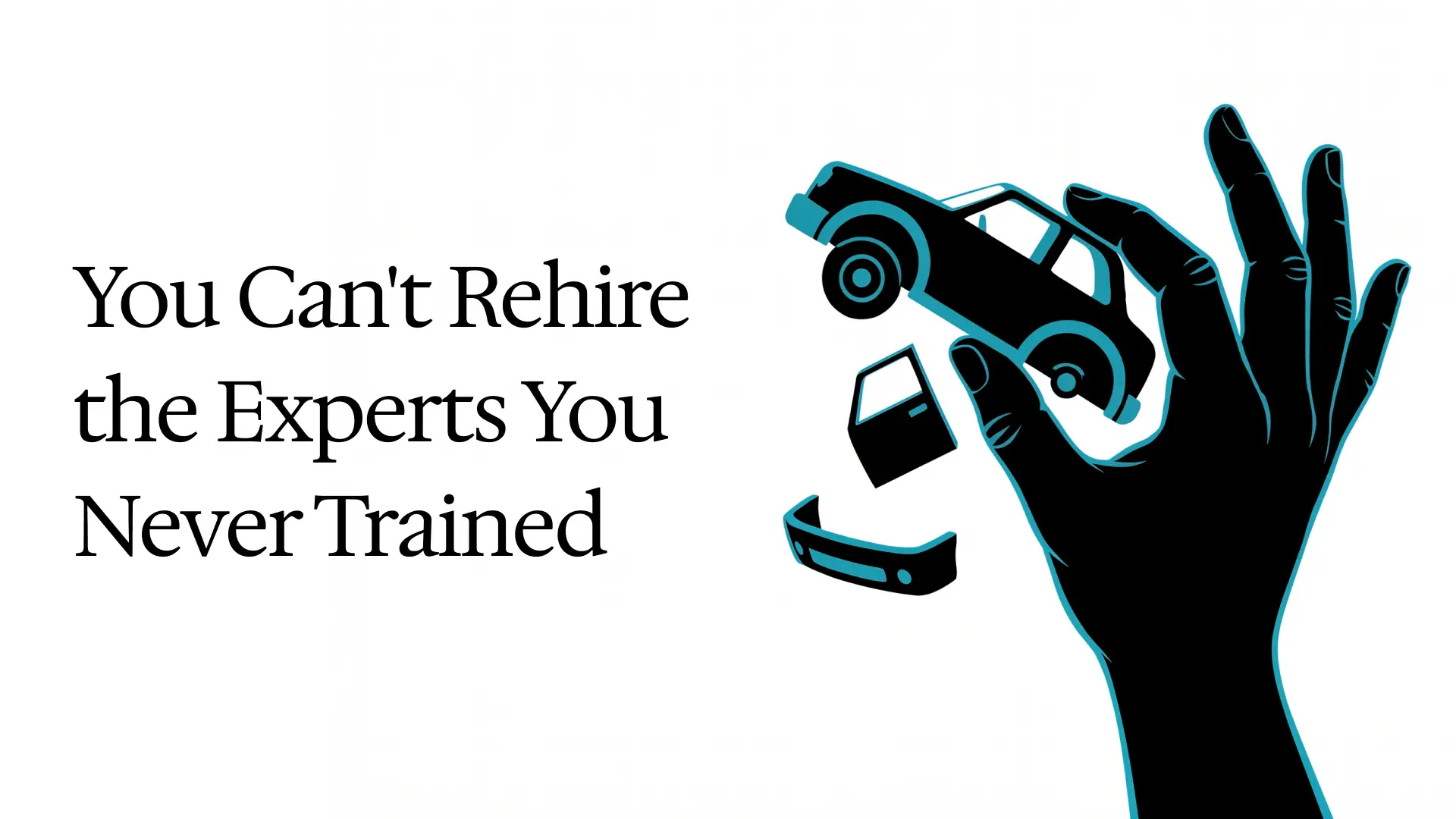
Ford brought back 350 veterans this year. The path that made them is exactly what AI is quietly automating.
Over the past few months, the headlines have been hard to miss. Ford rehired hundreds of veteran engineers after its AI-based quality systems fell short. Klarna started hiring human support agents again after replacing them with a chatbot. Company after company, quietly bringing people back.
The easy read is “AI failed, humans win.”
I think that misses what happened. And what it’s setting up. The rehiring wave is a response to rushed adoption.
In fact, a while back, I argued that AI would change the shape of work more than it would erase it, and that it would move at the pace organizations can absorb it, not the pace of the technology.
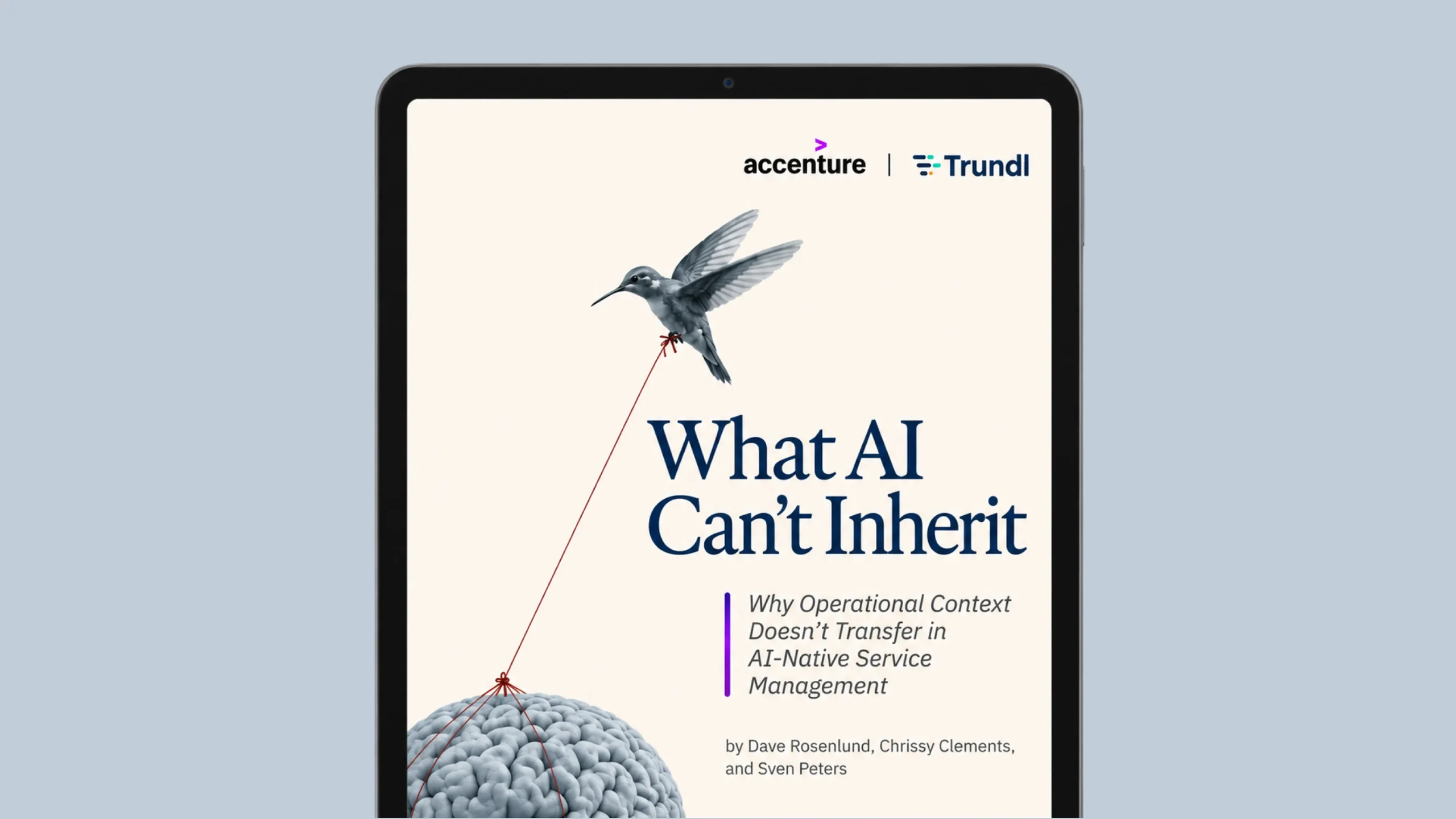
AI works from what an organization has captured and encoded, and a lot of what makes an expert good was never captured. I’ve called that the unwritten layer, and I won’t rehash it here.
It isn’t that companies rehired people. It’s which people.
They rehired seniors. Ford didn’t bring back a random cross-section. It brought back veterans, the engineers who could catch the failure that wasn’t in any spec because they’d seen it before. At the same time, and far less visibly, the entry level was thinning. Stanford researchers found early-career workers in the most AI-exposed jobs have seen a 16% relative decline in employment, while their senior colleagues held steady.
AI isn’t deleting the human work. It’s sorting it. The documented, repetitive tasks go first, and those are the ones junior people cut their teeth on. Senior work is getting compressed too, but the scarce part, the judgment and context nobody wrote down, still sits at the senior end. So, the ladder is thinning fastest at the bottom.
That reads like good news if you’re already experienced. The trouble is how anyone gets there.
Because those junior tasks were never just junior tasks. They were apprenticeships. Doing the boring, documented work is how people used to absorb the parts that aren’t documented. You learned which “closed” ticket wasn’t really closed, which change would take down production on a Friday, which customer was about to churn, by handling the small stuff, getting some of it wrong, and living with what happened. The unwritten layer isn’t something you’re born with. It’s something you accumulate on the lower rungs.
Now we’re automating the lower rungs.
We’re quietly automating the very path that produced the judgment companies just paid to bring back.
You can rehire the last generation of experts. Ford just did. What you can’t do is rehire the next generation, because the training ground where they’d have been made is being automated. The veterans Ford called back spent decades earning what they know. If that path no longer exists, this year’s shortage stops being a blip and becomes structural.
Sven Peters, Atlassian’s AI evangelist, made a related argument months ago, from a different angle. His point was that juniors are the AI-natives you’ll need most, and that without juniors there are no seniors. He’s right. I’d add the part that worries me more: even if you keep hiring juniors, AI is quietly automating the low-stakes work where they used to learn the judgment.
There’s a hopeful counter worth a hearing. Research shows AI helps novices the most, spreading the know-how of top performers to everyone else. Maybe AI becomes the new apprenticeship, through simulation, agent coaching, replaying old cases. It’s possible. But none of that happens on its own. The old apprenticeship was automatic: hire juniors, hand them the small work, and let experience accumulate as a byproduct. The new one has to be built on purpose, and most companies are dismantling the old system without designing the new one. The question isn’t whether AI can teach. It’s whether anyone is deliberately rebuilding how expertise gets made, or just assuming it still will.
AI can take the part of the job that was written down. The rest was always learned by doing the first part. Cut the first part, and you don’t just lose some junior headcount. You lose the factory that makes seniors.
AI tools helped me research, draft, and refine this piece. The ideas, the structure, and the thinking are mine.
Originally published on LinkedIn.