Contextual Delivery

The Time-to-Value Engine for Enterprise SaaS

The Industry Blueprint for AI-Led Enterprise Solution Delivery in the SaaS Industry

Patrick Howell

Co-CEO, Trundl

This whitepaper is intended for enterprise IT leaders, C-suite executives, SaaS MSPs, and technology delivery practitioners. The views expressed represent Trundl’s analysis of the enterprise delivery landscape and the emerging Contextual Delivery model.

About Trundl

Trundl is a global work transformation company headquartered in San Jose, California, operating across the United States, Canada, and India. An Atlassian Platinum Enterprise Solutions Partner, Trundl is also partnered with Microsoft and monday.com.
Trundl pioneers enterprise SaaS delivery using AI, proprietary tooling, and human-centric approaches, delivering deployments, migrations, and operational transformations at speed. Trundl’s Rapid Deploy represents its first-to-market implementation of the Contextual Delivery model.

About the Author

Patrick Howell is Co-CEO and Co-Founder of Trundl, Inc. He leads go-to-market strategy and operations for Trundl, which includes multiple regions and platform verticals.

Along with his fellow co-founders Jitesh and Manohar, Patrick has led Trundl from its beginnings as boutique 4-person IT consultancy to an enterprise work transformation company with 130+ employees. Previous to Trundl, Patrick spent a decade in marketing, primarily at Dell Technologies. Patrick lives in Cleveland, Ohio.
CONTENTS
    EXECUTIVE SUMMARY

    Enterprise Delivery Is Entering a New Phase

    Enterprise organizations are investing heavily in cloud platforms, AI technologies, and digital transformation initiatives. Yet the delivery models used to implement and evolve these systems remain largely unchanged.
    Most enterprise software deployments, migrations, and modernization programs still rely on labor-intensive discovery, manual configuration, fragmented stakeholder input, and lengthy implementation cycles that struggle to keep pace with business change.
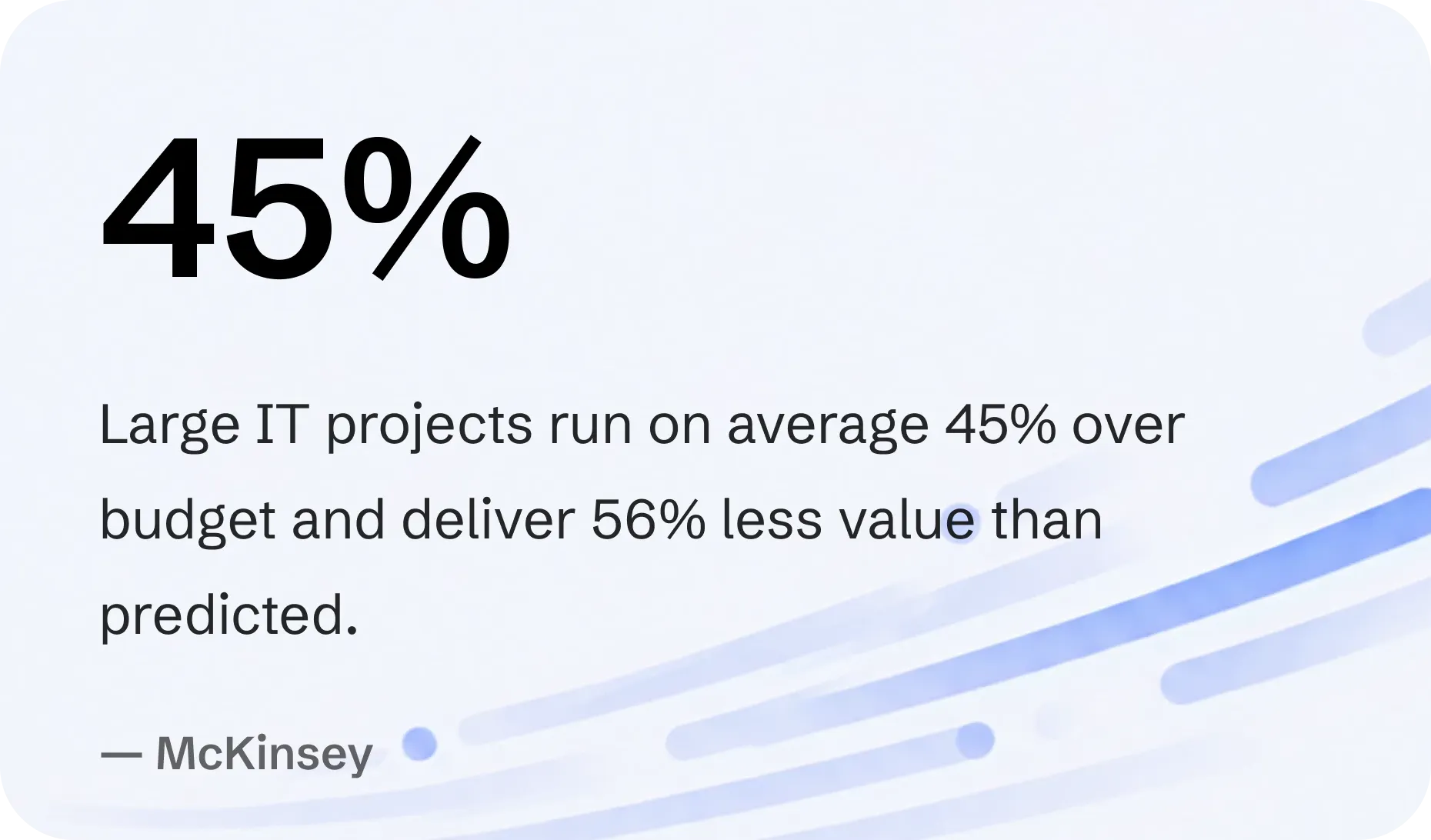
    Large-scale technology changes and enhancements routinely exceed budgets, underdeliver expected value, and require months of effort before stakeholders can validate outcomes. As enterprise environments become increasingly distributed, AI-enabled, and governed by expanding compliance requirements, this gap continues to widen.
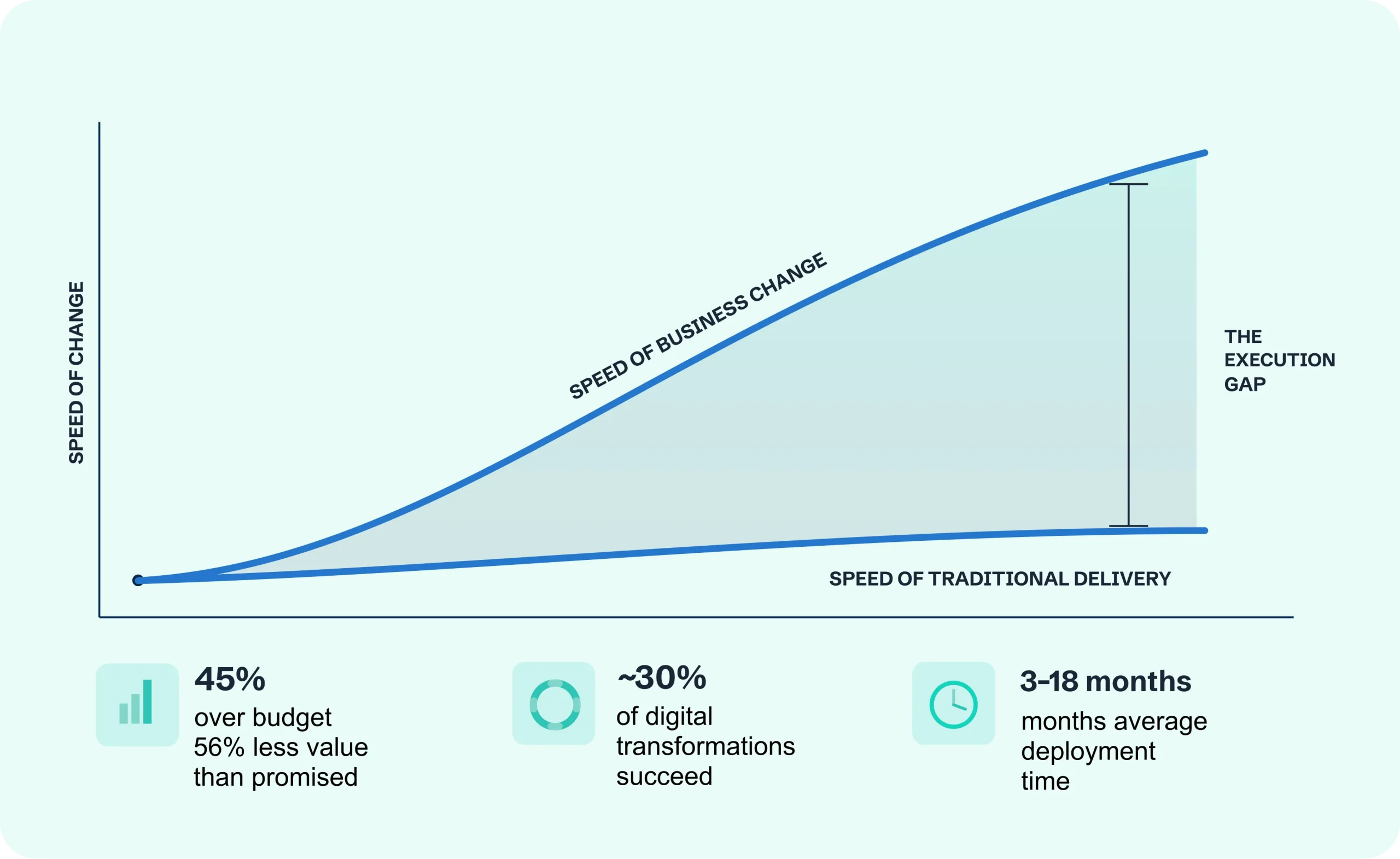
    The result is a growing execution gap between the speed at which organizations must adapt and the speed at which traditional delivery approaches can respond.

    What This Whitepaper Introduces

    Contextual Delivery is an emerging enterprise delivery model designed for the AI era. Contextual Delivery shifts solution delivery from a process centered on manual interpretation and implementation toward one driven by operational context, intelligent orchestration, governance-aware automation, and continuous validation.
    Rather than treating application deployments, migrations, integrations, and modernization initiatives as isolated projects, Contextual Delivery enables organizations to continuously translate business intent into operational systems of work.

    The Seven Contextual Delivery Capabilities

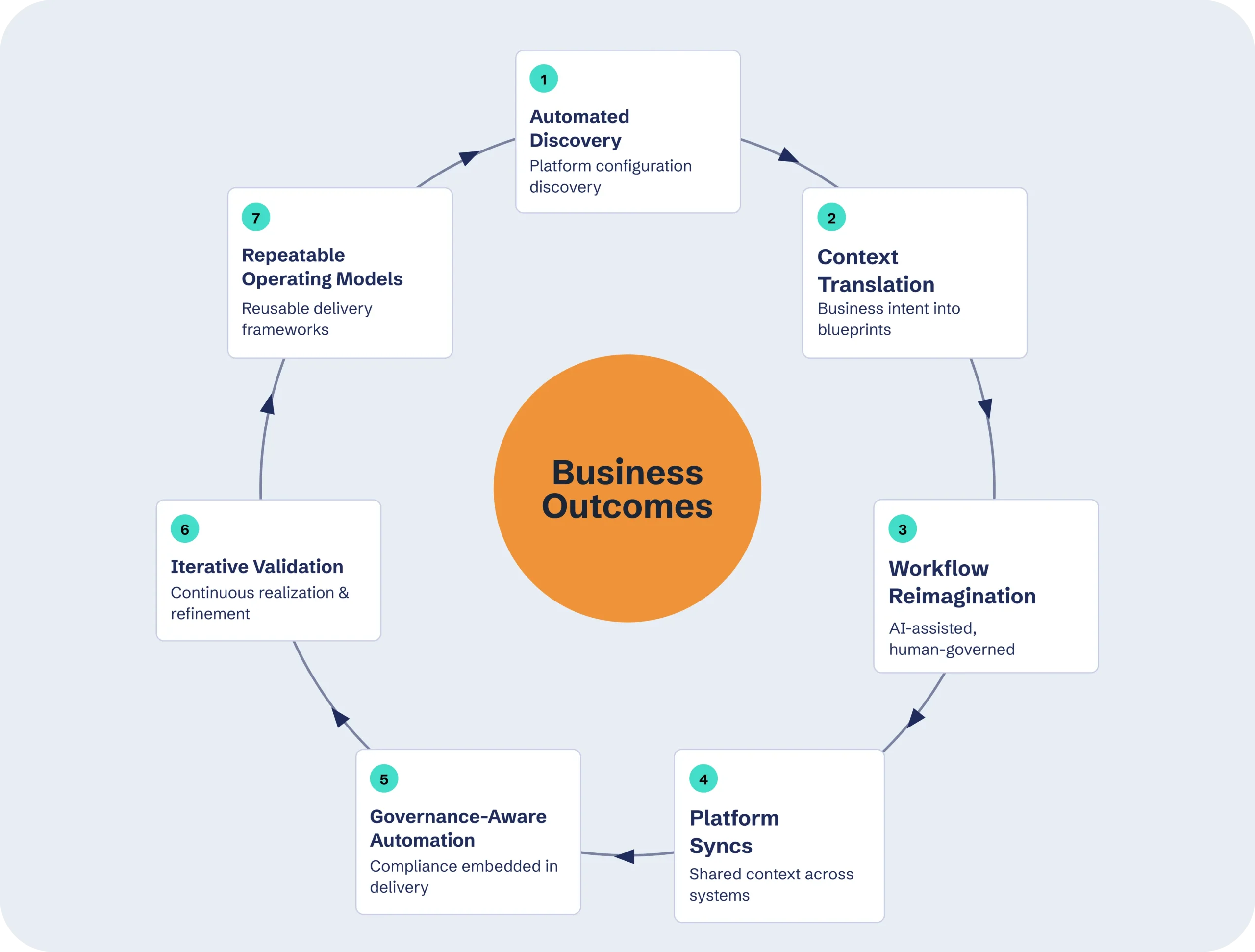
    Contextual Delivery platforms combine automated platform discovery, context translation, AI-assisted workflow reimagination, cross-platform synchronization, embedded governance, iterative validation, and repeatable operating models into a unified delivery capability. Together, these capabilities enable organizations to accelerate implementation timelines, reduce delivery risk, improve governance outcomes, and continuously adapt operational systems as business priorities evolve.
    The emergence of knowledge graphs, context-aware AI systems, agentic workflows, and increasingly connected SaaS ecosystems has created the technical foundation required for this shift.
    Key Argument
    Organizations that can operationalize business context and activate it across delivery workflows will be positioned to modernize faster, adopt AI more effectively, and scale transformation initiatives beyond the constraints of traditional labor-driven delivery models.
    In this model, delivery evolves from an effort-based service activity into an intelligence-driven capability that continuously accelerates enterprise transformation.

    This paper defines the principles, capabilities, maturity model, and business implications of Contextual Delivery. It argues that enterprise delivery is entering a new phase, one in which competitive advantage will increasingly depend on an organization’s ability to transform business intent into governed operational outcomes at speed.

    01

    The Enterprise Delivery Problem

    Understanding the market forces and structural failures that make a new delivery model necessary

    The Market Moment

    The global collaboration software market, spanning team communication and project coordination, is valued at $24 to $36 billion with a CAGR of 7% to 13%. Cloud-based solutions from vendors such as Microsoft, Atlassian, Salesforce, and Google are the primary growth drivers. The cloud segment is expected to capture nearly 72% of new platform adoptions in 2026.

    Enterprise Operating Conditions

    The market is experiencing a persistent shift toward remote and hybrid work models, AI integration, and a focus on employees facilitating real-time communication and project management.
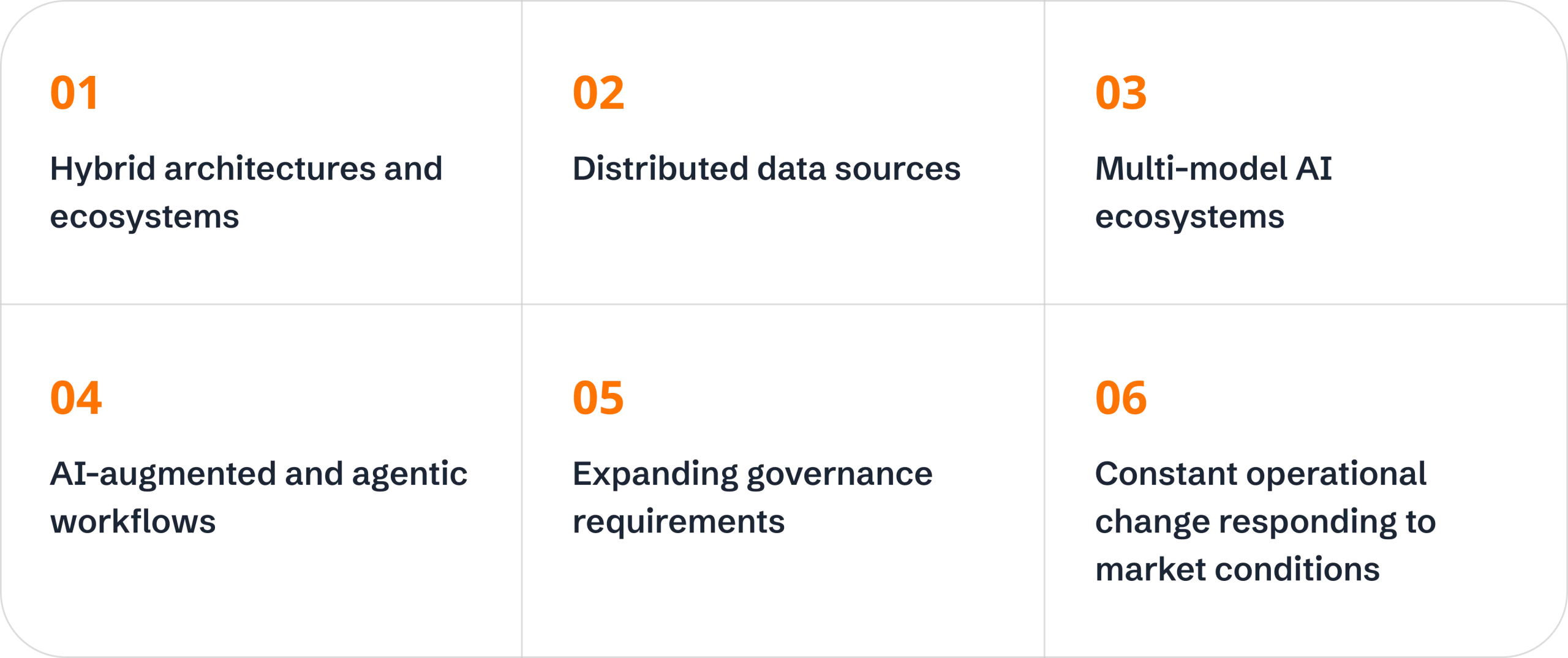
    Moreover, organizations today operate across increasingly complex environments composed of:

    With the need for AI-embedded tooling growing in evermore complex enterprise environments, organizations must rethink solution delivery.

    Where Traditional
    Delivery Breaks

    Traditional collaboration solution delivery rests on a flawed premise: that an organization understands its own environment well enough to design an implementation around workshop outputs. In practice, what gets documented reflects what stakeholders believe to be true, not what is operationally real or backed by data.
    The divergence is not intentional, it is an inefficiency that technology has not yet solved.
    Enterprise environments are simply too dynamic and too distributed for any team to hold complete awareness.

    The Configuration Drift Problem

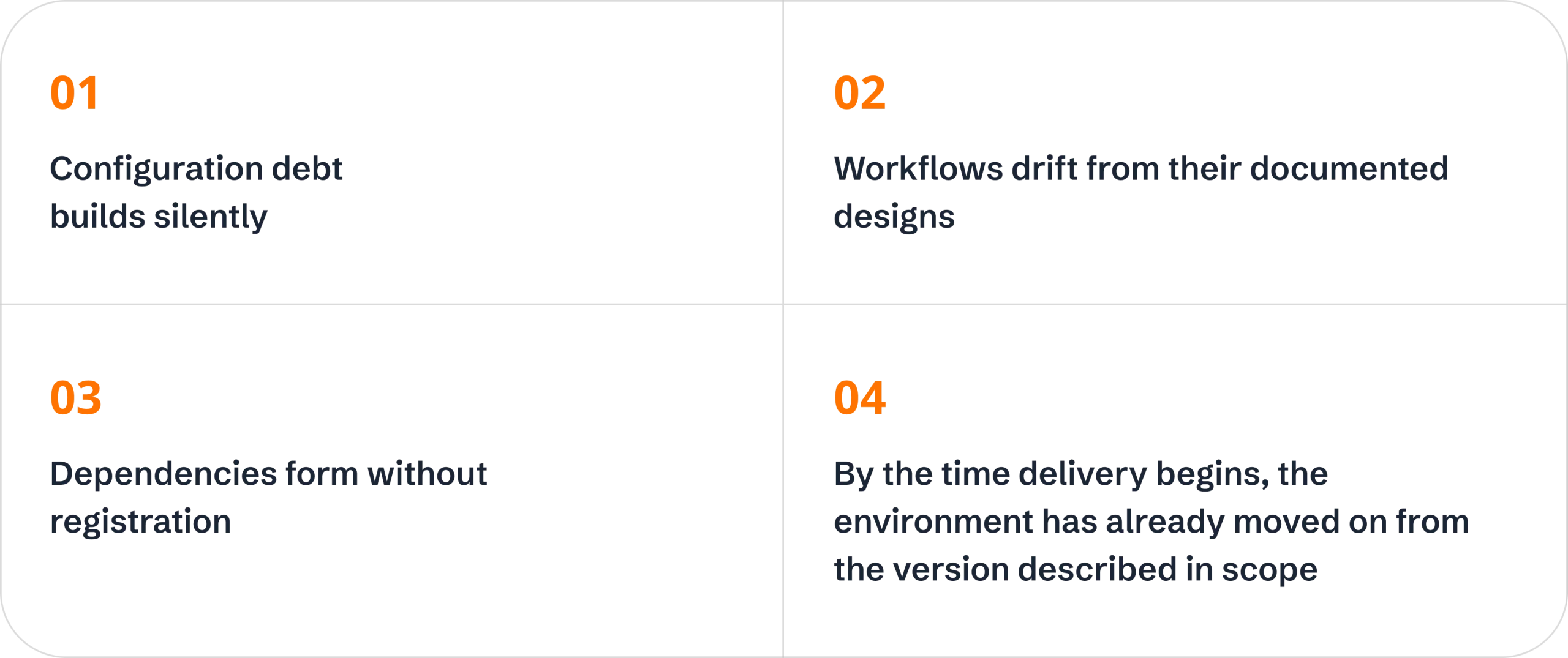
    Without continuous discovery and validation, four compounding failures accumulate:

    The Time-to-Value Problem

    For the companies deploying and administering these tools, or the SaaS MSPs implementing them, the traditional approaches to architecting and delivering collaboration solutions are a time-to-value problem.
    Time-and-materials consulting models depend heavily on gathering and translating business context. It is often human-centered, involving interpreting documents, capturing stakeholder tribal knowledge, and C-level directives. This is a practice across SaaS platforms. It is costly, slow, and creates a long adoption curve for end users. The industry-wide average for time to value for enterprise SaaS solutions is 3-18 months.

    Migration Tools Fall Short

    This is not limited to enterprise SaaS rollouts. Data migrations and tool consolidations suffer from the same inefficiencies.

    The data migration and tool consolidation market offers narrowly-focused, single-purpose tools, but they offer no role in solving for operational transformations using business context. They move data from one tool to another, adding significant time and cost to engagements. In total, these issues still persist in the age of AI.

    The Enterprise Gap

    The result is a growing enterprise gap between:

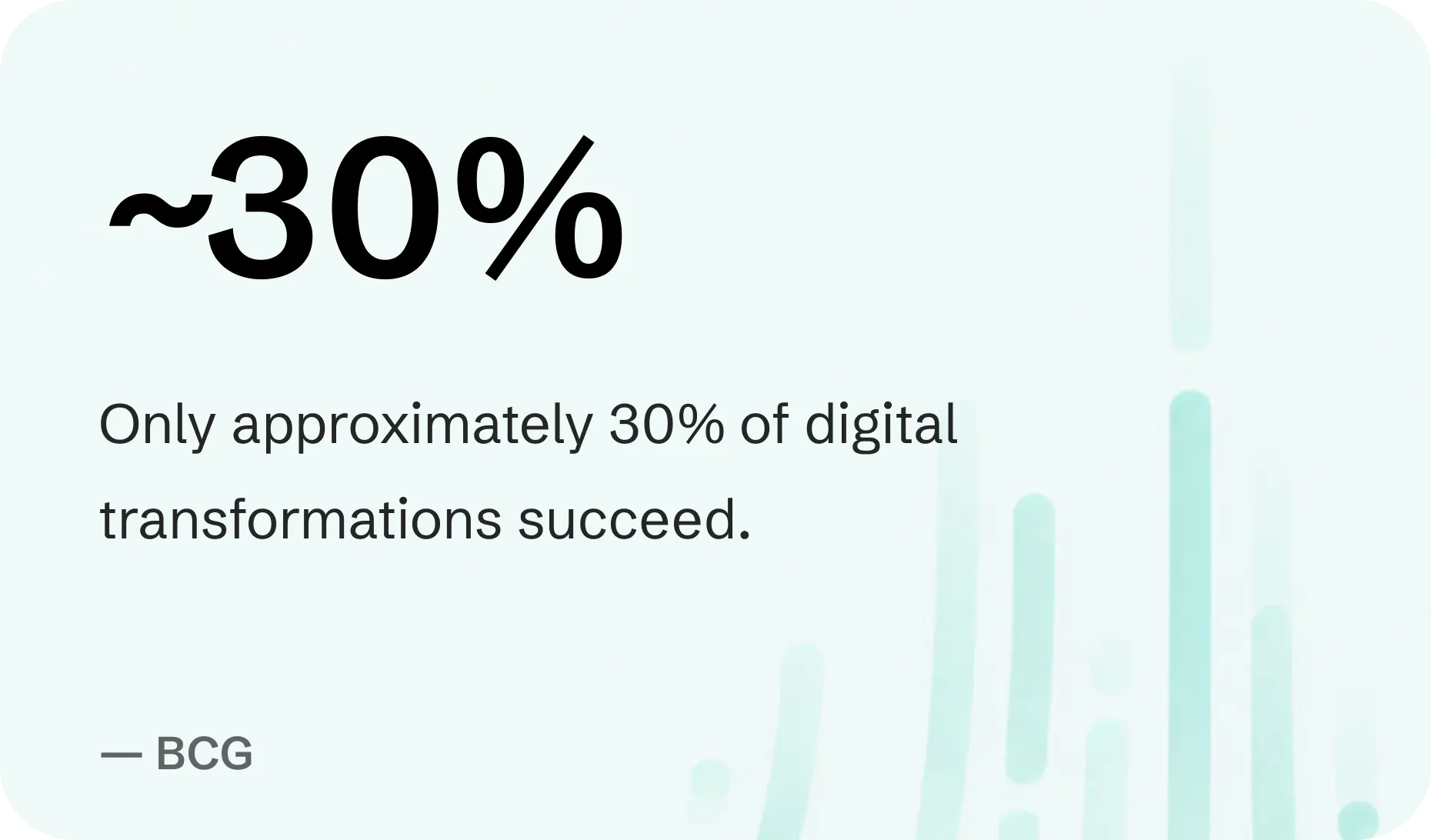
    Independent Benchmarks

    02

    Converging Forces for Change

    Six structural forces making a new delivery model both necessary and inevitable

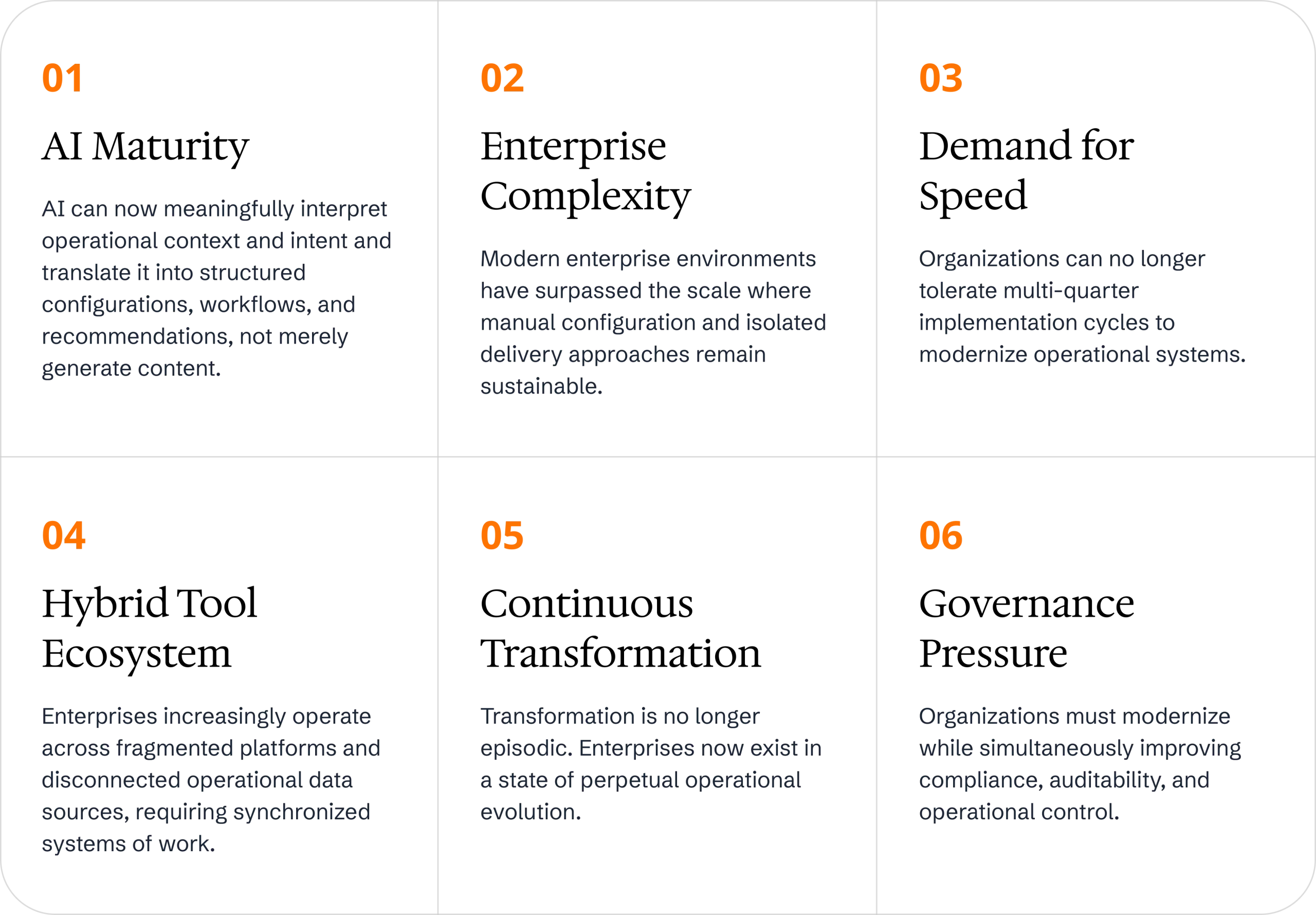
    Six Forces Reshaping Enterprise Delivery

    Several forces are converging to make changes to enterprise delivery both necessary and inevitable. No single force alone would be sufficient to displace the existing model. Together, they create conditions in which the old model can no longer scale.

    03

    The Context Infrastructure

    How knowledge graphs and context graphs create the technical foundation for AI-led delivery

    The Era of AI and Activating Business Context

    LLMs and AI business productivity platforms are beginning to open meaningful doors for enterprise delivery. Two architectural concepts are now widely available for enterprises to exploit.

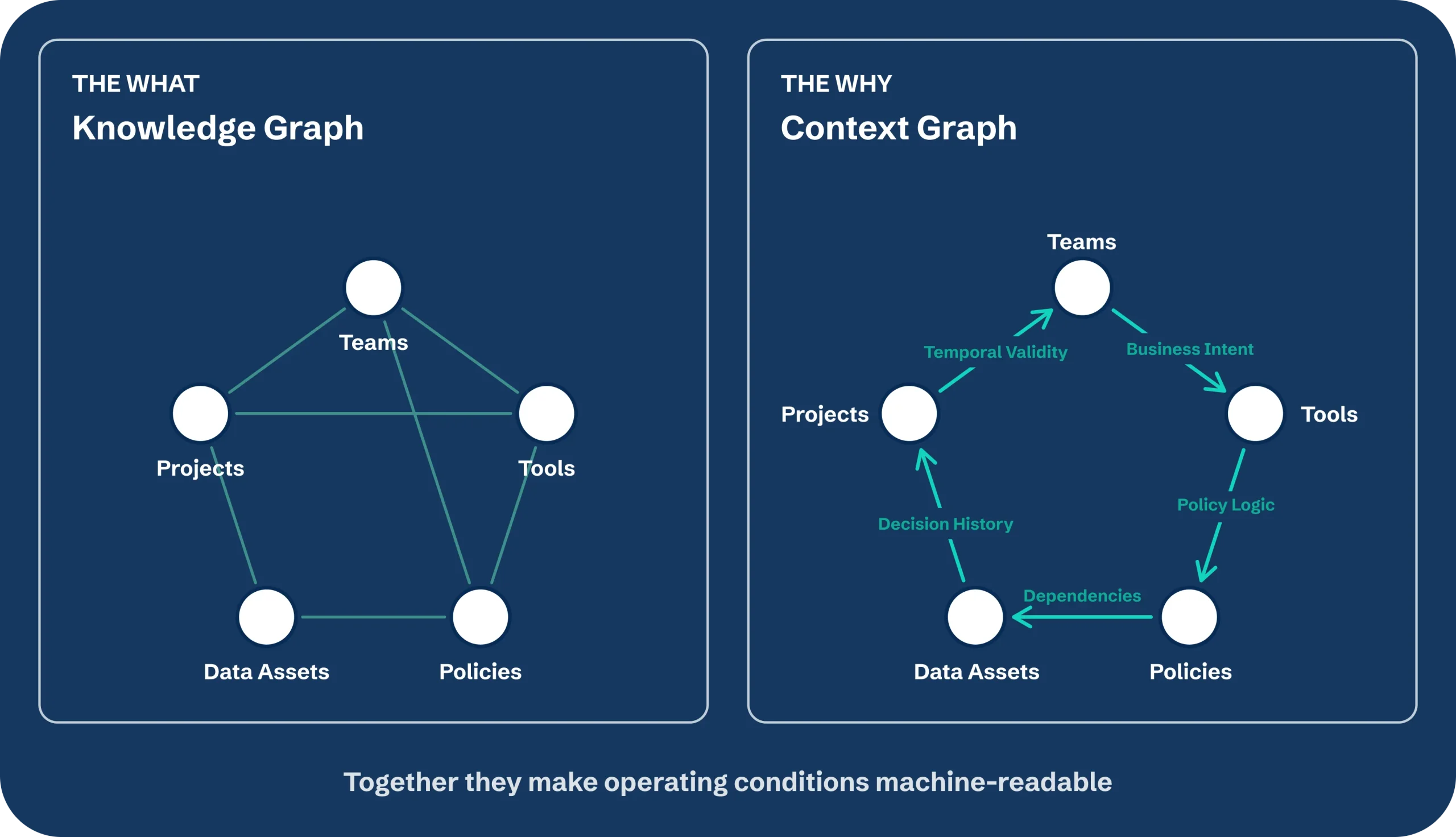
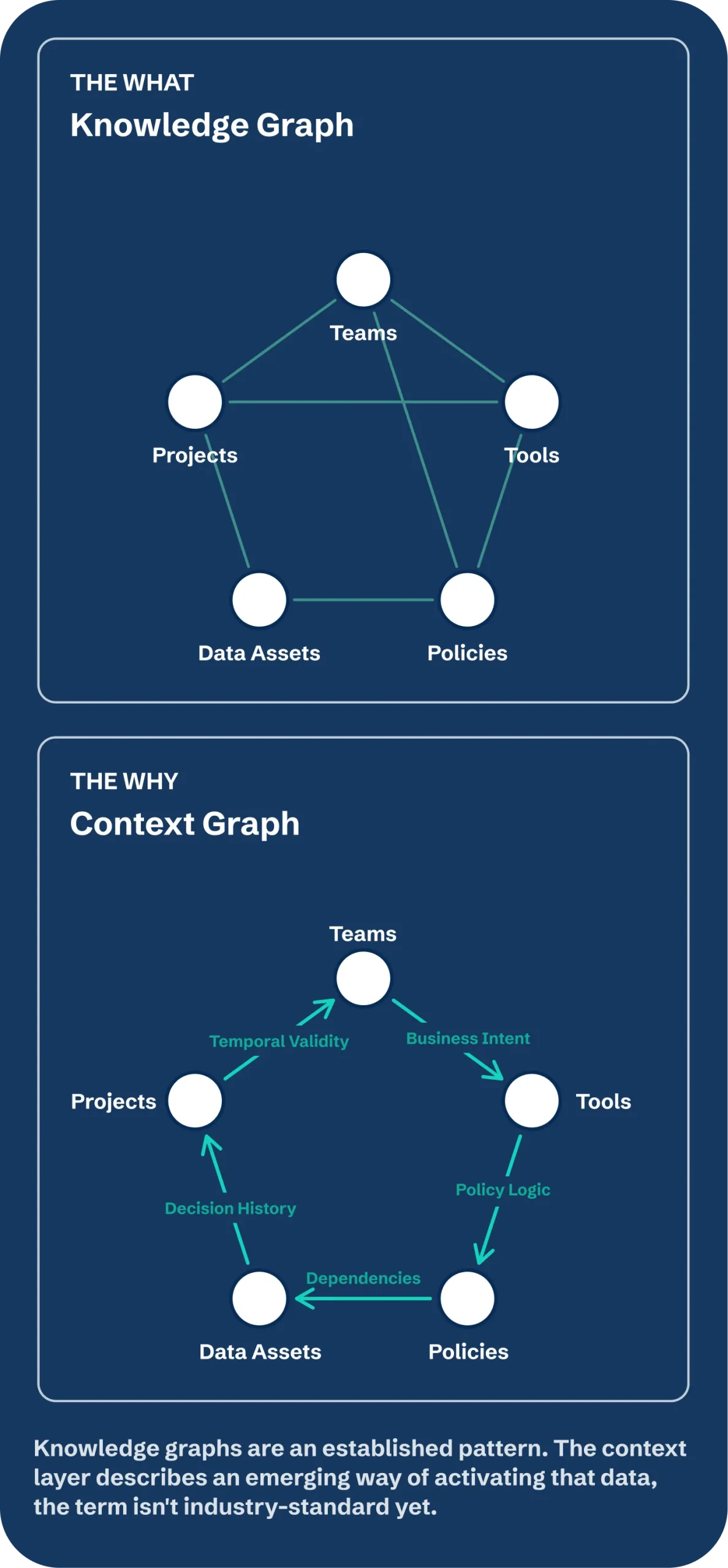
    The Knowledge Graph: The 'What' of Business

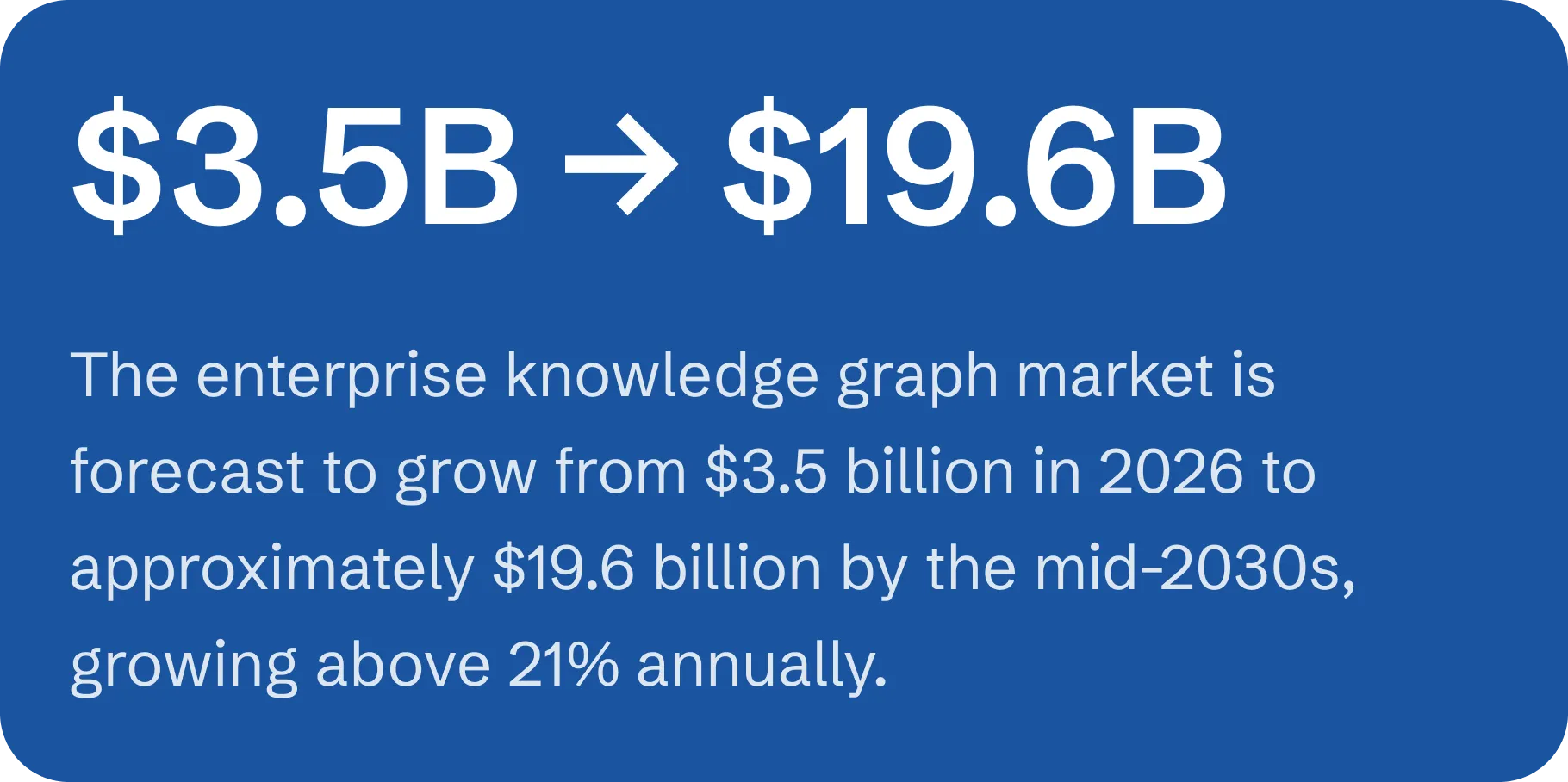
    A knowledge graph is a structured map of everything an enterprise knows: teams, projects, tools, policies, and data assets stored as connected entities and relationships rather than isolated records. It answers factual questions about what exists and what is connected. It allows AI to reason across fragmented systems instead of treating each one in isolation.

    The Context Graph: The 'Why' of Business

    A context graph extends the knowledge graph into decision infrastructure. Where a knowledge graph records what is connected, a context graph records how those connections should be used:
    The context graph is a living layer that grows every time a business process executes.

    Why is This Important for SaaS Delivery?

    Context and knowledge graphs open an opportunity, making operating conditions explicit and machine-readable rather than trapped in tribal knowledge or other silos. Moreover, there are well-established context-capturing solutions, such as Loom, Zoom, and Teams.

    The practical implication for delivery is direct: organizations with mature, connected context are structurally ready for delivery. Those with fragmented, undocumented environments must have that context built as part of their solution delivery.
    What's needed is a delivery model that accommodates both extremes.

    From Implementation to Context Orchestration

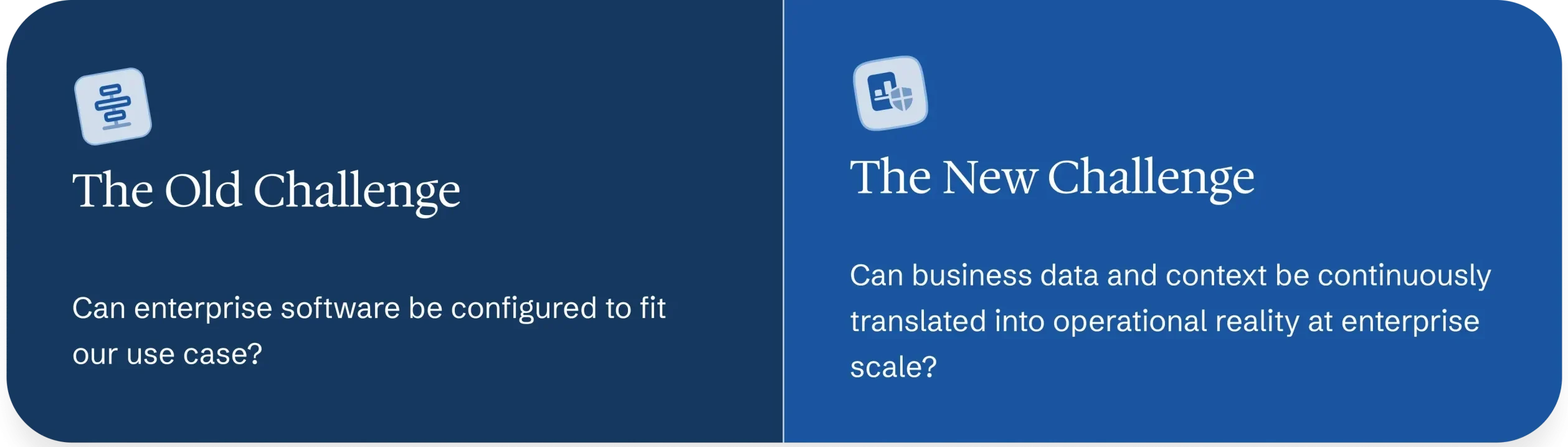
    Historically, enterprise delivery focused on implementing tools. In the AI era, competitive advantage comes from orchestrating data and business context across systems, teams, workflows, and decision-makers. The challenge has fundamentally shifted.
    Contextual Delivery address this challenge by making delivery an intelligent, iterative, context-driven process rather than a sequence of isolated, large implementation initiatives. This marks a transition:

    04

    The Contextual Delivery Platform Model

    Platform architecture, the seven core capabilities, and the principles that define Contextual Delivery as an enterprise-ready standard

    Defining Contextual Delivery Platforms

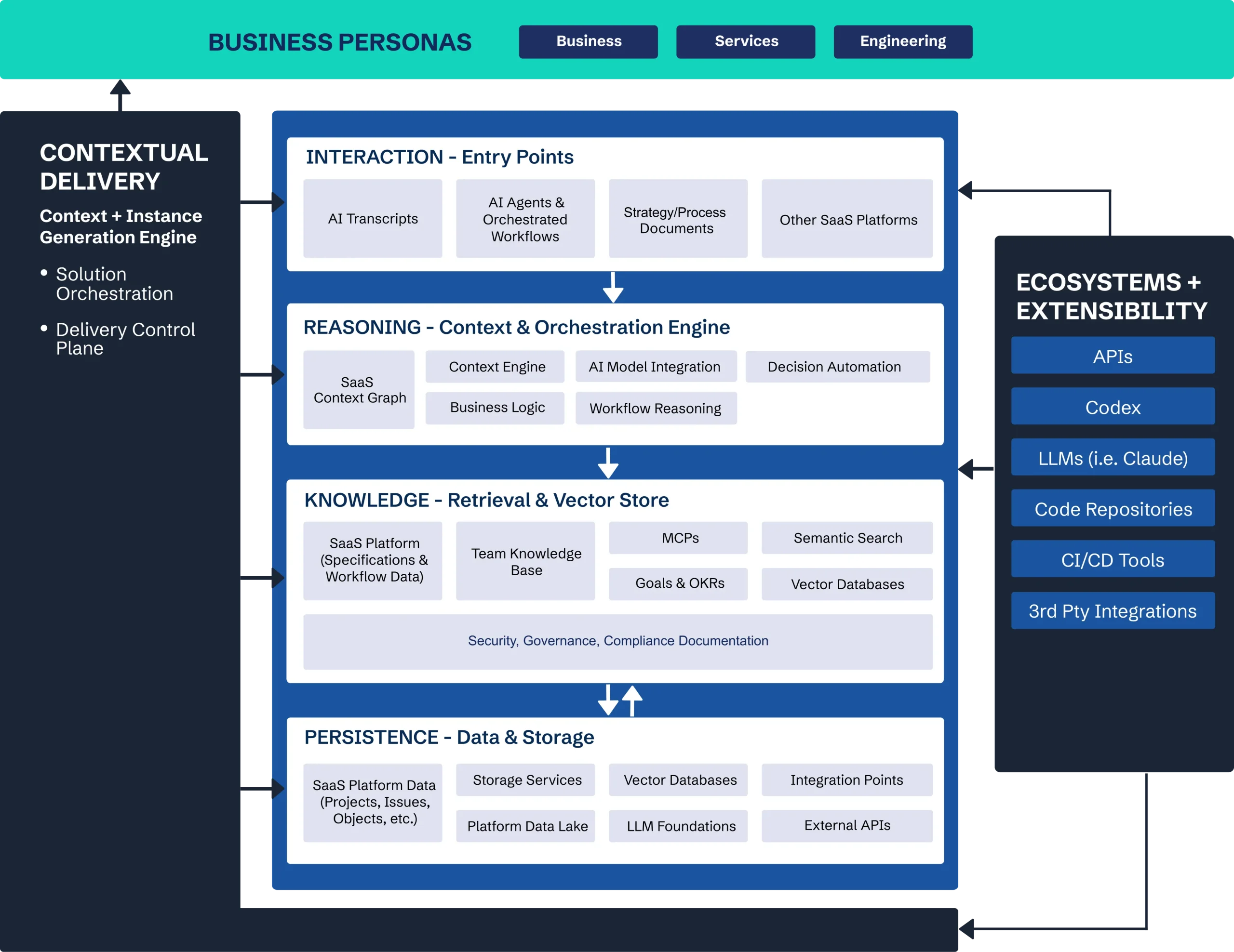
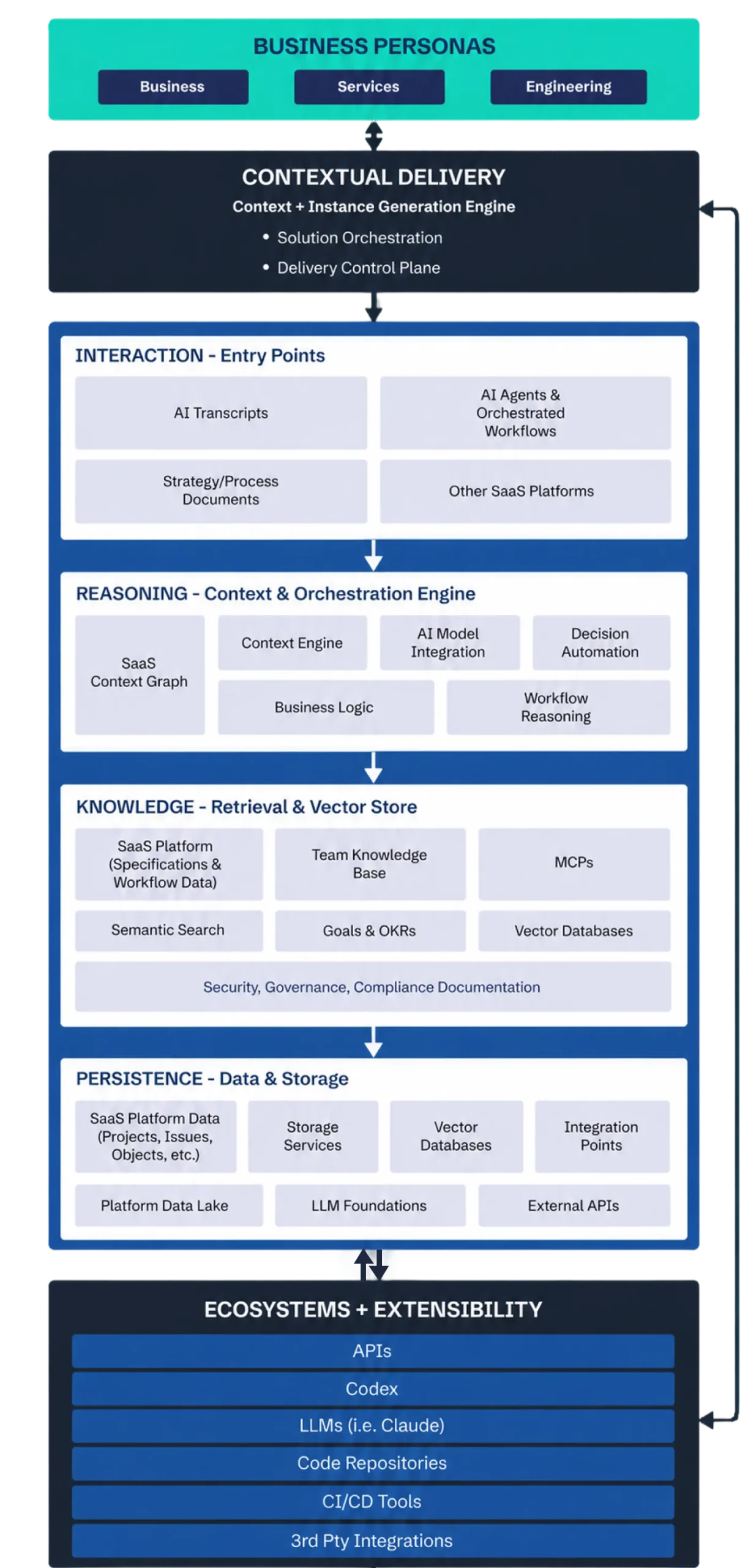
    Contextual Delivery platforms account for multiple layers of interaction, reasoning, knowledge, and data persistence. These layers, applied to any number of tech stack environments, allow Contextual Delivery platforms to solve traditional enterprise solution delivery inefficiencies.
    The below illustrates a standard technical architecture of a Contextual Delivery platform.

    Platform Architecture

    A standard Contextual Delivery platform operates across four layers: Interaction, Reasoning, Knowledge, and Persistence, serving three business personas (Business, Services, Engineering) and connecting outward to an extensibility ecosystem of APIs, LLMs, code repositories, CI/CD tools, and third-party integrations.

    The Seven Core Capabilities

    All Contextual Delivery platforms share seven capabilities that together constitute a unified enterprise delivery engine. These capabilities are not modular add-ons, they function as an integrated system, each one addressing a specific failure mode in traditional delivery.
    Gartner: Rethinking workflows with agentic AI from the ground up is the ideal path to successful implementation. Bolting agents onto legacy systems can be technically complex, often disrupting workflows and requiring costly modifications.

    1. Automated Platform Configuration Discovery

    Standard configuration discovery maps an organization’s users, devices, and network infrastructure. Platform configuration discovery gives organizations understanding of how a platform (ie. Jira) has been customized into a unique operating system or collaboration tool for the business. It is a critical part of validating the “way of work” from a source instance, both for pre-migration and pre-change use cases.
    Contextual Delivery platforms continuously analyze enterprise environments to uncover operational realities that traditional implementations often miss. This includes:
    Automated discovery enables organizations to move from assumption-based delivery to evidence-based transformation. Rather than relying exclusively on interviews, workshops, and manual audits, Contextual Delivery platforms create continuously evolving operational awareness directly from the systems themselves.

    2. Context Translation

    Context is king, and comes in many forms in organizations. Context comes in technical documentation, it comes conversationally, it comes from connected platforms. The future of solution delivery must account for diverse sources to fully account for critical business context. Contextual Delivery platforms transform business intent and context into deployable operational blueprints and systems.
    This includes:

    3. AI-Assisted Workflow Reimagination

    Incremental workflow optimization is no longer sufficient. The value of AI is unlocked only when workflows are reimagined rather than merely automated. Contextual Delivery platforms leverage human-governed AI to reduce repetitive engineering effort and accelerate operational redesign. Rather than merely automating tasks, AI is used to:
    The human remains in control while AI amplifies delivery speed, consistency, and scalability. Moreover, workflow reimagination is not a deliverable produced once at project start, but potentially a continuous, AI-assisted capability operating at the speed of business change.

    4. Platform-to-Platform Syncs

    Modern enterprises operate across interconnected platforms, architectures, and data ecosystems. They often rely on bi-directional sync tools, which move data between defined endpoints according to configured rules. A sync keeps systems and platforms connected, but alone, does not have awareness of why they are connected, what delivery outcome the connection serves, what governance constraints apply to the data in transit, or how the connection should evolve as conditions change.
    Contextual Delivery platforms, still needing this critical component, establish synchronized operational context and workflows across environments through intelligent platform connectivity. Platform syncs enable:
    This capability allows organizations to operate with a unified understanding of work, even when execution occurs across disparate systems. Platform Syncs are foundational to enabling scalable systems of work in hybrid enterprise environments.

    5. Governance-Aware Automation

    Traditional delivery treats governance frameworks such as SOC 2, GDPR, ISO 27001 and HIPAA, as overlays. In other words, external requirements reviewed at project gates and managed separately from delivery. This creates a structural tension: the faster a team moves, the greater the risk that governance is addressed retroactively. This is a risk and time-to-value problem.
    Contextual Delivery platforms embed governance directly into delivery acceleration.
    This includes:
    Governance is no longer treated as a downstream review activity, but as an integrated component of delivery itself.

    6. Iterative Validation and Refinement

    Enterprise delivery tends to treat workflow redesign as a large project, involving a workshop, a design phase, a deliverable. This causes two major adoption issues. The time between requirement definition and user acceptance testing can be long. Both requirements and users change. Users mis-remember what they stated in requirement gathering weeks or months prior, and the solution their testing is often misaligned.
    For deployments, migrations, or configuration changes, Contextual Delivery platforms enable continuous realization and validation rather than phase-heavy deployments. Organizations can:
    This encourages iterative work reimagination, compressing the distance between design and operational reality. Rather than delivering a finished redesign at the end of a phase, this capability validates workflow change incrementally, testing assumptions against real behavior, surfacing friction before it embeds, and adapting designs to how teams actually work. Moreover, this capability accelerates the trajectory toward fully agentic operations


    7. Repeatable Operating Models

    A delivery engine cannot engineer Enterprise solutions without accommodating industry “blueprints.” They do not represent fixed configurations, rather, reusable frameworks across customers and teams to roll out the same best-practice setup, leaving specific tailoring open. Organizations will always lean toward scriptable, repeatable configurations to reduce risk.
    Contextual Delivery platforms standardize and operationalize delivery knowledge and frameworks. This includes:
    This capability allows organizations to operate with a unified understanding of work, even when execution occurs across disparate systems. Platform Syncs are foundational to enabling scalable systems of work in hybrid enterprise environments.
    Gartner projects that at least 15% of day-to-day work decisions will be made autonomously through agentic AI by 2028.
    — Gartner, 2025

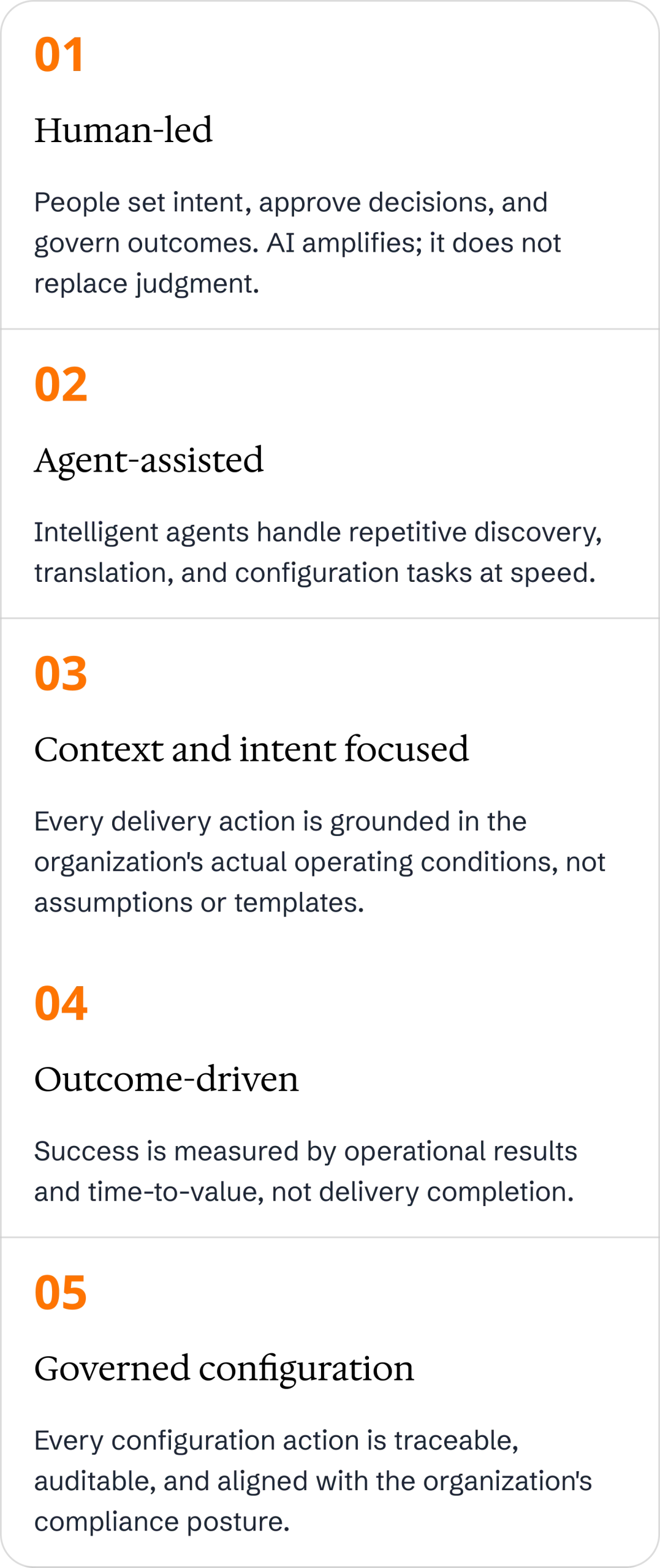
    Contextual Delivery Core Principles

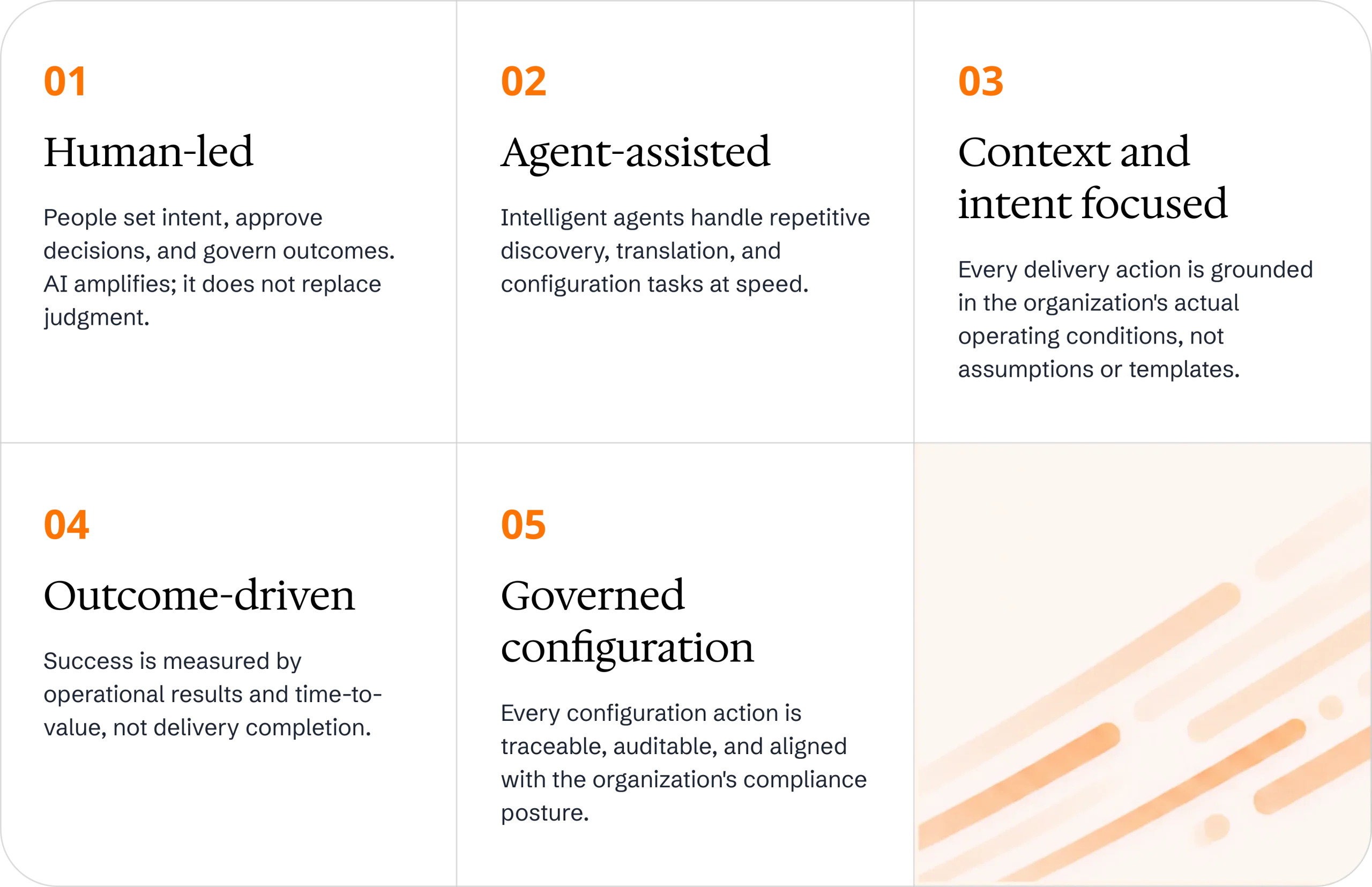
    Contextual delivery platforms themselves require certain core principles, to meet the standard of an enterprise-ready platform. Contextual Delivery platforms are:
    Mature environments risking consequential impacts when changes occur to collaboration would require all of these principles met within a single platform.

    05

    The Competitive Landscape

    Where existing categories fall short, and what makes Contextual Delivery a distinct category of its own

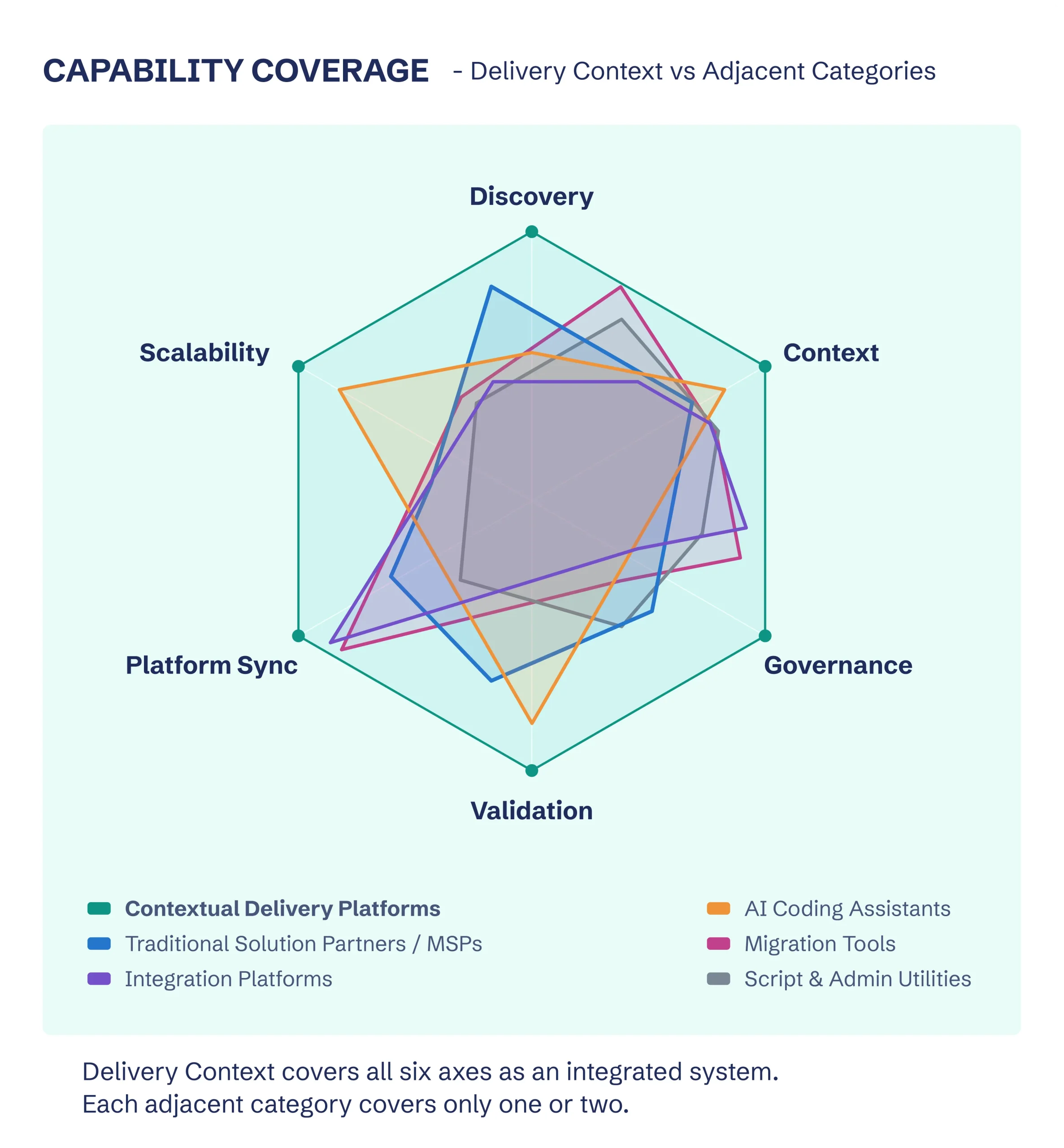
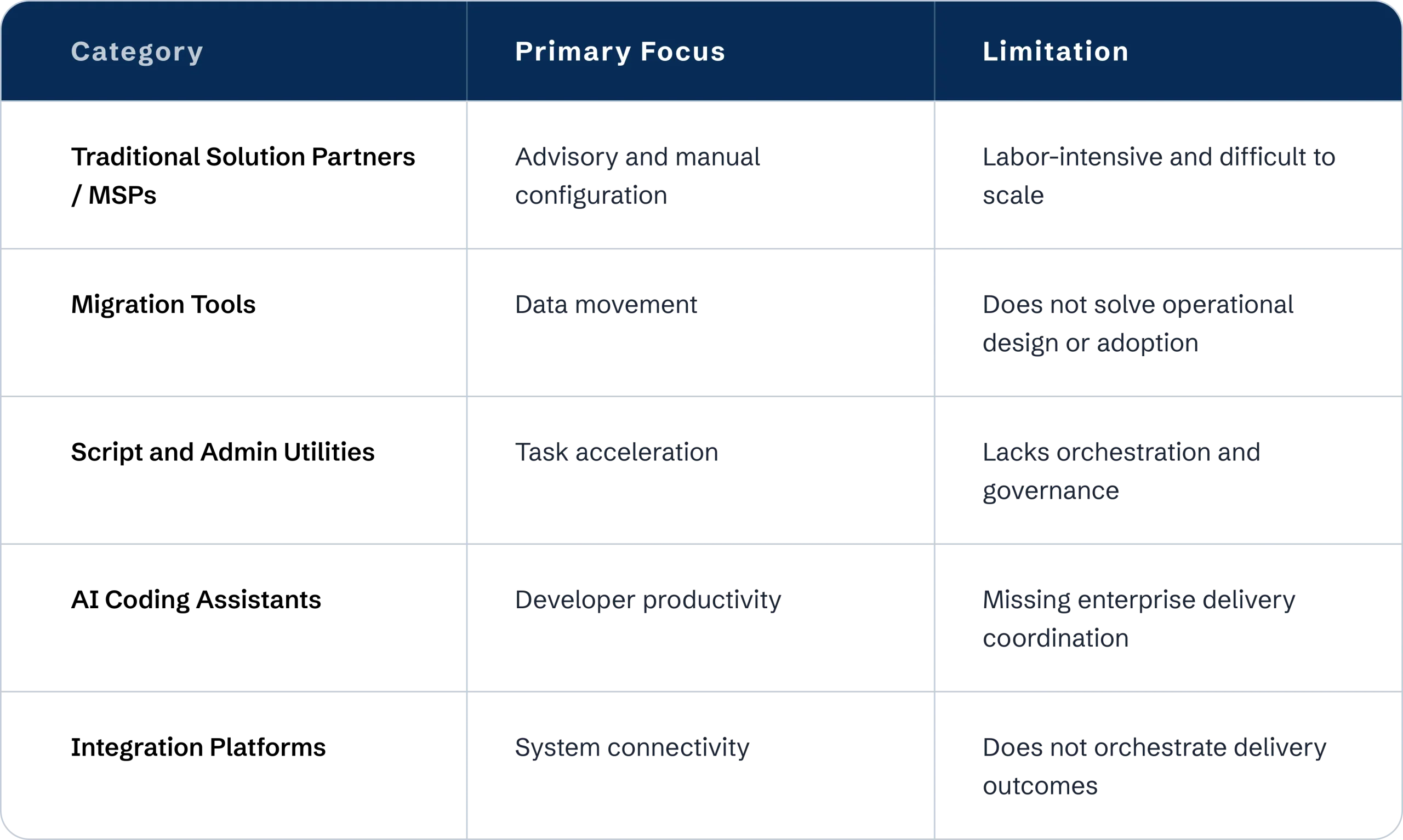
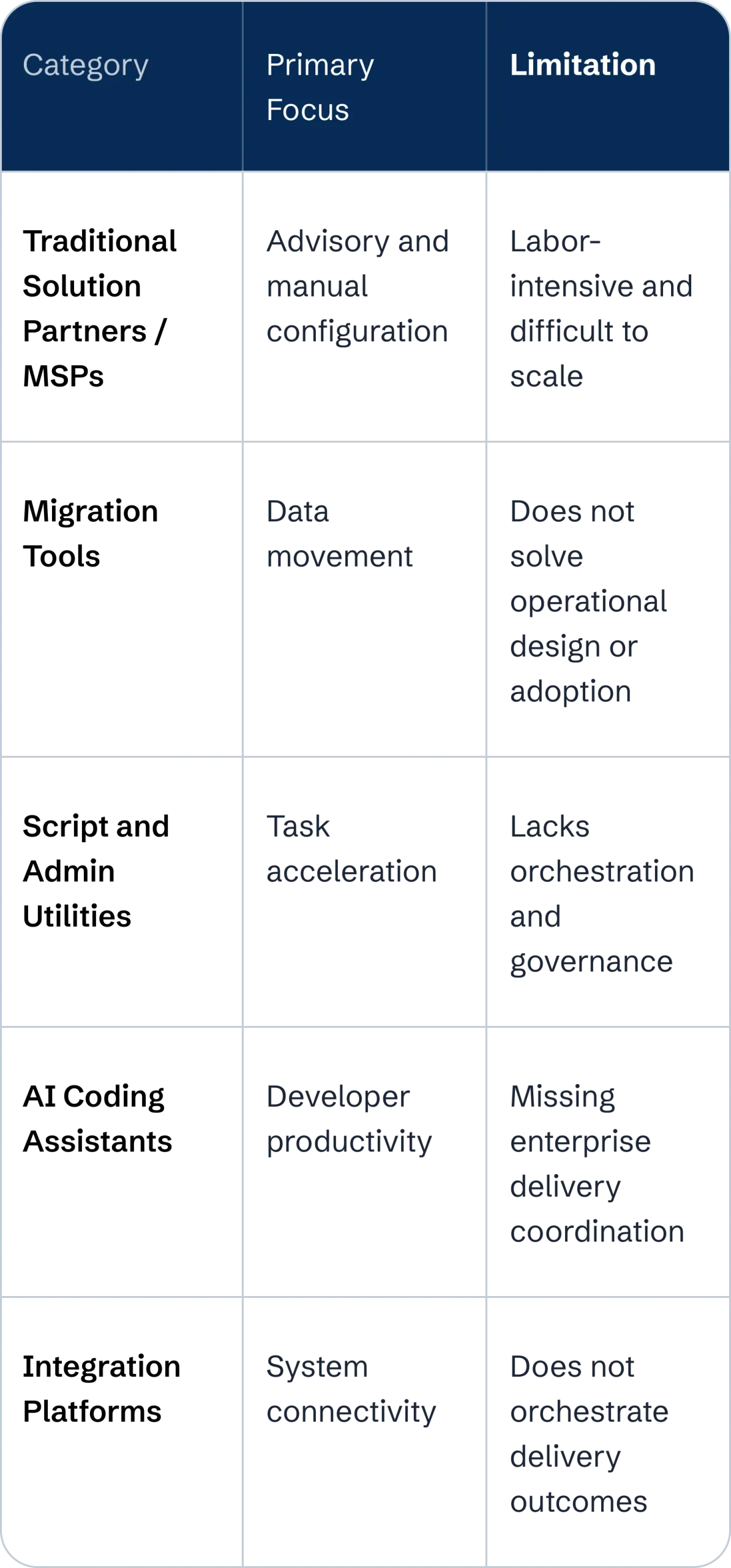
    Where Existing Categories Fall Short

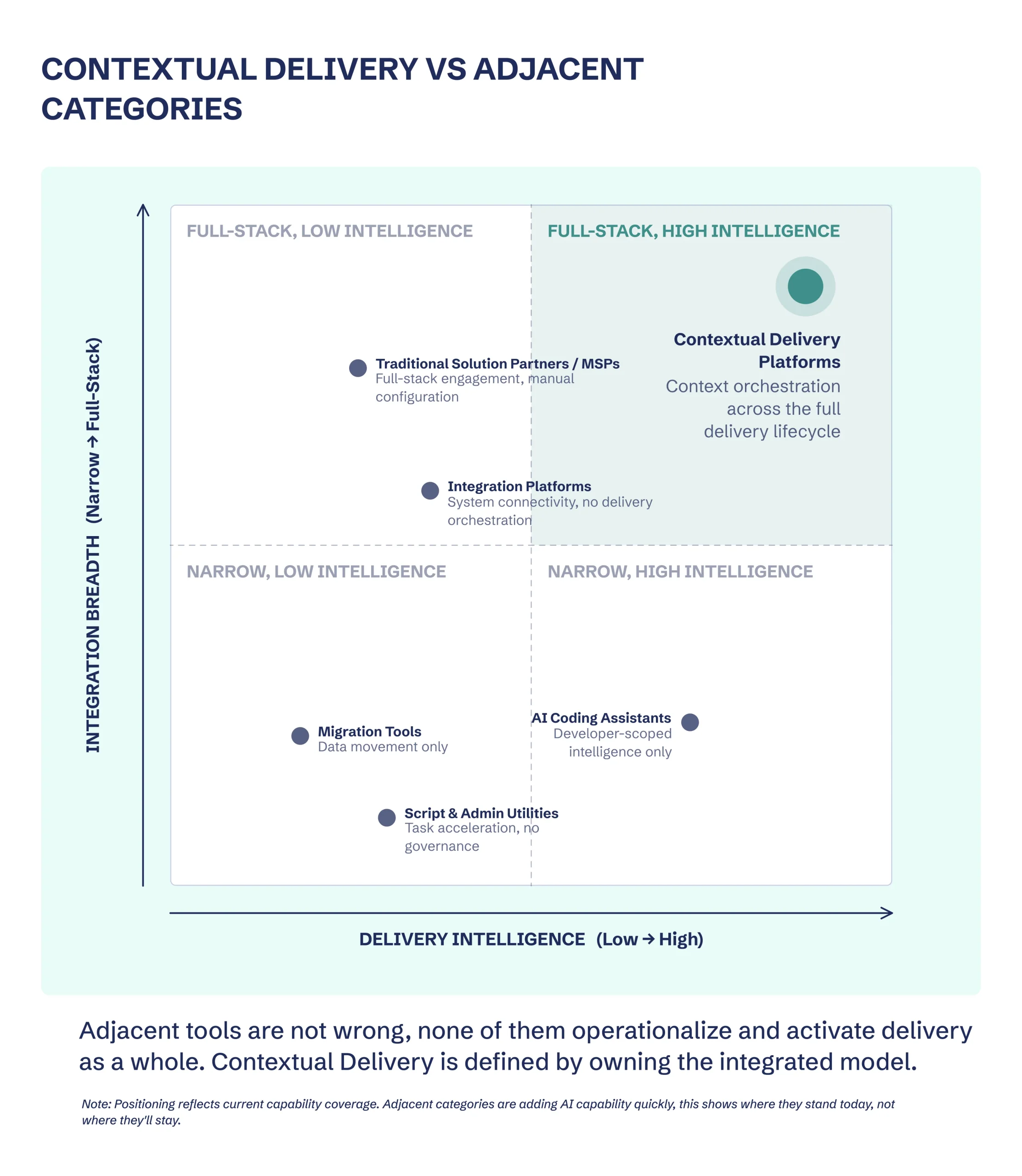
    Existing software categories solve isolated portions of the enterprise delivery problem. None of them operationalize and activate delivery as a whole.

    What Makes Contextual Delivery a Distinct Category

    Contextual Delivery platforms differ by combining:
    Together, these represent a unified enterprise delivery capability, as a separate category. A category requires more than one participant; the presence of credible specialists in adjacent spaces, such as sync platforms, migration tooling, and automation utilities. Contextual Delivery’s position is not that these tools are wrong, but that none of them operationalize and activate delivery as a whole. The category is defined by owning the integrated model, not by out-featuring any single adjacent tool.

    06

    Business Impact and Strategic Implications

    What organizations gain from Contextual Delivery, and where enterprise delivery is headed by 2027

    What Organizations Gain

    Organizations leveraging Contextual Delivery platforms experience measurable operational advantages across delivery timelines, risk, governance, and organizational agility:
    Most importantly, Contextual Delivery enables enterprises to continuously evolve their systems of work as business conditions change.

    The 2027 Delivery Standard

    By the end of 2027, enterprise delivery models will increasingly require capabilities that are:

    The future enterprise will not operate through isolated implementations. It will operate through continuously synchronized systems of work, capable of evolving alongside business strategy, operational change, and AI-driven transformation.
    THE FUNDAMENTAL SHIFT
    Contextual Delivery represents the shift from effort-based delivery economics to intelligence-driven delivery economics.

    07

    Trundl and the
    Toshiba Proof

    Trundl and the Toshiba Proof

    First-to-market with Contextual Delivery, and what happened when the model met a real enterprise deployment

    Trundl: First-to-Market with Contextual Delivery

    Trundl (trundl.com) is among the first organizations pioneering Contextual Delivery, with their Rapid Deploy engine. Trundl is a Platinum Enterprise Atlassian Solution Partner, focused on Enterprise deployments and migrations with Atlassian’s popular tools, such as Jira and Jira Service Management.
    Atlassian serves as an ideal SaaS platform for Contextual Delivery. Atlassian serves 350,000+ customers at roughly $1.4 billion in quarterly revenue growing 21% year over year. Their portfolio of apps, including their flagship tool, Jira, represents one of the few SaaS platforms able to serve as a system of work, connecting development, operations, and project/product teams.
    75% – 95%
    Trundl’s Rapid Deploy reduces time-to-value for custom enterprise Atlassian deployments by 75% to 95%, based on internal deployment benchmarks.
    CASE STUDY

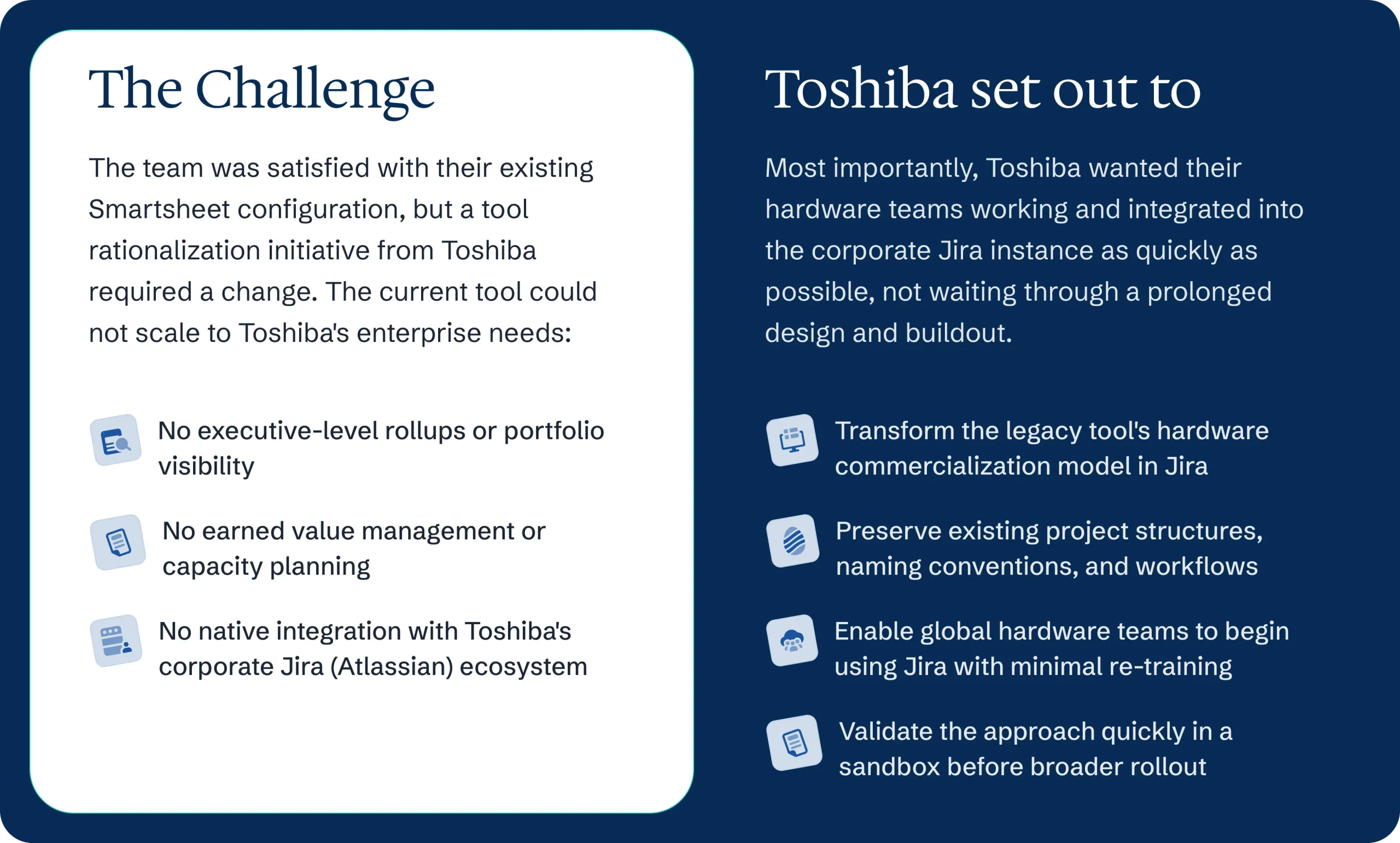
    Toshiba Global Commerce Solutions

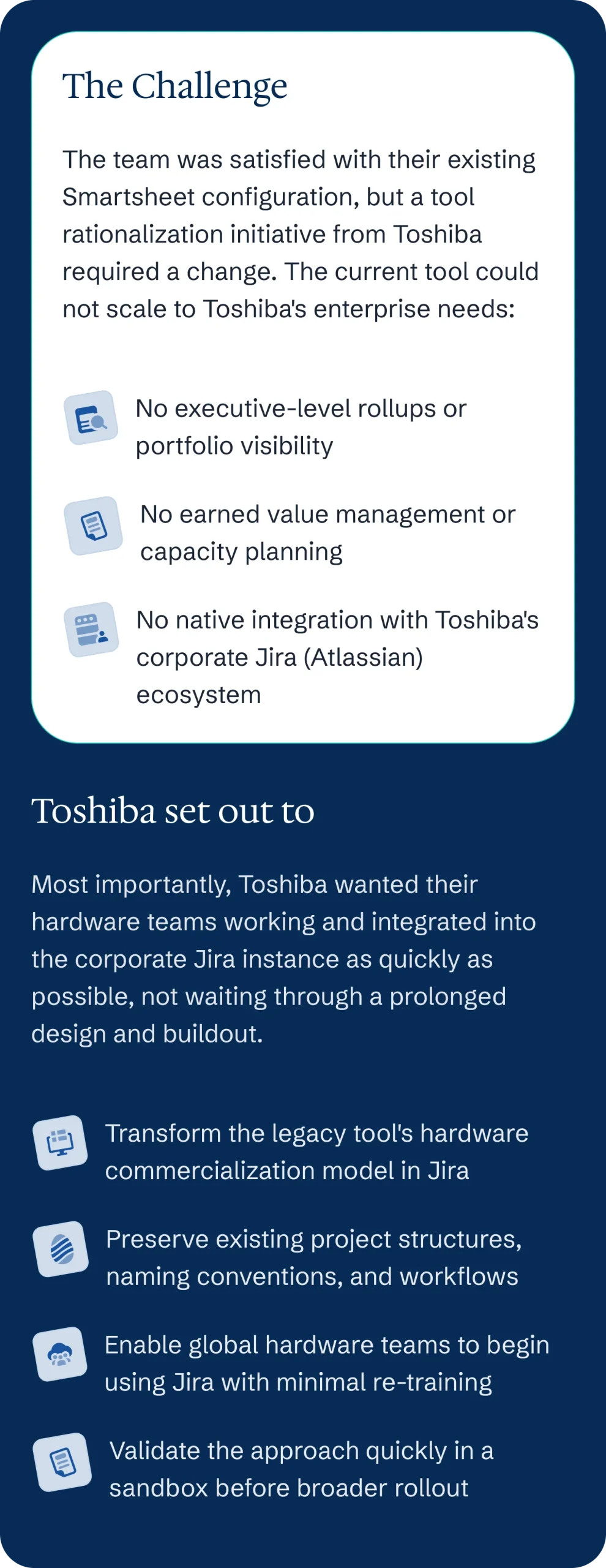
    Toshiba Global Commerce Solutions is a global market share leader in retail store technology, providing an ecosystem of POS hardware, software, and services to help retailers streamline operations and enhance customer experiences.
    The hardware team involved in this engagement: 8 teams, 83 people, primarily based in Taiwan.

    The Traditional Approach and Why Trundl Didn't Use It

    Before the project kick-off, Toshiba provided the same process documentation assets originally used to build their legacy solution, it included:
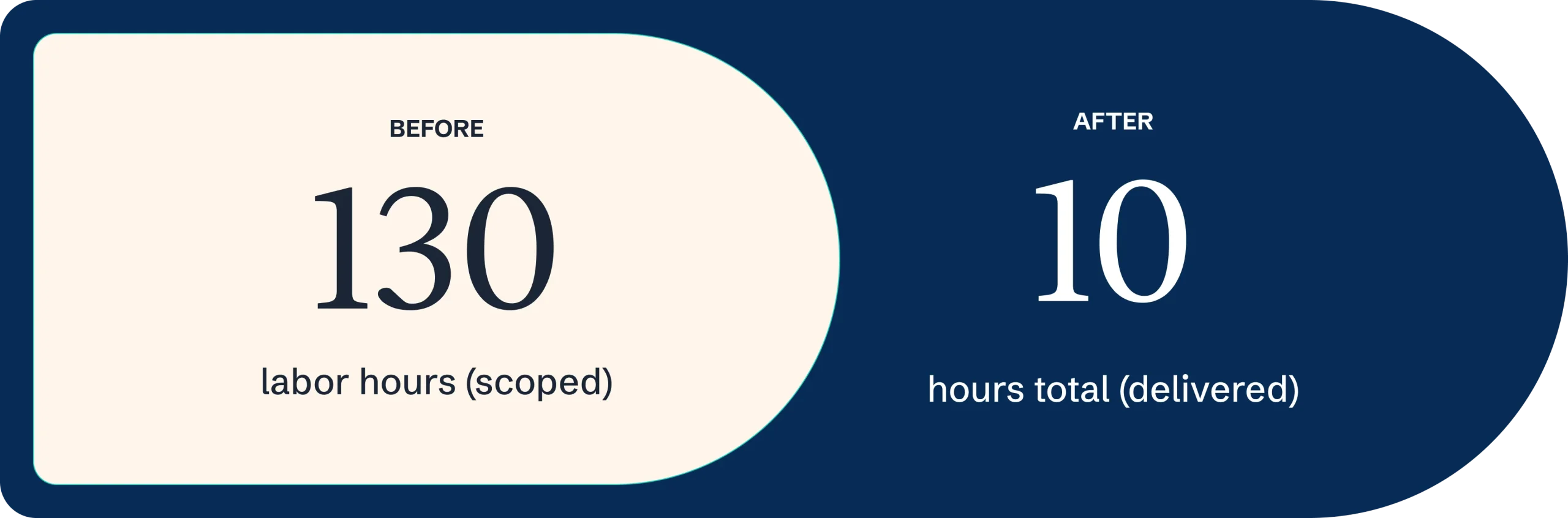
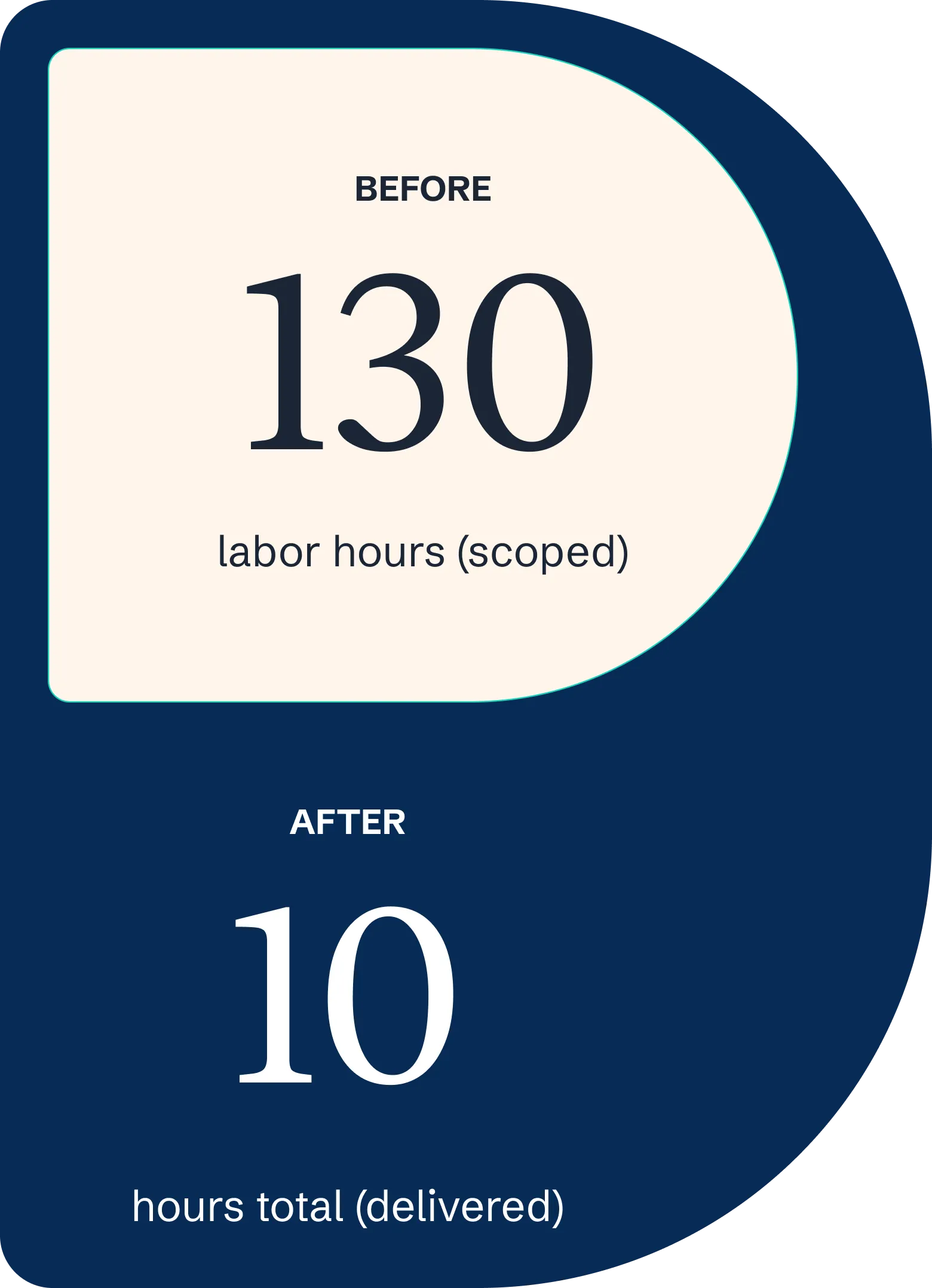
    The documents came in different formats and were extensive. Additionally, the meeting transcript contained rich context and intent, directly from Toshiba’s stakeholders. An early Trundl estimate put the effort at 130 labor hours to deliver with 4 weeks to user acceptance testing (UAT).
    This traditional approach would require an Atlassian Solution Architect and Jira Engineer to collaborate, pouring over details and converting the requirements into a Jira configuration. This represented a significant cost in terms of time and labor.

    The Rapid Deploy Approach

    Trundl decided to apply its proprietary Rapid Deploy engine to accelerate this phase.
    Rapid Deploy transformed their work breakdown documentation and meeting transcript directly into a working Jira solution in Toshiba’s Atlassian sandbox, including:

    The Results

    By the second meeting with Trundl, instead of discussing what a Jira solution might look like, Toshiba’s teams were immediately shown what it already looked like in the form of a testable instance.
    Toshiba’s teams could actively test a custom Jira instance that mirrored their legacy environment, this included:

    What the Team Found in the Sandbox

    Users were no longer evaluating concepts, they were validating a live system that reflected how they worked. This rapid alignment dramatically changed the dynamic of both discovery and solution refinement. Conversations shifted from abstract requirements to concrete changes, accelerating user buy-in and adoption.
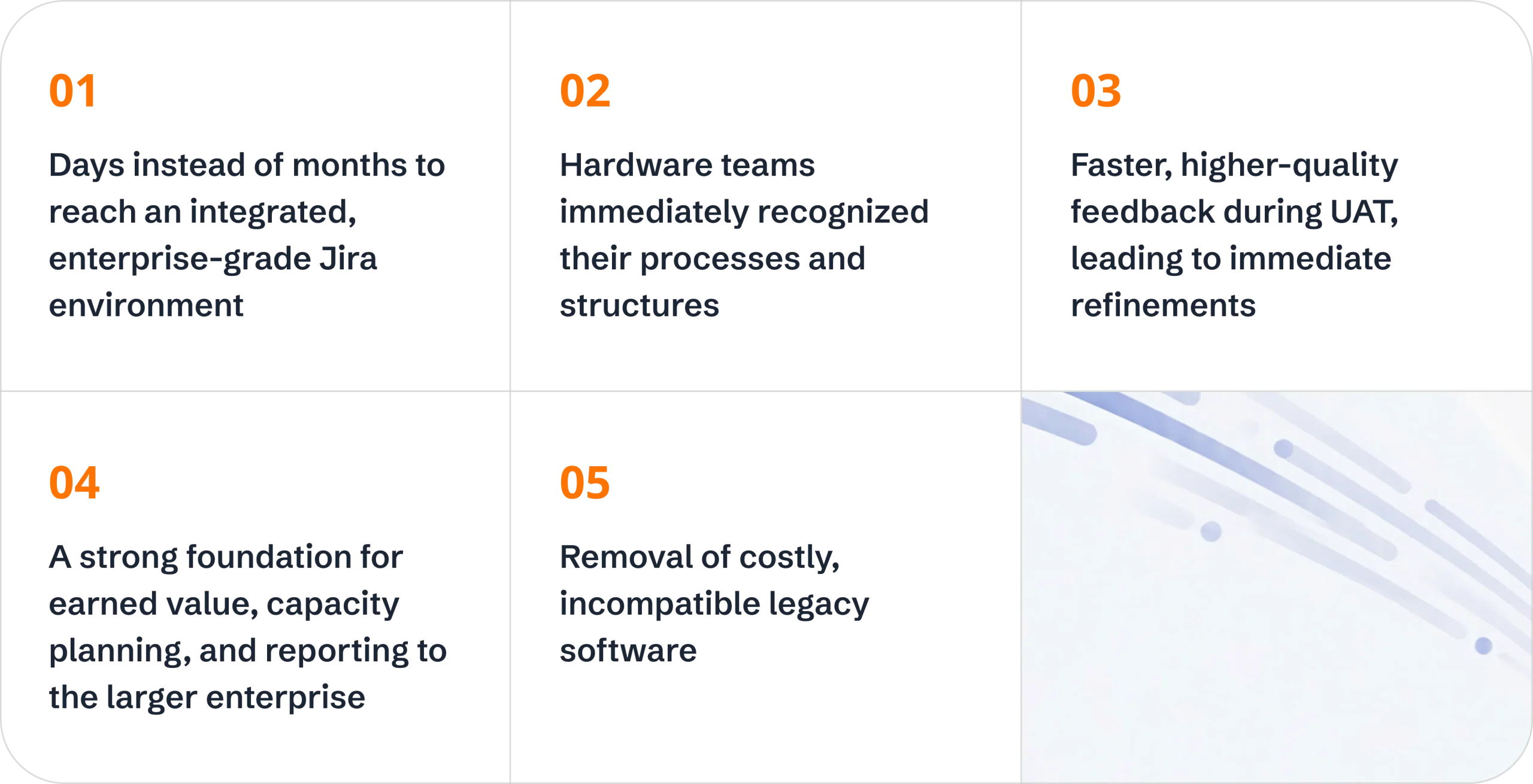
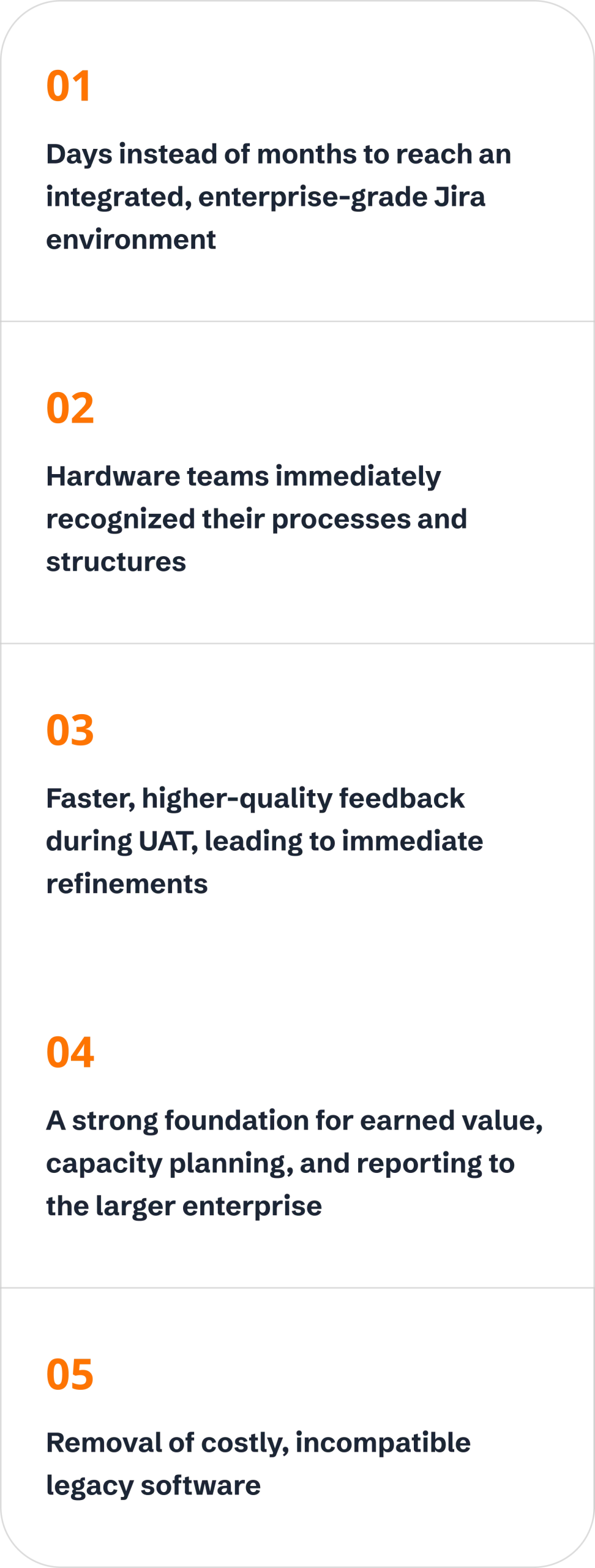
    The early impact was clear:
    A 4-week, 130-hour engagement completed in under 10 hours, including labor and meeting time. Delivered to UAT in days, not months.
    Trundl and Toshiba demonstrated that enterprise Jira adoption for hardware teams did not have to be slow, disruptive, or theoretical. Moreover, an effort that was originally scoped at 130 labor hours and 4 weeks was completed in less than 10 hours (including labor and meeting time).

    08

    The Contextual Delivery Maturity Model

    A framework for assessing where your organization stands and what Contextual Delivery looks like in practice

    Assessing Contextual Delivery Maturity

    C-suite and IT leaders will need to assess their current capabilities to change, adapt, integrate or migrate their tooling as the business dictates.

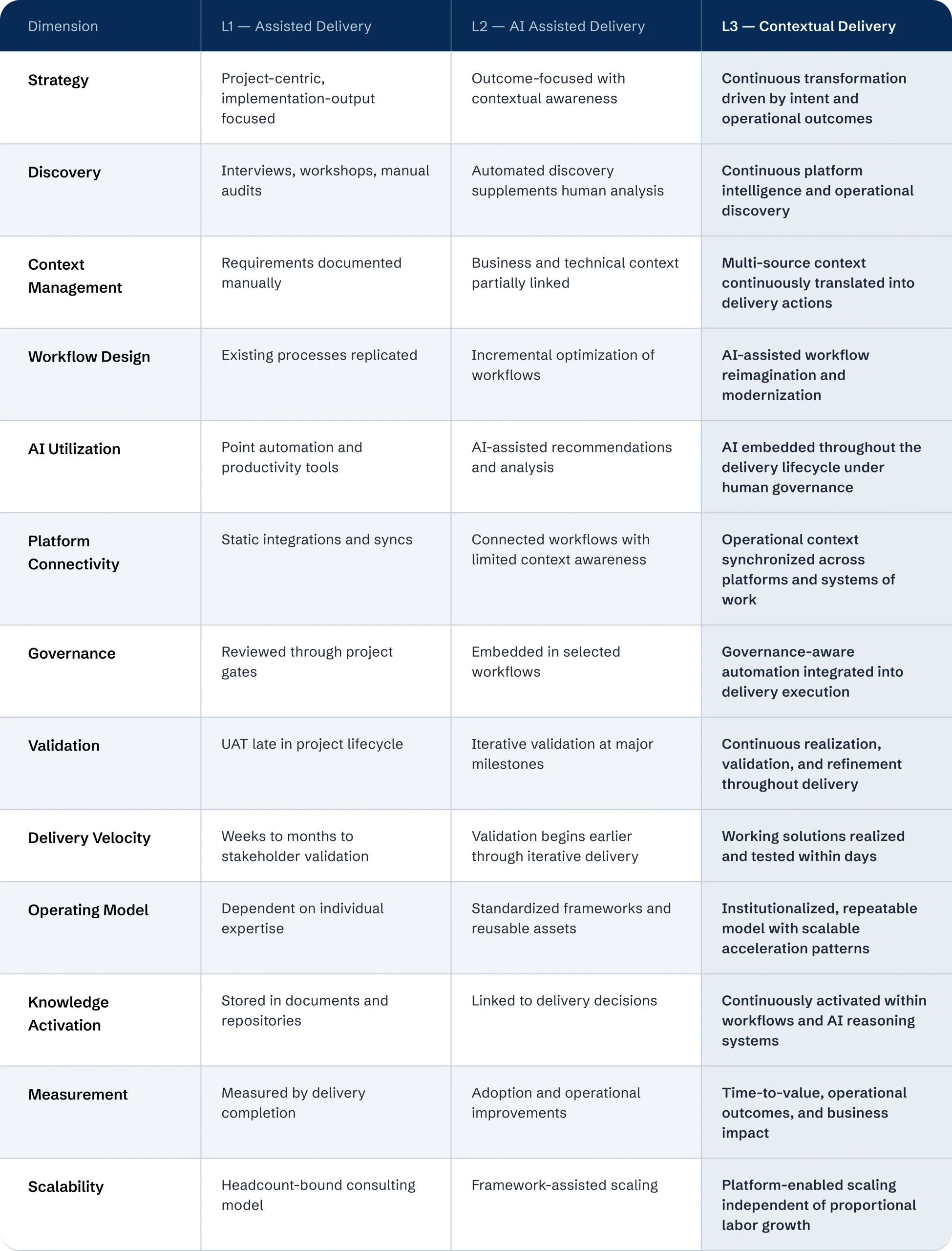
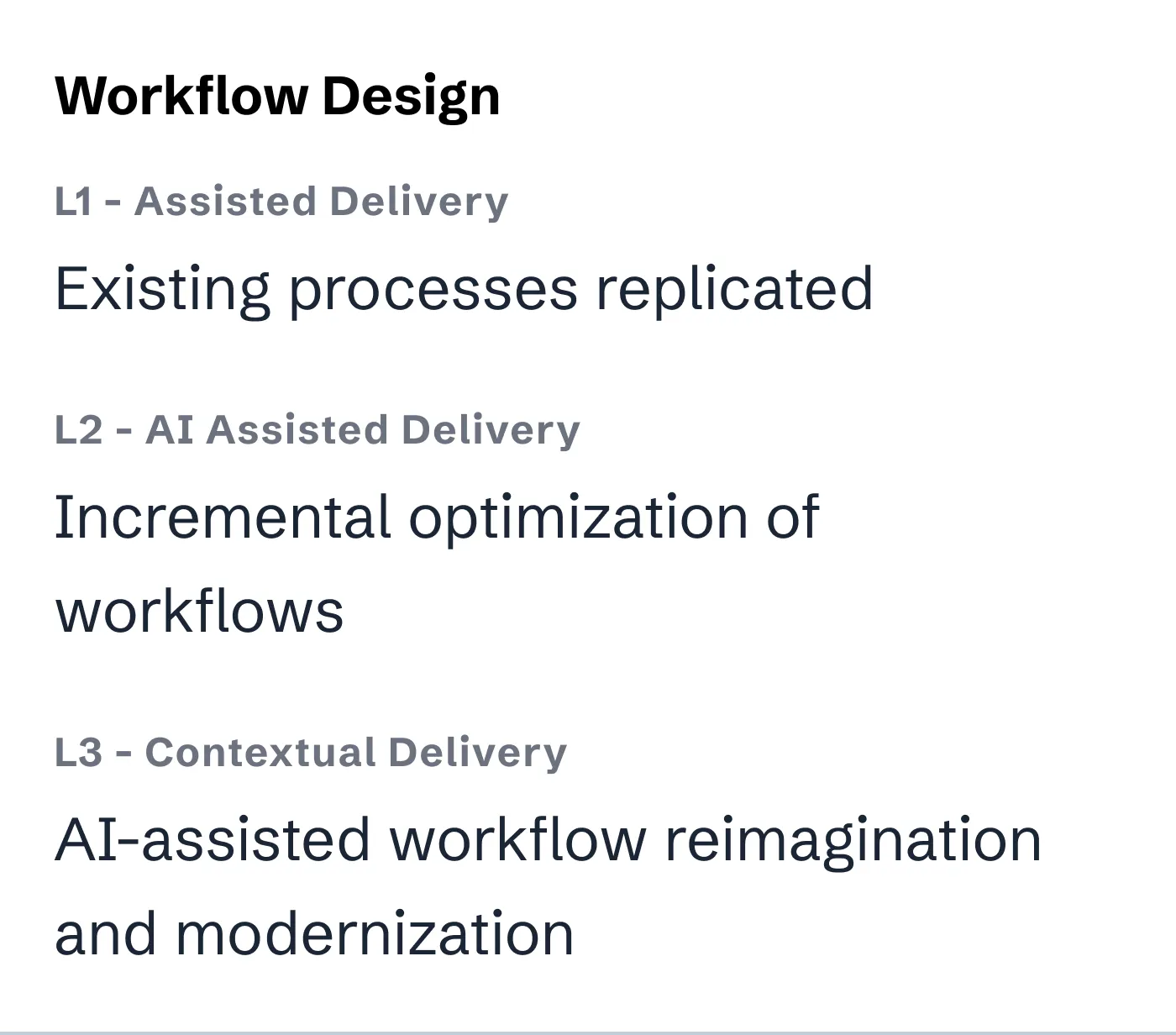
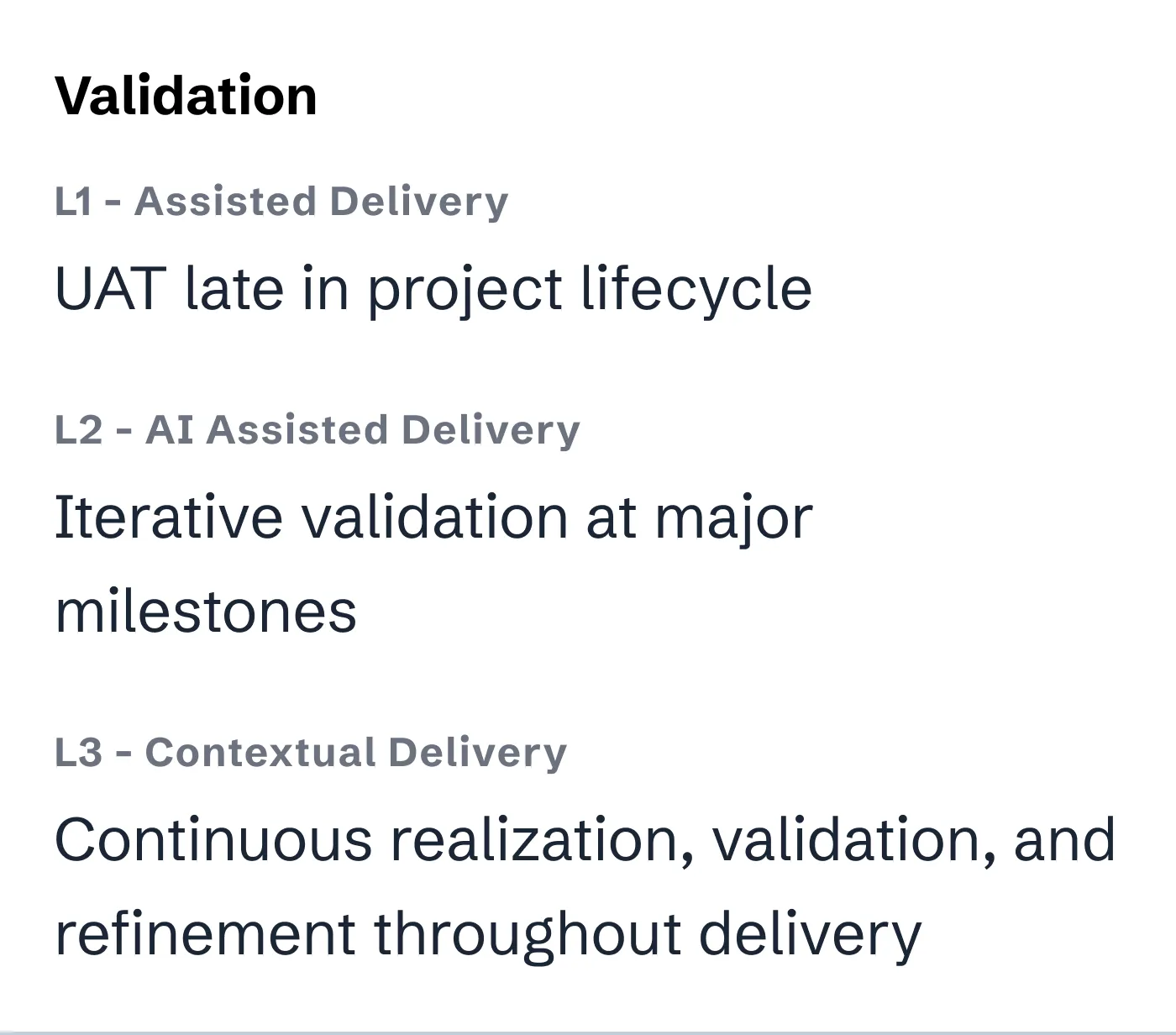
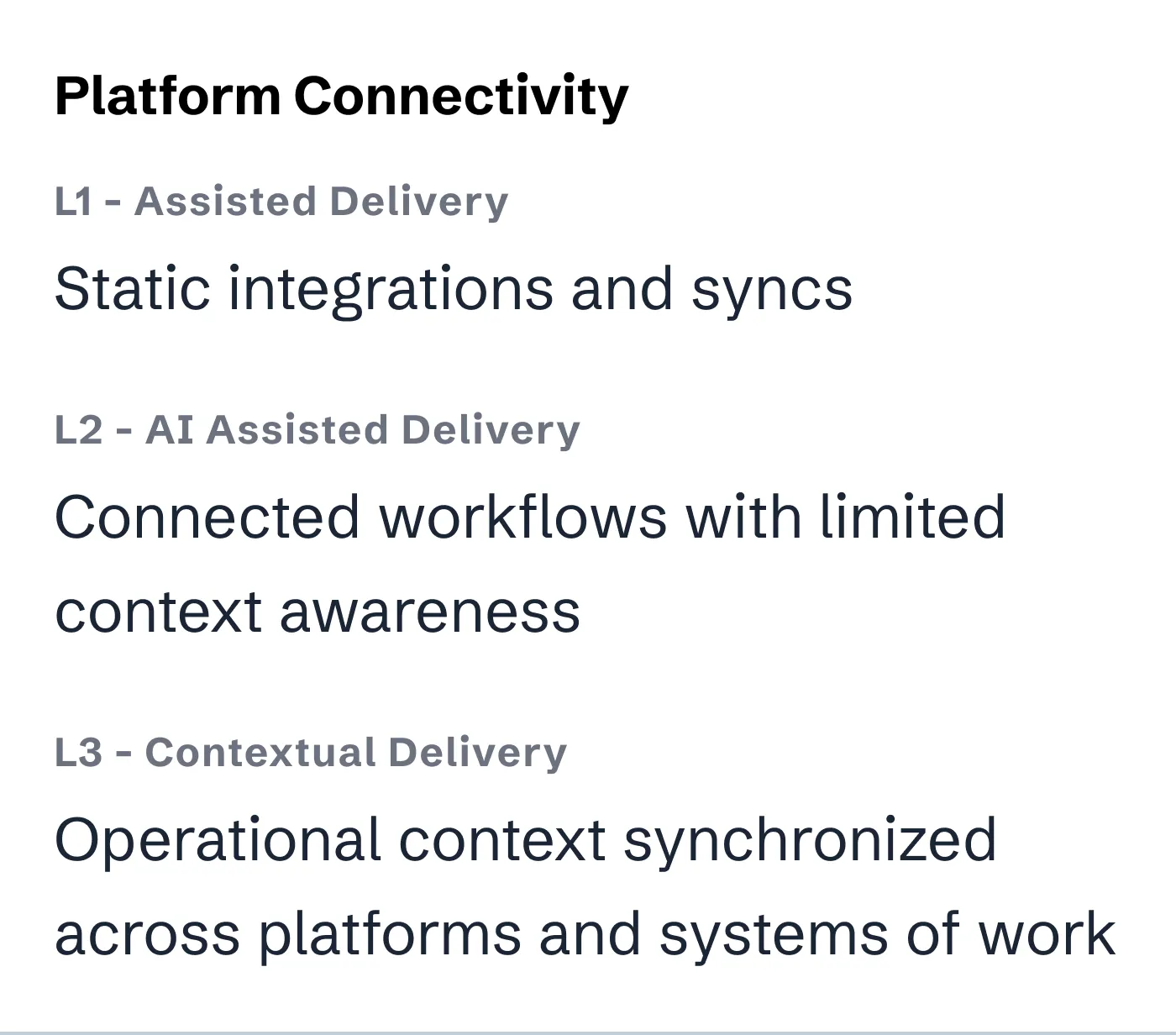
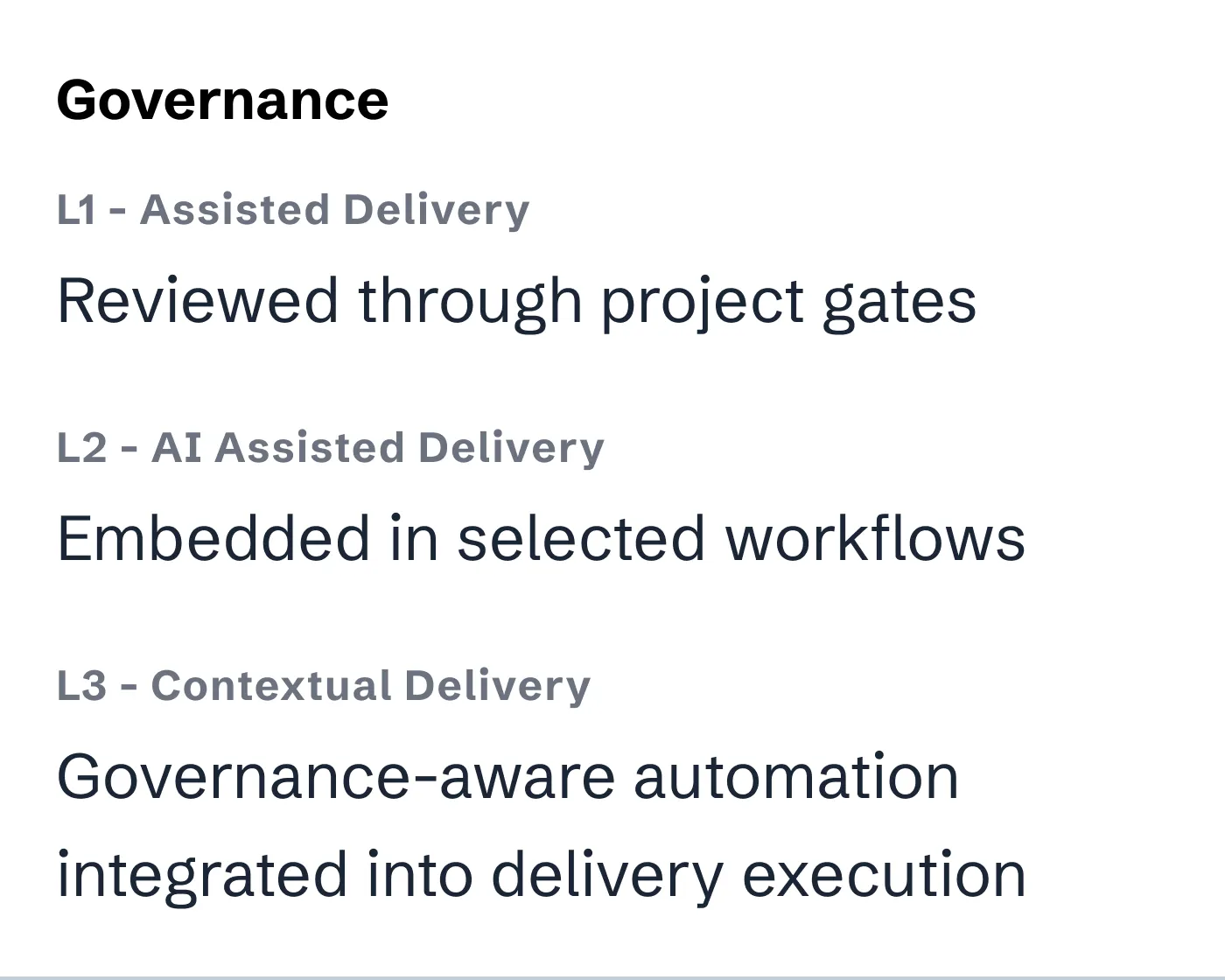
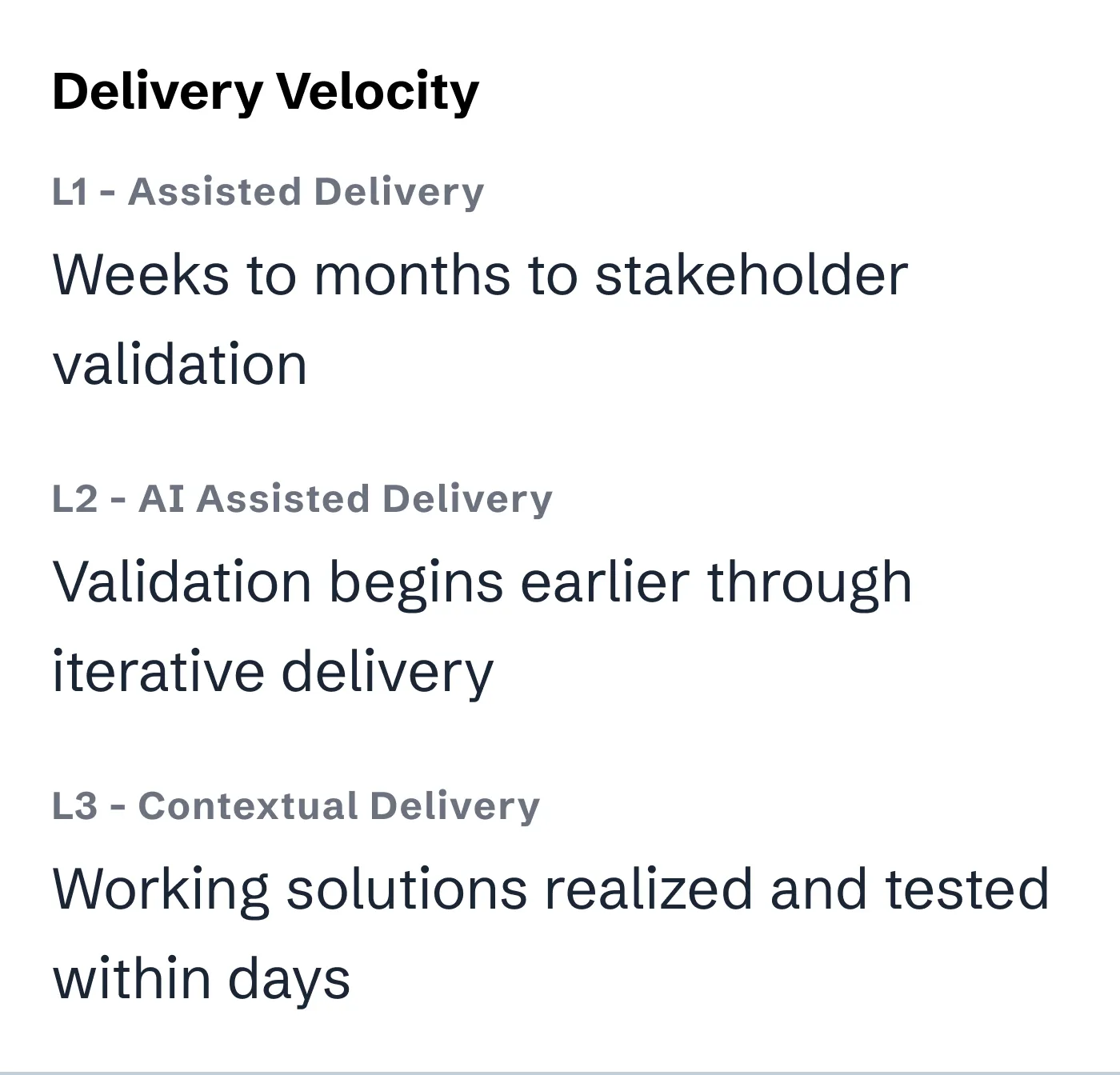
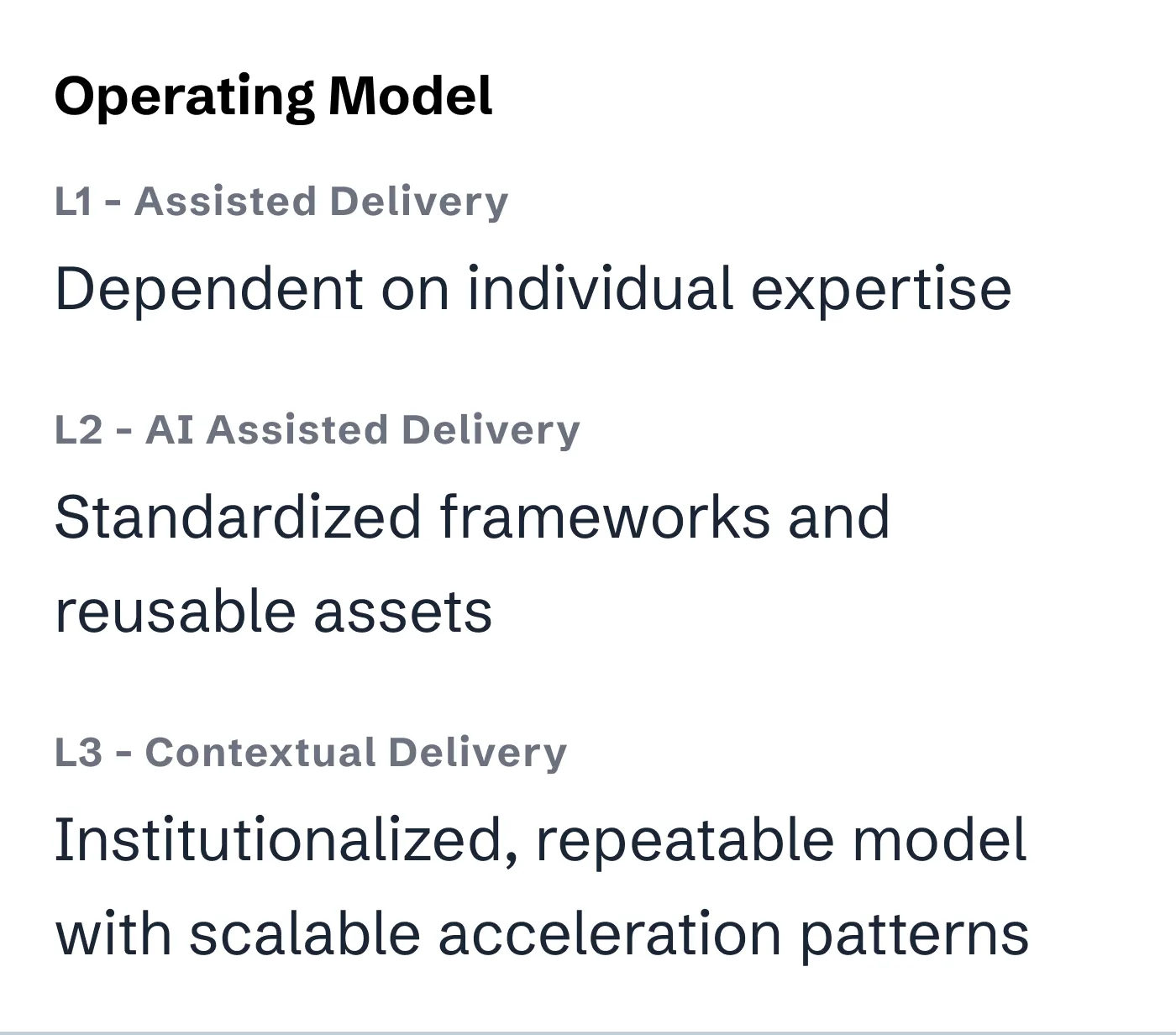
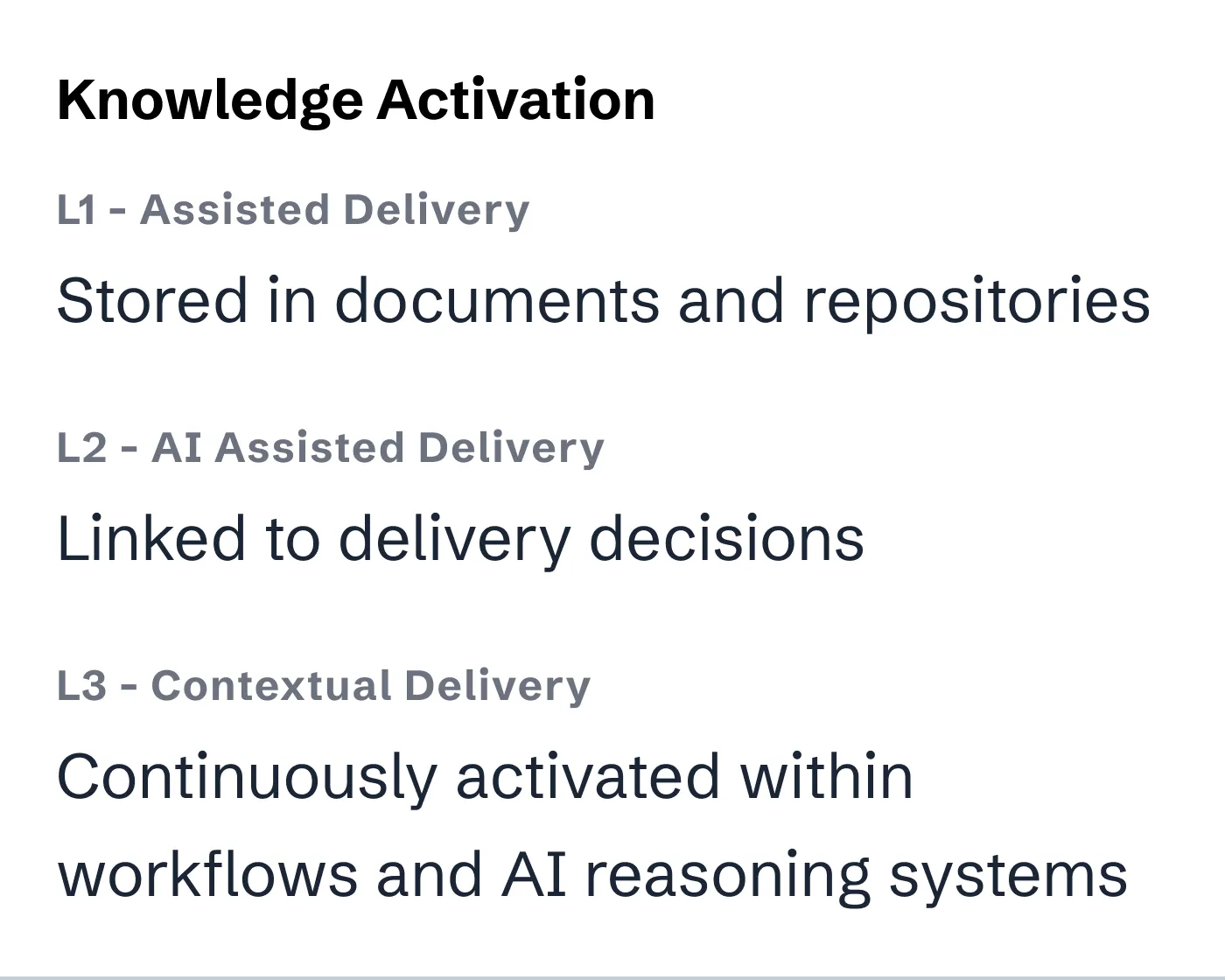
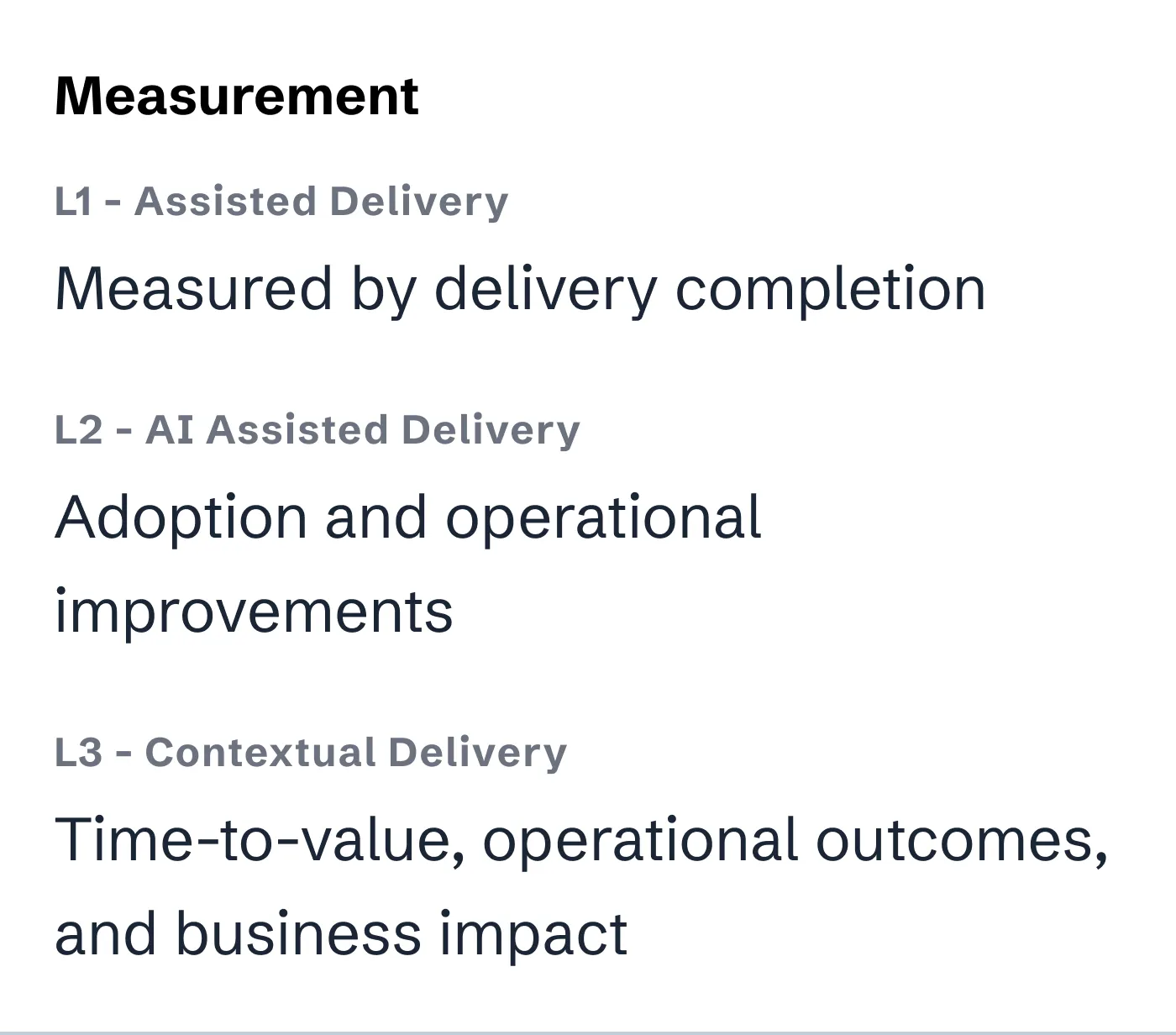
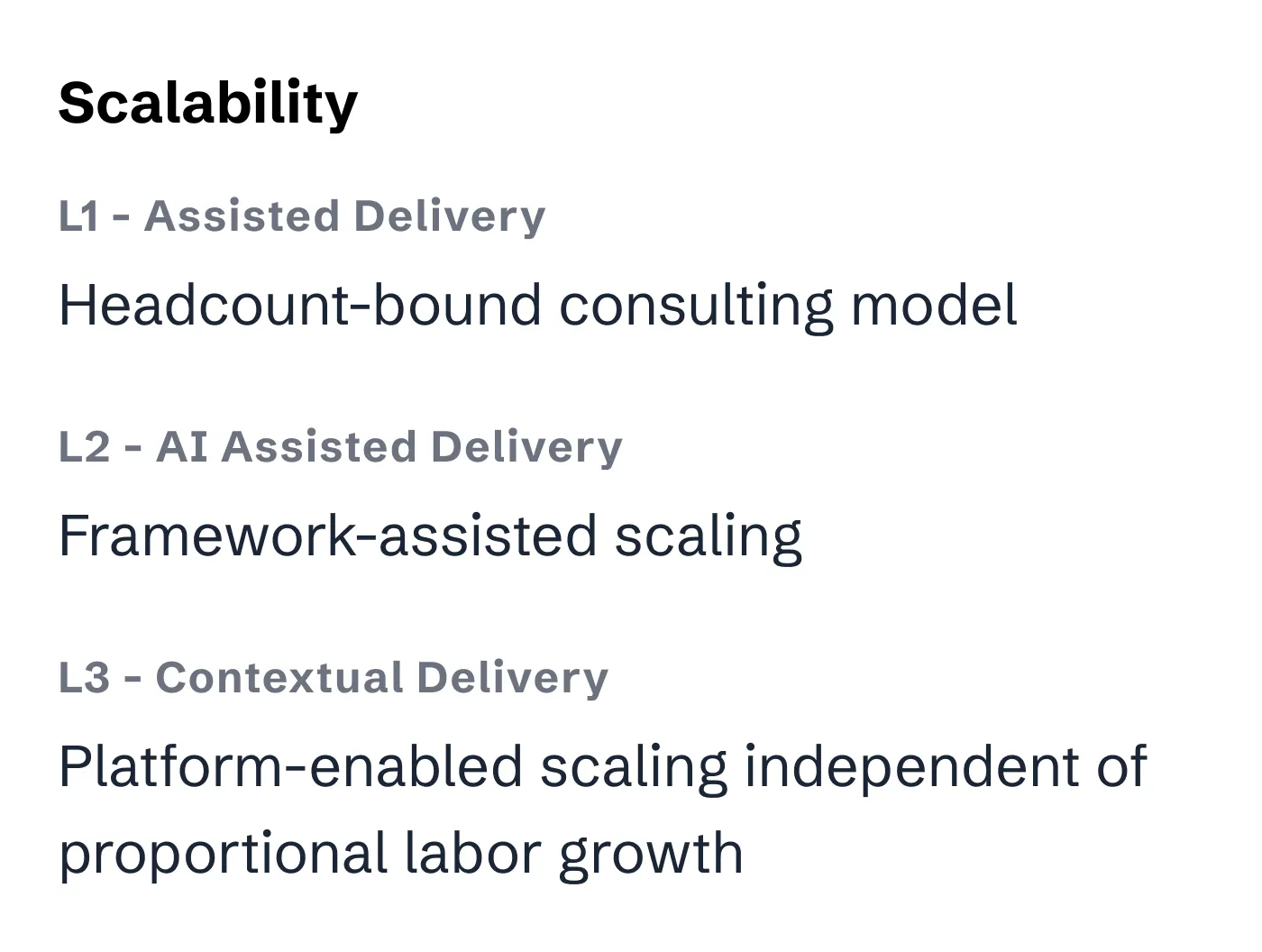
    Maturity Model by Dimension

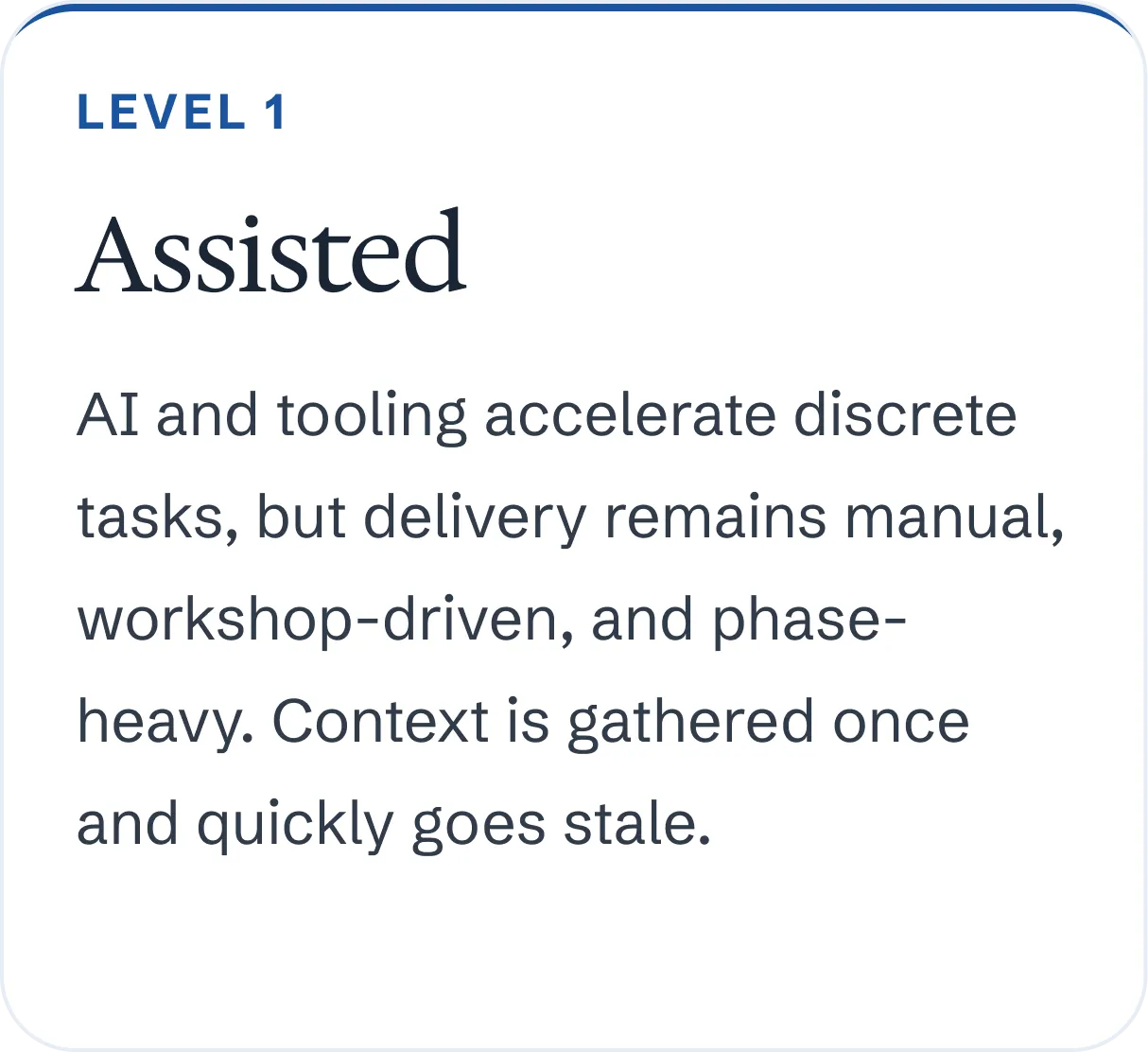
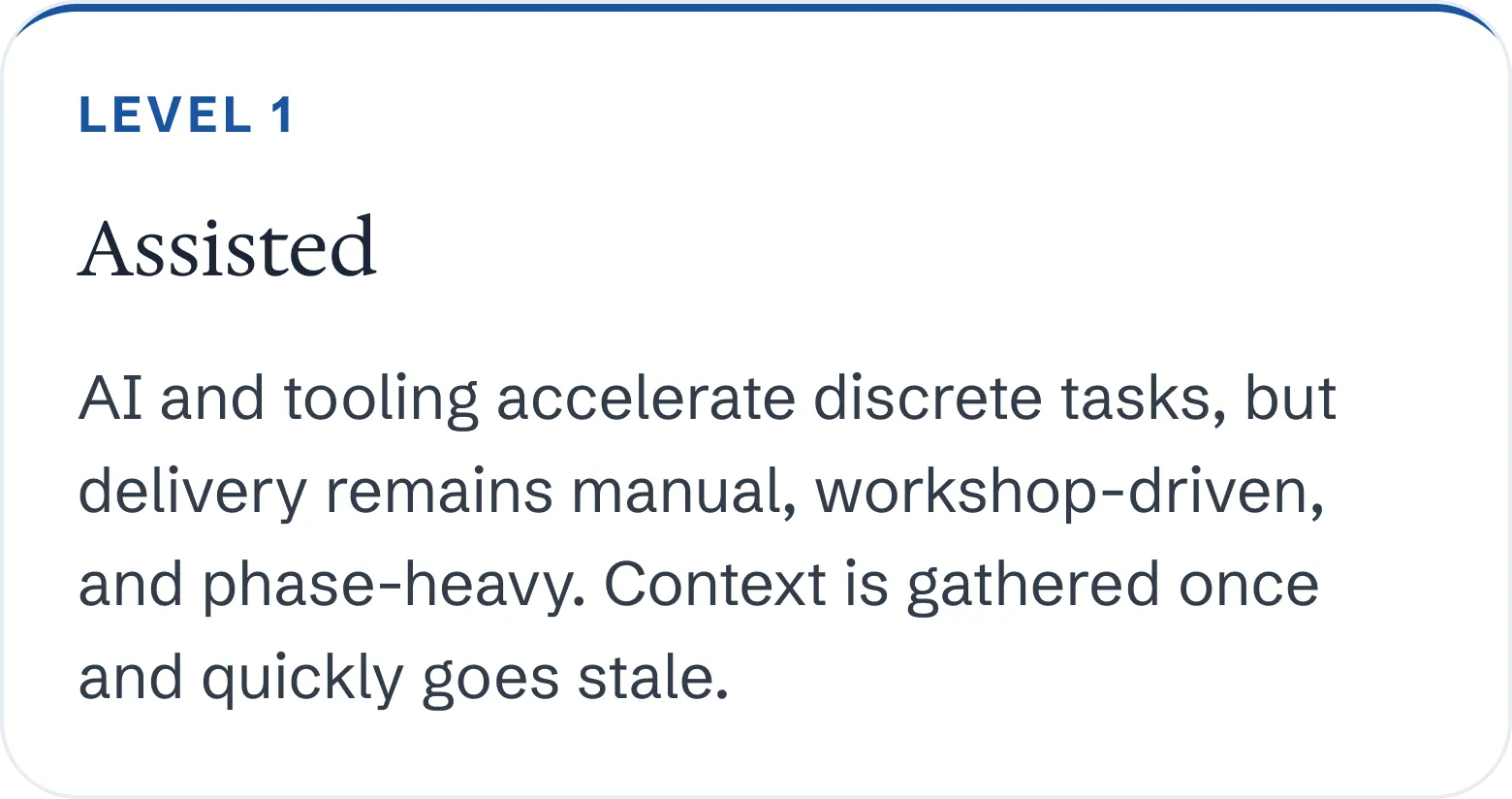
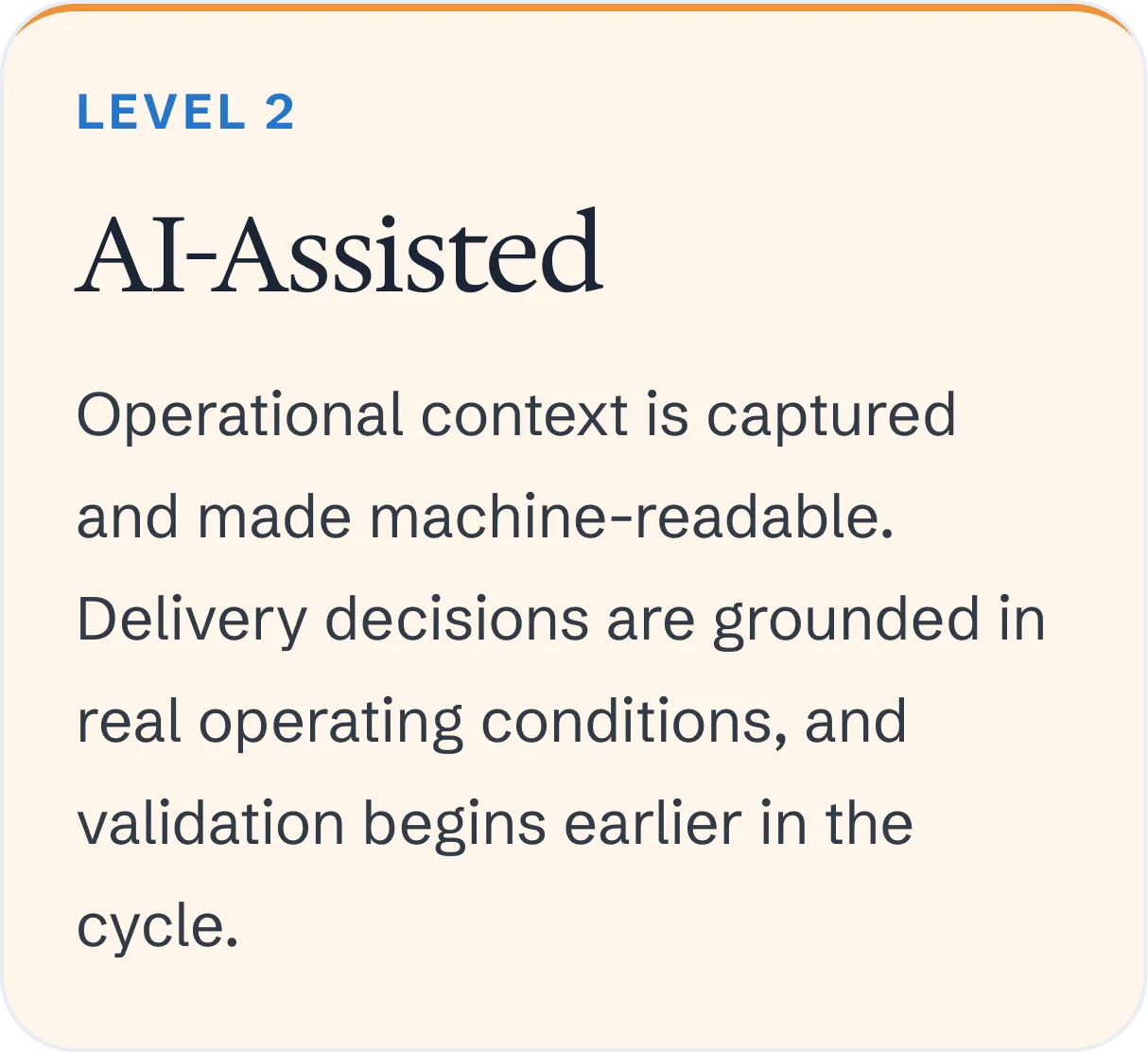
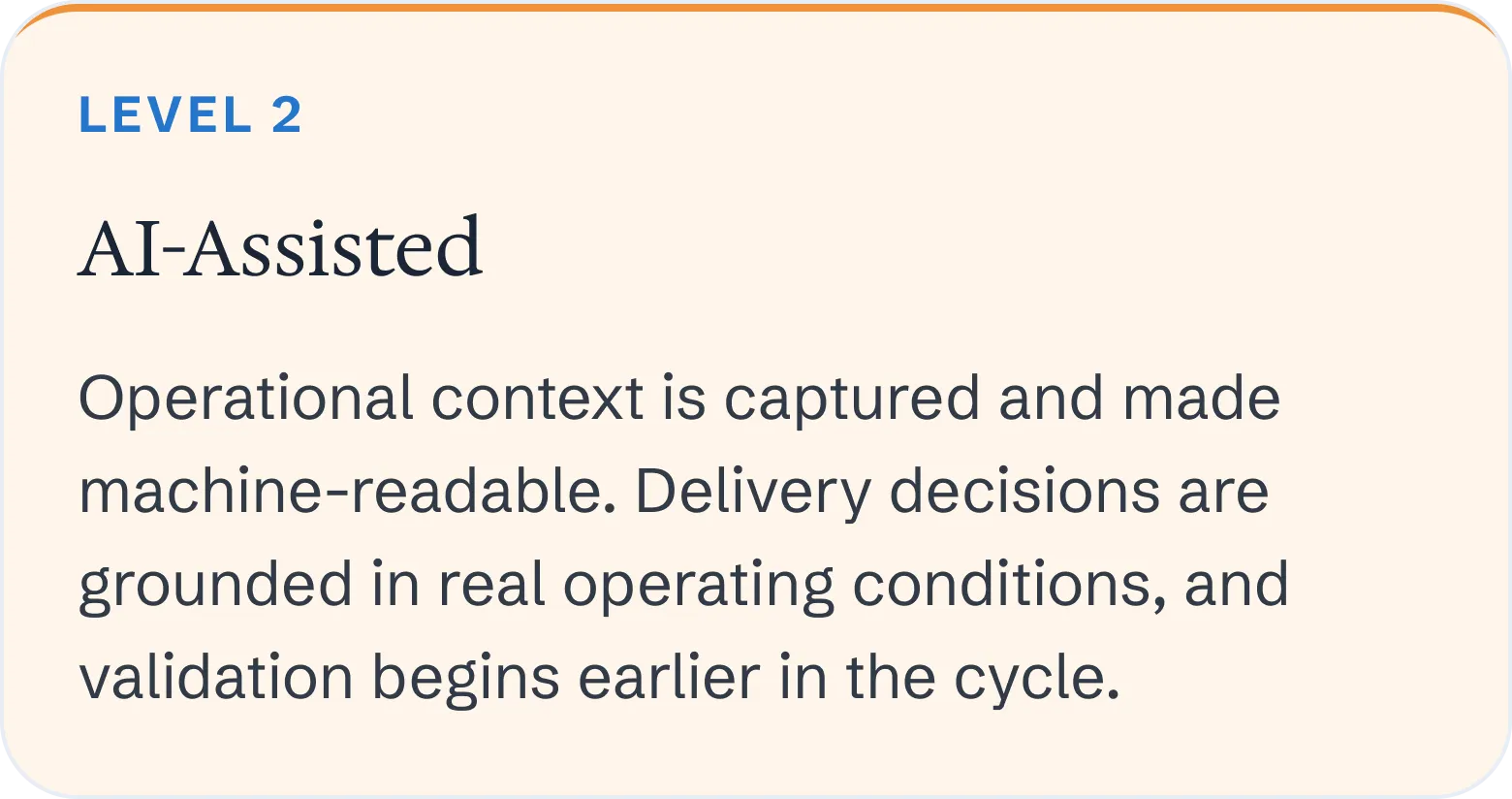
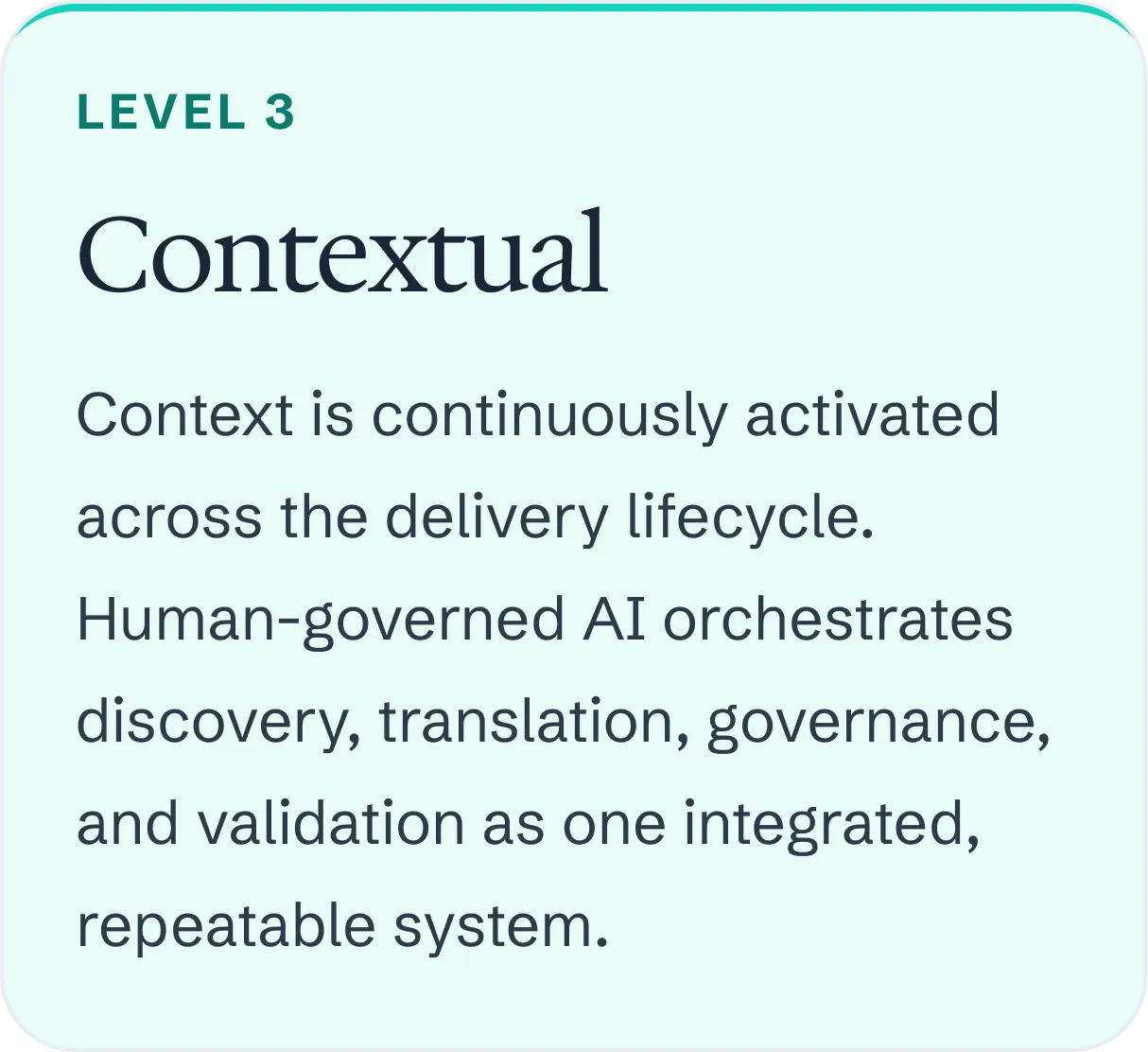
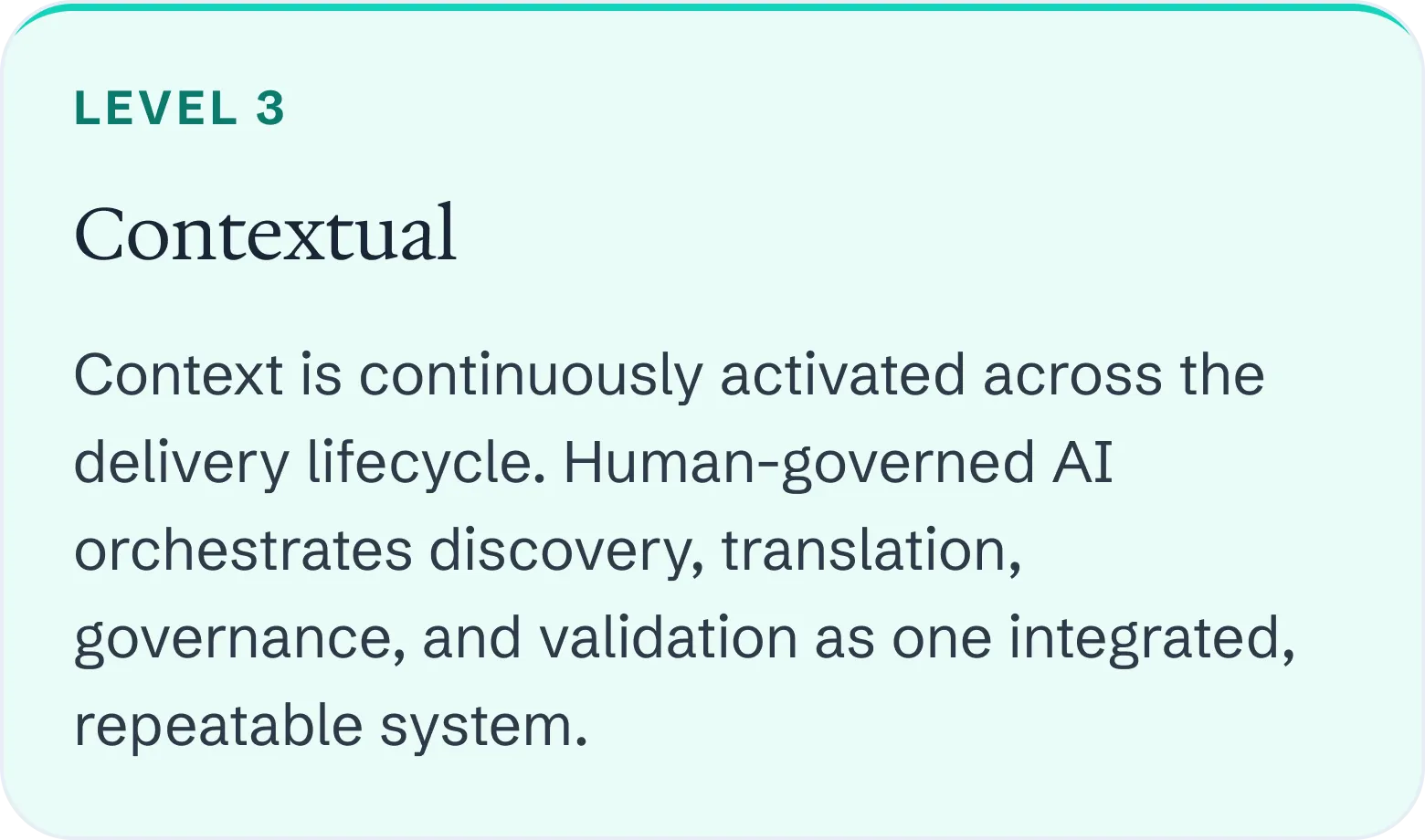
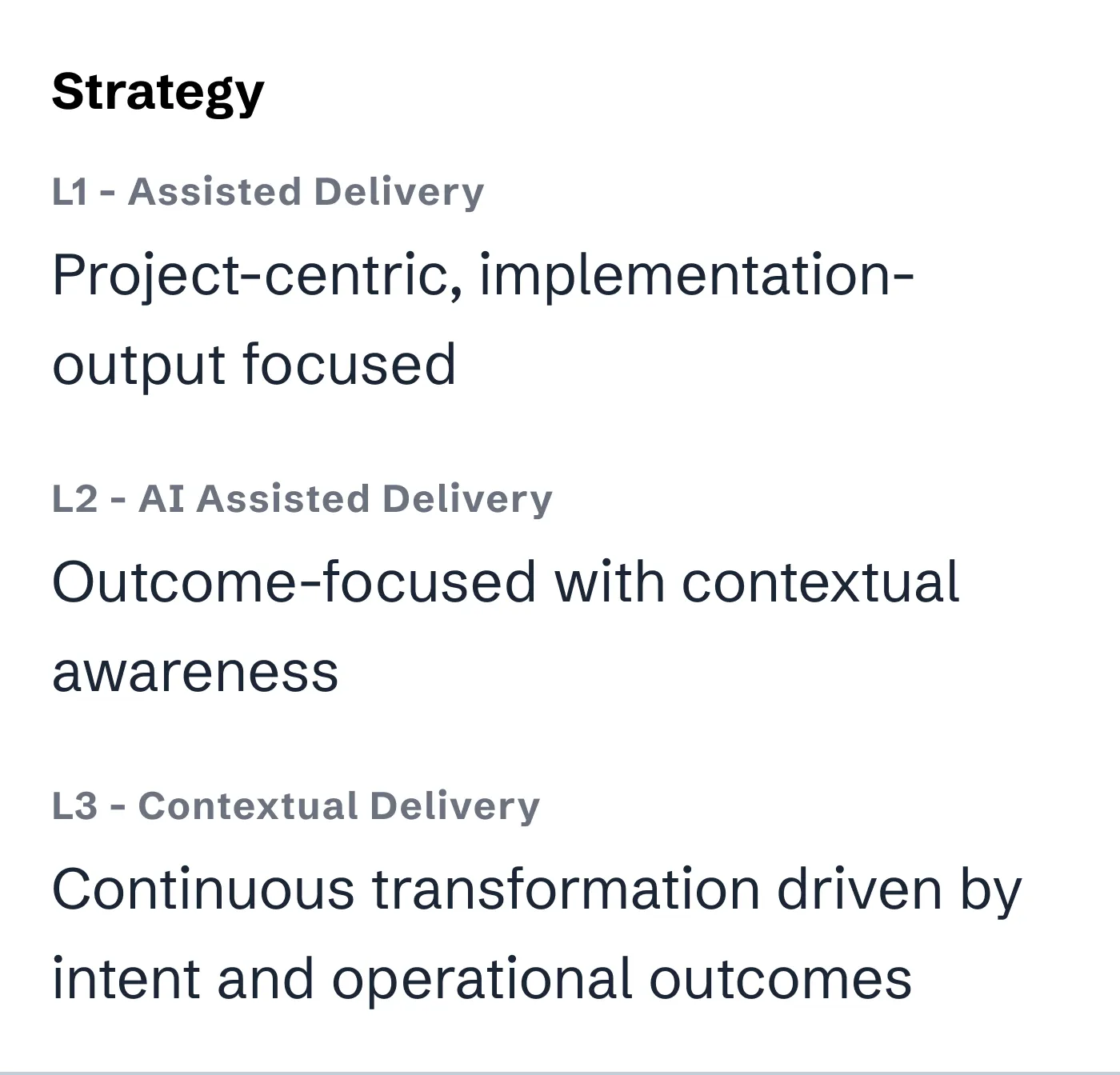
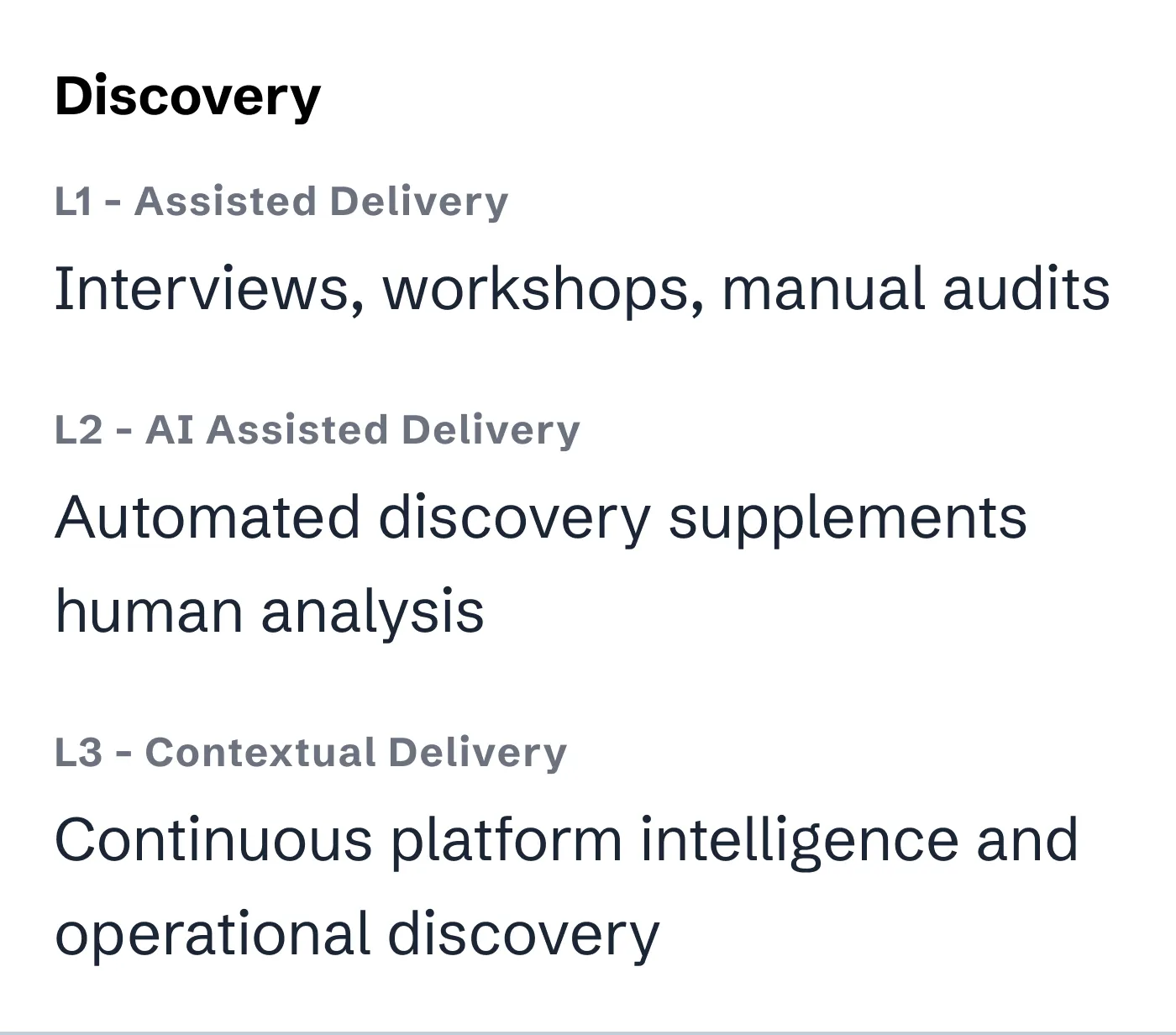
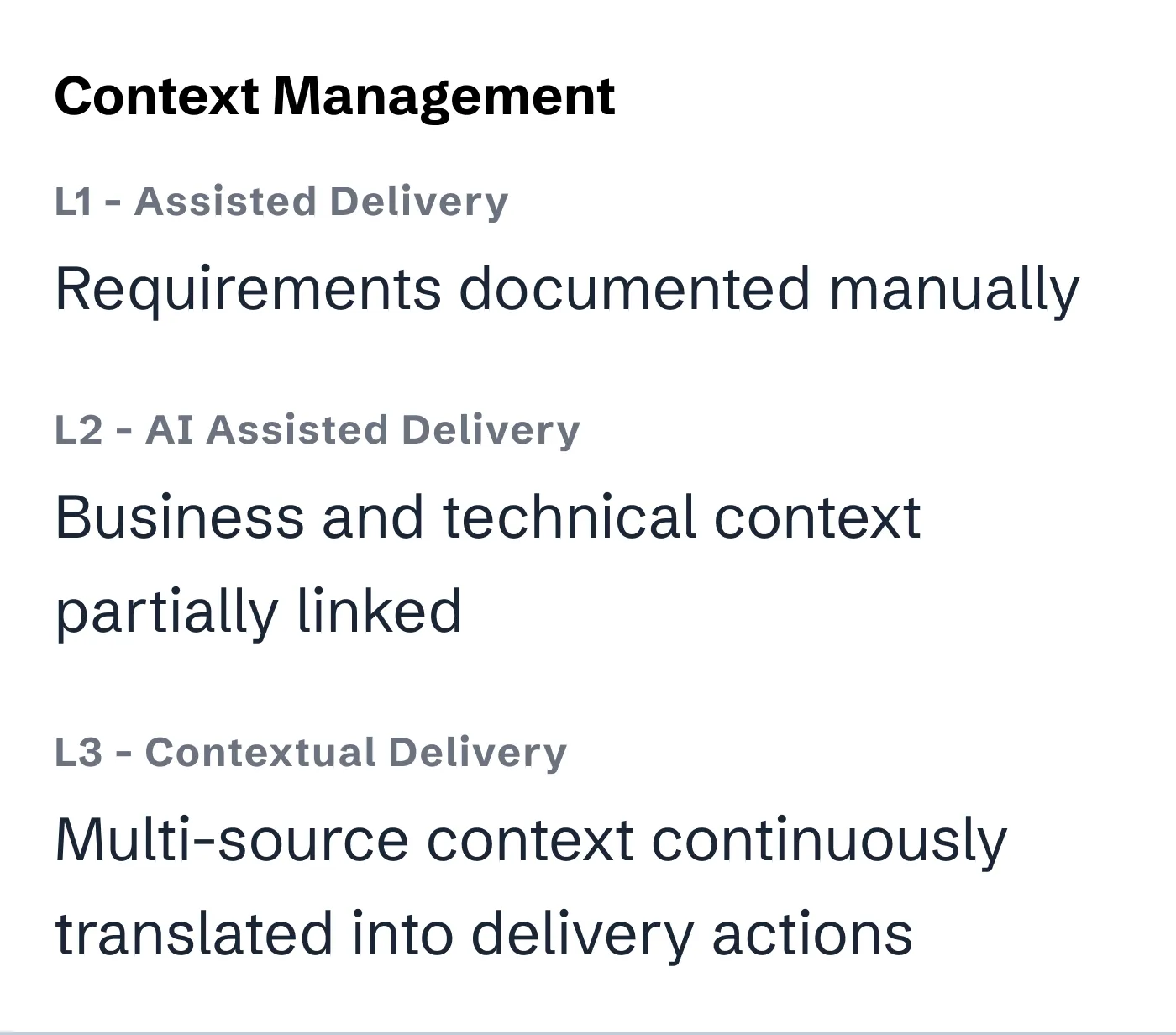
    Below serves as a Contextual Delivery maturity model:

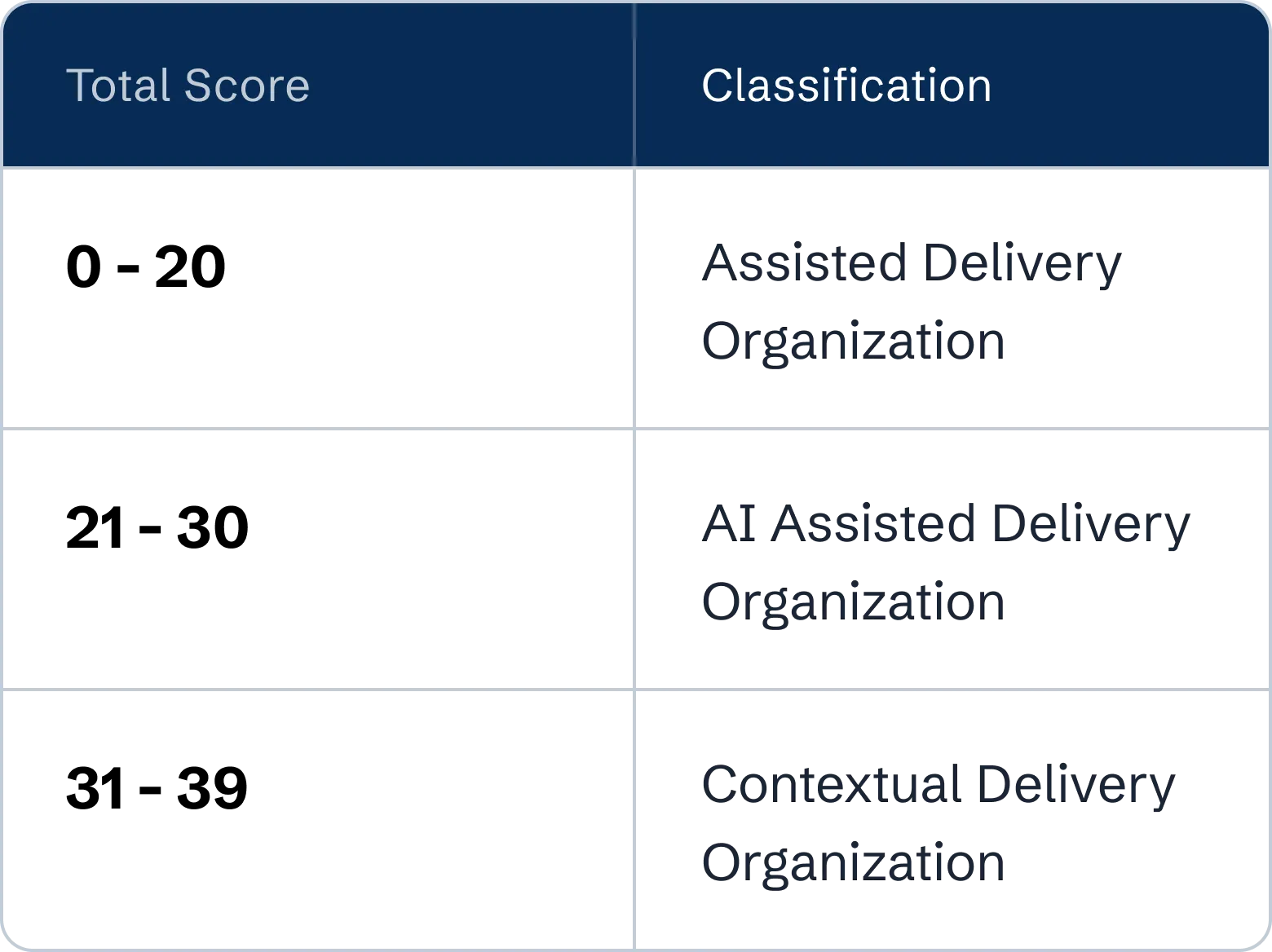
    Capability Assessment Scoring

    For organizations evaluating whether they have reached Contextual Delivery maturity, each capability outlined below could be scored 1–3 for each of the dimension rows above:
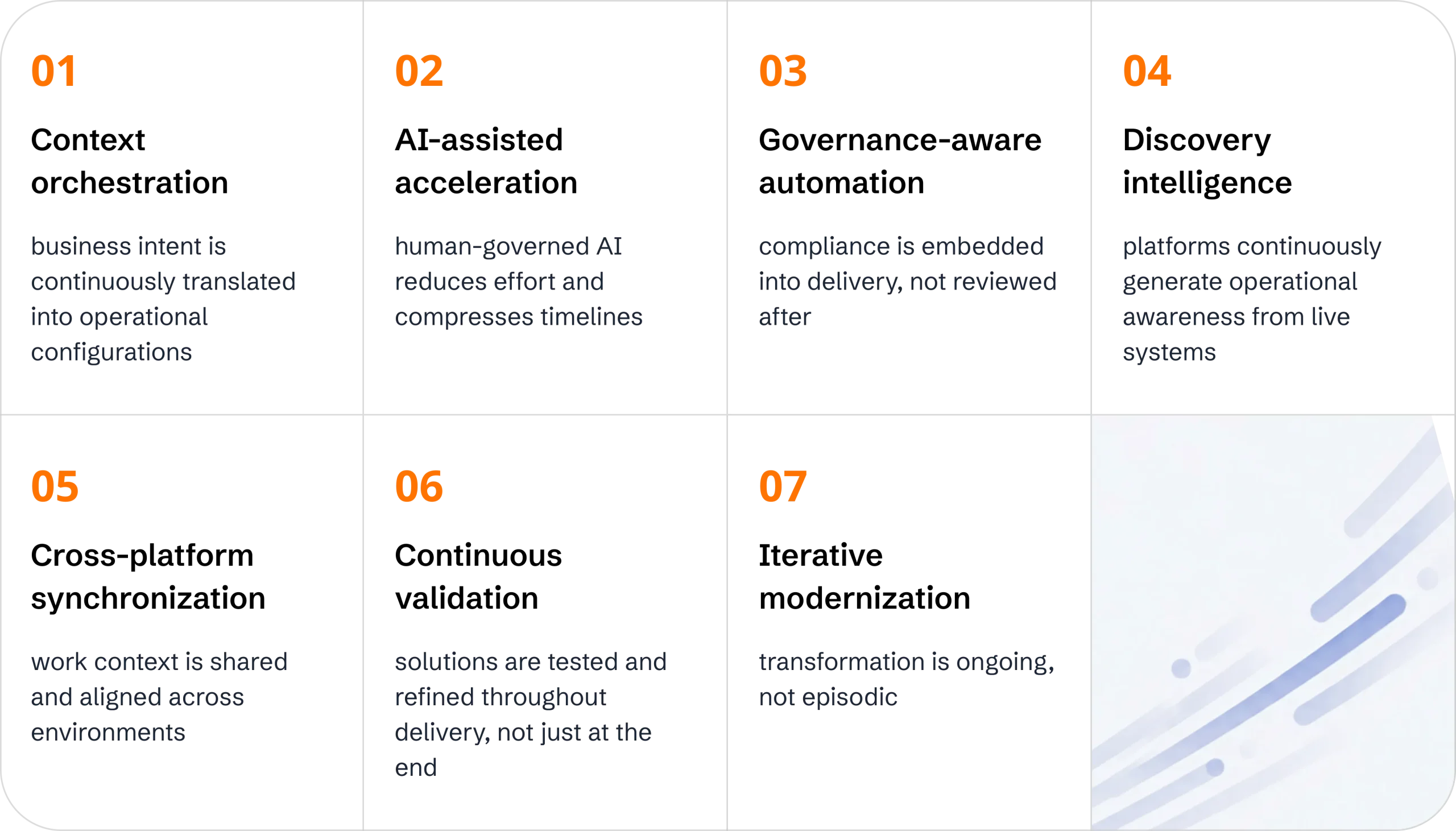
    Contextual Delivery maturity is not a destination, it is a delivery posture that organizations develop progressively as their context infrastructure, AI capabilities, and operating models evolve.

    SOURCES AND REFERENCES

    All citations and data sources

    referenced in this whitepaper

    Copyrights 2026-27 © Trundl - All Rights Reserved

    Book A Call